

Sustained heat and gentle electrical stimulation are the two most reliable, drug-free ways to ease period cramps, and both now come in cordless, wearable forms you can use anywhere. For most people, a cordless wearable that combines heat with massage, like NuFemme, offers the best mix of comfort and portability for home and travel. Relief with these methods often starts within 15 to 60 minutes.
TL;DR:
- Cordless wearable devices that combine heat, massage, and red light are the most versatile for travel and daily use, offering adjustable heat up to 40°C.
- Heat therapy reduces cramps by relaxing uterine muscles and increasing pelvic blood flow, with sessions of 20 to 30 minutes providing significant relief.
- TENS devices work by interfering with pain signals through electrical pulses and can reduce cramping within 15 to 20 minutes when applied above the pubic bone.
- Battery life and maintenance are key: rechargeable wearables can last several hours per charge and avoid the frequent replacement of adhesive pads required by stick-on patches or belts.
- Always verify device safety features, including proper safety warnings and the availability of replacement consumables, before purchasing or using to avoid potential risks.
Table of Contents
- Best Period Pain Relief Devices for Home and Travel: The Shortlist
- Why Heat and TENS Actually Reduce Period Pain
- Home vs. Travel: Which Device Fits Your Life?
- What to Look for Before You Buy a Period Pain Device
- Safety Guidance: When a Device Isn’t Enough
- What I’ve Learned About Living With These Devices
- NuFemme: One Device for Cramps at Home and On the Go
- Sources
Best Period Pain Relief Devices for Home and Travel: The Shortlist
You don’t need five gadgets in a drawer. You need one that matches how you actually live. Here’s how the main categories stack up:
- Cordless wearable (heat + massage + red light): Cordless wearable belts deliver continuous heat, vibration massage, and infrared light in one discreet unit worn under clothing. Best for travel, work, and anyone who wants hands-free relief without hovering near an outlet. These devices often run on a rechargeable battery with multiple heat and massage levels, so you’re not stuck with one intensity all day.
- Rechargeable heat belt (heat only): Similar form factor to a wearable combo device, but without massage or light therapy. Good for people who want simplicity and don’t mind fewer settings.
- Stick-on heat patch: Thin, adhesive, single or limited use. Best for a budget backup or a spare in your bag, though you’ll need to restock adhesives regularly.
- Compact TENS pad: Small electrode pads that clip to a waistband, delivering electrical stimulation instead of heat. Best for people who respond better to nerve-level pain blocking than warmth, though battery life and pad adhesion vary by brand.
- Corded electrical heating pad: Classic and effective at home, but the cord means you’re tied to a couch or bed, not ideal once you leave the house.
For someone who wants one device that covers both a commute and a quiet night in, a cordless wearable is the most practical starting point, and it’s the category NuFemme is built for.
Why Heat and TENS Actually Reduce Period Pain
Heat works because it relaxes the uterine muscle and increases blood flow to the pelvis, which eases the cramping that comes from prostaglandin-driven contractions. A 2018 review found continuous heat therapy performed comparably to NSAIDs for menstrual cramps, with fewer reported side effects. That’s a meaningful finding: it means you can get pharmaceutical-level relief without swallowing a pill.
TENS works differently. It sends low-level electrical pulses through the skin that interfere with pain signals traveling to the brain and may prompt the body to release endorphins. According to patient education from Medanta, high-frequency TENS applied above the pubic bone can reduce cramping within 15 to 20 minutes, and pairing heat with an NSAID often produces additive relief.
By the numbers: Sustained heat around 39 to 40°C is the temperature range most consistently linked to fast, meaningful cramp relief, according to the PMC review on heat therapy for dysmenorrhea.
What this means practically:
- Look for a device with adjustable heat that can sustain, not just spike, temperatures in that 39 to 40°C zone.
- Sessions of 20 to 30 minutes tend to be where people notice the biggest drop in pain.
- Cleveland Clinic lists heat therapy alongside light exercise and NSAIDs as one of the fastest first-line measures for cramps, which is why so many devices lean on heat as the core mechanism rather than an add-on.
Research on device-based menstrual pain interventions is still expanding, according to a current clinical trial listing, so treat any single device’s marketing claims as one data point, not gospel.
Home vs. Travel: Which Device Fits Your Life?
The device that works beautifully on your couch can be useless on a train. Here’s how the main formats hold up once you leave the house:
- Corded electrical heating pads stay warm indefinitely and cover a wide area, making them the best choice for a long evening at home, but they’re a nonstarter for travel or work.
- Microwave heat packs are cheap and reusable, ideal as a backup at home, though they cool down in 20 to 30 minutes and need a microwave nearby to reheat.
- Stick-on heat patches are lightweight and easy to pack, but the adhesive weakens with sweat and movement, and you’ll burn through a box faster than you expect.
- Cordless wearables hold their charge for hours, fit discreetly under clothing, and don’t require a wall outlet or a fresh patch every few hours, which makes them the strongest fit for travel, commuting, or a full workday.
That last point matters more than people expect, as explained in how wearable therapy devices work for neck pain, highlighting battery and maintenance considerations that aid adherence. “Device fatigue” is real: if a device requires constant fiddling, swapping pads, or babysitting a cord, you stop reaching for it, even if it works. Low-maintenance wearable devices solve that by removing the friction entirely.
Pro Tip: If you’re flying, check your device’s battery capacity before packing it. Most rechargeable wearables use lithium batteries under the airline watt-hour threshold, but it’s worth confirming on the manufacturer’s travel guidance before you leave for the airport.
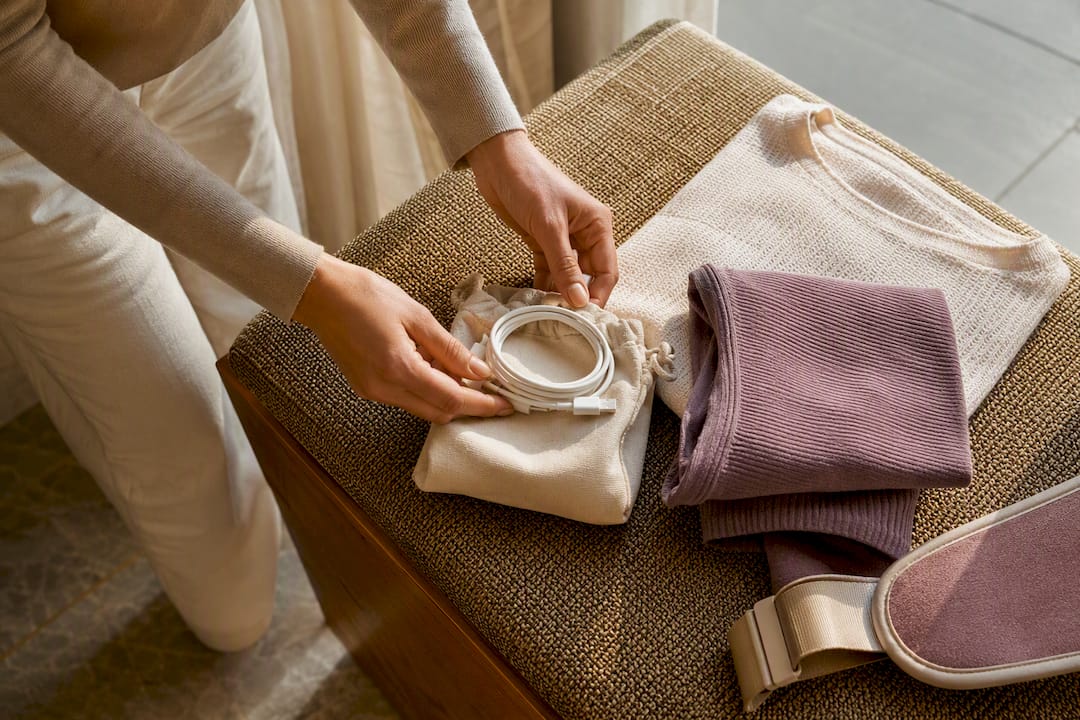
For packing, bring a spare charging cable, skip loose adhesive pads if you can (a belt-style wearable avoids that problem entirely), and charge overnight rather than mid-trip so you’re never caught at 2% battery in a taxi.
What to Look for Before You Buy a Period Pain Device
A good device checklist saves you from buying twice. Before you add anything to cart, confirm these basics:
- Therapy type: heat alone, TENS alone, or a combination of heat, massage, and light.
- Heat control: can it sustain roughly 39 to 40°C, or does it just spike and fade?
- Battery life: how many sessions per charge, and how long is a full recharge?
- Consumables: does it need replacement adhesive pads, or is it a reusable belt?
- Discretion: can you wear it under regular clothing without visible bulk or noise?
- Warranty and returns: is there a real return window if the device doesn’t suit you?
Before checkout, ask the seller (or check the product page for) these three things:
- What’s the realistic battery life per charge, in hours, not just “long lasting”?
- Are replacement pads or adhesives sold separately, and how often do they need swapping?
- What safety warnings does the label include, and are they visible on the product page itself?
Watch for two red flags. First, vague or unverifiable medical claims (“cures cramps,” “treats endometriosis”) without any cited evidence behind them. Second, missing information about consumables. If a company won’t tell you how often you’ll need to buy replacement pads, assume it’s often, and assume they know that’s a downside.
Safety Guidance: When a Device Isn’t Enough
Heat and TENS devices are safe for most people, but a few situations call for extra caution. Skip TENS if you have an implanted electrical device like a pacemaker, and avoid placing any heat or electrode source over broken or irritated skin. If a product label warns against use during pregnancy, take that seriously rather than assuming it doesn’t apply to you. Don’t stack a heating device on top of another heat source, like a hot bath right after a heating pad session, since that raises the risk of burns without adding relief.
Some symptoms mean it’s time to call a clinician instead of reaching for a device:
- Sudden, severe, or one-sided pelvic pain
- Fever alongside cramping
- Fainting or near-fainting
- Bleeding heavy enough to soak through protection hourly
According to Johns Hopkins Medicine, pain that’s unusually severe or doesn’t respond to normal measures can signal endometriosis or another condition that needs clinical evaluation, not just a stronger heat setting. Devices are a genuine tool for everyday cramps, but they supplement medical care for diagnosed conditions. They don’t replace it.
What I’ve Learned About Living With These Devices
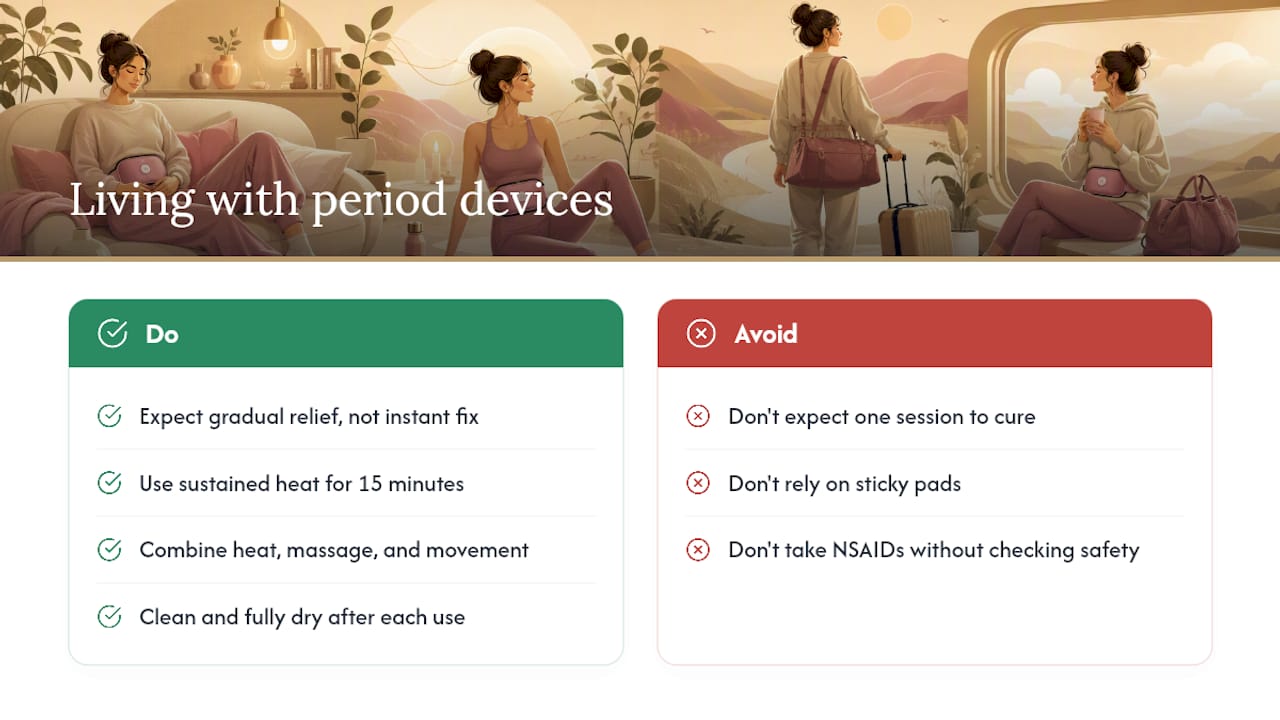
Realistic expectations matter more than any spec sheet. Most people feel some relief within the first 15 minutes of sustained heat, but full comfort usually takes a full cycle of adjusting settings, not one lucky session. Combining a heat and massage wearable with light movement, a short walk, some stretching, and an NSAID when it’s safe for you tends to outperform any single method alone.
Maintenance is where devices quietly succeed or fail. A wearable with a fixed belt and no adhesive to replace, like NuFemme, holds up better over months of use than anything relying on sticky pads that lose grip after a few wears. NuFemme users have reported reduced pain within 15 minutes in 93% of cases in company-reported usage data, a number that tracks with what sustained heat plus massage should do physiologically. Clean the skin-contact surface after each use and let it fully dry before recharging or storing it.
— Lavinia
NuFemme: One Device for Cramps at Home and On the Go
If you’ve read this far wondering which single device covers both a rough night at home and a long travel day, some cordless wearables combine heat, vibration massage, and red-light therapy in one belt, with multiple heat levels and massage speeds so you can dial in what your body needs that day.
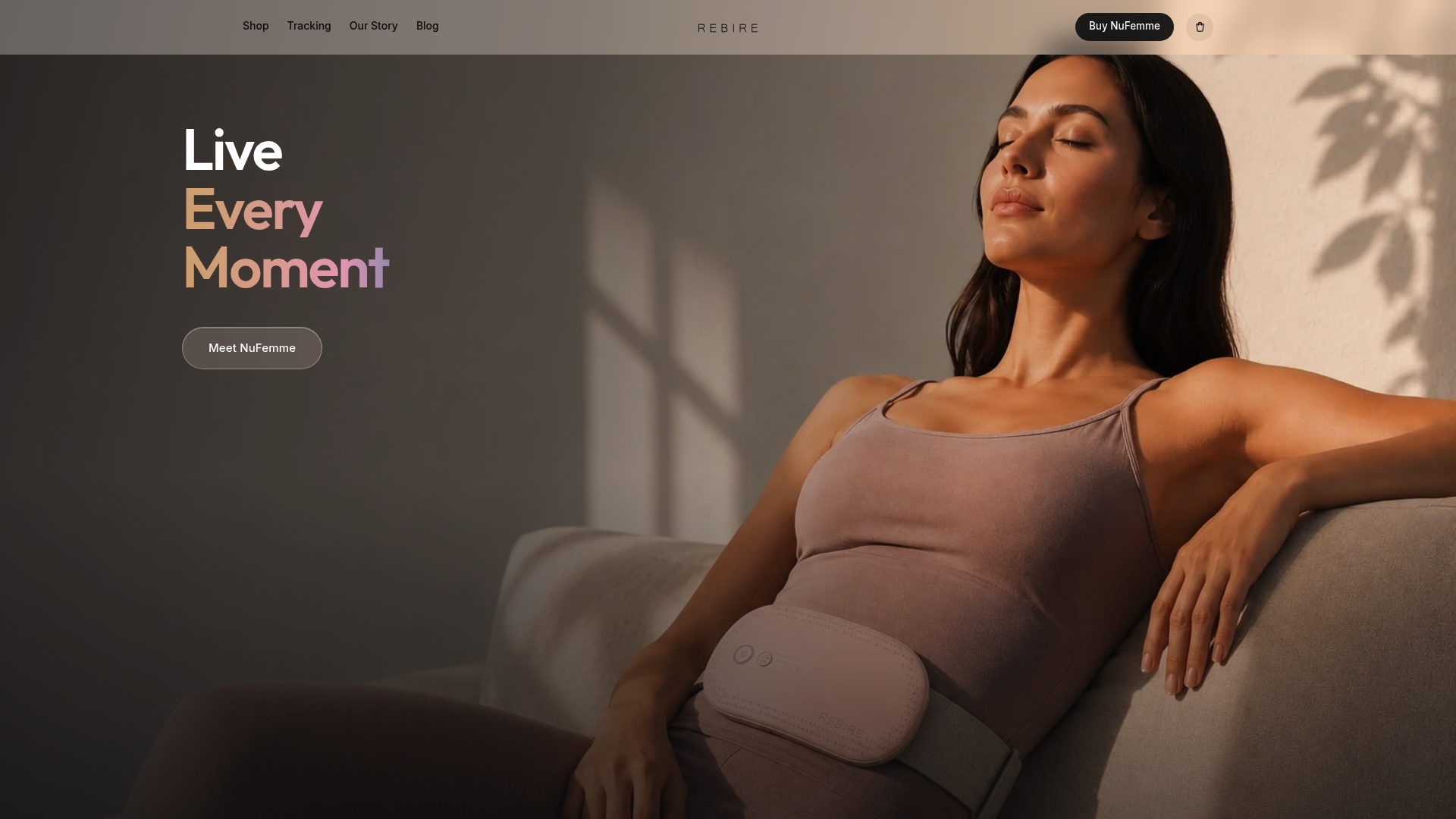
It’s rechargeable, discreet under regular clothing, and doesn’t require the adhesive swaps or charging cords that make other devices a hassle to maintain. That combination is why NuFemme fits so many different situations: a stretch at your desk, a long commute, a weekend trip, or a moment where you just want to lie down and let the heat do its work. It also works well as a gift. Rose Gold and Ivory finishes make it feel like something chosen with care, not grabbed last minute at a drugstore. If you want to see the full feature set and current options, visit the NuFemme product page to check availability.
Sources
- Review: Heat therapy for dysmenorrhea (2018) — PMC
- What Helps With Period Cramps? — Cleveland Clinic
- Period pain relief: home remedies — Medanta patient education
This article is general information, not a substitute for advice from a qualified doctor. Consult a qualified healthcare professional about your own circumstances before acting on anything here.