

Yes. Targeted superficial heat often reduces endometriosis-related pelvic pain by relaxing tense pelvic muscles and easing cramping. A portable, moderated-temperature wearable or an adjustable heating pad is a smart first option. Heat treats symptoms, not the underlying lesions, so persistent or severe pain still deserves a conversation with your clinician.
TL;DR:
- Superficial heat therapy is most effective when maintained at 38 to 40°C (100.4 to 104°F) for 8 to 12 hours with wearable devices designed for continuous use.
- Moist heat penetrates tissue faster than dry heat, but all heat sources carry burn risks if not used carefully, especially hot water bottles or overnight devices.
- Heat relaxes deep pelvic muscles and increases blood flow but does not reduce endometriotic lesions or address the root causes of pain.
- Using heat alongside other treatments like NSAIDs or pelvic floor therapy offers the most comprehensive symptom relief.
- Avoid heat over skin infections, open wounds, or areas with numbness, and consult a clinician if pain worsens or new symptoms develop.
Table of Contents
- How Endometriosis Heat Therapy Works on Pelvic Pain
- What Are the Best Heat Options for Endometriosis Pain?
- What Do Studies Say About Heat Therapy for Endometriosis?
- How to Use Heat Safely Without Burning Your Skin
- When Is Endometriosis Pain a Sign to See a Clinician?
- What Real Experience Teaches About Wearable Heat Devices
- When Should You Avoid Heat Therapy?
- Is Heat Better Than Cold or TENS for Endometriosis Pain?
- What Temperature and Duration Work Best for Heat Therapy?
- A Reader’s-Eye View on Living With Heat Therapy
- Why NuFemme Is Worth Considering for Daily Relief
- Sources
How Endometriosis Heat Therapy Works on Pelvic Pain
Heat doesn’t touch the endometriosis lesions themselves. What it does is calm the muscle response those lesions trigger, and for a lot of women, that response is where the worst of the pain actually lives.
When your pelvic muscles tense up around inflamed tissue, that guarding creates its own cycle of cramping and spasm. Cleveland Clinic notes that heating pads or heat wraps ease pelvic cramping and muscle tension, and identifies pelvic floor muscle tension as a common driver of endometriosis pain, not just an occasional side effect. Applying warmth to the lower abdomen dilates local blood vessels, which increases circulation to tight muscle tissue and helps flush out some of the chemical byproducts of that tension.
There’s also a chemistry piece worth understanding. Prostaglandins, the hormone-like compounds responsible for uterine contractions during your period, drive a lot of the sharp, cramping quality of endometriosis pain. Heat doesn’t block prostaglandin production, but it does relax the smooth muscle those compounds are acting on, which softens how intense the contractions feel.
Here’s what heat therapy realistically does for endometriosis pain:
- Relaxes deep pelvic floor muscles, not just surface-level cramping
- Increases local blood flow to reduce muscle stiffness and guarding
- Softens the intensity of prostaglandin-driven contractions
- Provides a non-drug option you can layer with other treatments
- Offers immediate, on-demand relief without waiting for medication to metabolize
What heat won’t do is shrink or eliminate endometriotic tissue. It’s symptomatic relief, full stop. If your pain is escalating, spreading, or not responding to heat and over-the-counter anti-inflammatories the way it used to, that’s a signal worth bringing to a clinician rather than pushing through with a heating pad alone.
What Are the Best Heat Options for Endometriosis Pain?
Not all heat is created equal, and the format you choose matters more than most people realize. Broadly, you’re picking between moist heat and dry heat, and each behaves differently against skin and muscle.
Moist heat — think a warm bath or a damp heat wrap — penetrates tissue faster because water conducts heat more efficiently than air. A warm bath can ease widespread pelvic tension and works well before bed, though it’s obviously not something you can do at your desk.
Dry heat covers the more familiar territory: hot water bottles, electric heating pads, and heat wraps. A hot water bottle is cheap and simple, but it cools within 30 to 45 minutes and carries real burn risk if it’s overfilled or held directly against skin. Electric heating pads solve the cooling problem with adjustable, sustained warmth, but most require an outlet, which limits where and how long you can use them.
Here’s a quick rundown of the main options and what to expect from each:
- Hot water bottle: inexpensive, widely available, cools quickly, requires careful handling to avoid burns
- Electric heating pad: adjustable temperature, sustained heat, but corded and impractical outside the home
- Disposable heat patches: adhere directly to clothing or skin, typically run 8 to 12 hours at a lower, steady temperature, but are single-use and generate ongoing cost
- Cordless wearable belts: rechargeable, portable, and often combine heat with massage or red-light therapy for layered relief
Disposable patches, like the CozyTherm Heating Relief Patch, are worth knowing about if you want something you can wear under clothes without charging or plugging in anything. They’re convenient for a single workday or a long flight, but the temperature isn’t adjustable, and the adhesive can irritate sensitive skin with repeated use.
Cordless wearable belts solve the two biggest complaints women have about traditional heat therapy: you’re tethered to an outlet, or you’re stuck holding a hot water bottle against your stomach while trying to function. A wearable belt sits under your clothes and moves with you, which matters enormously if your worst cramps hit during a workday, a commute, or your kid’s soccer practice. Many now combine heat with vibration massage or red-light therapy, giving you more than one mechanism of relief in a single device. Rebire covers what to look for in a wearable heating pad for period cramps if you want to dig into device features before buying.
Whatever you choose, factor in laundry and travel. Heat wraps need washing, hot water bottles need refilling, and only battery-powered wearables survive a weekend trip without a hunt for an outlet.
What Do Studies Say About Heat Therapy for Endometriosis?
The clearest, most specific guidance so far comes from a 2026 review in Frontiers in Medicine, which recommends superficial heat therapy at 38 to 40°C (100.4 to 104°F) and suggests wearable devices are appropriate for continuous use across 8 to 12 hours for devices designed for that duration.
By the numbers: Frontiers in Medicine (2026) recommends a superficial heat range of 38–40°C (100.4–104°F), with wearable devices suited to 8–12 hours of continuous use when built for that purpose.
That range matters because it’s high enough to trigger vasodilation and muscle relaxation without crossing into burn territory, especially over the many hours a wearable might stay against skin during a workday.
Major health systems back the same general approach, though with less numeric precision. Mayo Clinic recommends warm baths and heating pads to relax pelvic muscles, and lists pelvic floor therapy and NSAIDs among the complementary options clinicians commonly suggest alongside heat. Cleveland Clinic’s guidance lines up closely, framing heat as a legitimate symptomatic tool rather than a fringe home remedy.
Where the research gets more interesting is in how heat stacks up against other non-drug approaches. A 2026 network meta-analysis in the Journal of Pain compared non-pharmacological interventions for endometriosis pain and quality of life, and found pelvic floor–based physical therapy and acupuncture ranked highest overall, with physical therapy performing best specifically for menstrual cramping. That doesn’t diminish heat’s value. It reframes it: heat is one effective lever among several, and it works best pulled alongside others rather than relied on in isolation.
A few points worth flagging on the evidence itself:
- Heat therapy research for endometriosis specifically is thinner than research on general dysmenorrhea, so some guidance is extrapolated from broader menstrual pain studies
- Pelvic floor physical therapy and acupuncture currently have stronger comparative outcomes data than heat alone
- Emerging thermal interventions like magnetic hyperthermia show promise in preclinical models for affecting lesion biology directly, but these remain experimental, clinical-only, and nowhere near ready for home use
That last point is worth sitting with. There’s a real difference between a heating pad calming a muscle spasm and a lab-stage thermal therapy attempting to act on lesion tissue itself. Don’t confuse the two, and don’t expect a wearable to do what only a clinical intervention might eventually do.
How to Use Heat Safely Without Burning Your Skin
Getting relief from heat therapy comes down to control, not intensity. Cranking a device to its highest setting doesn’t work faster, it just raises your risk of skin damage.
- Choose a device with adjustable temperature and auto shutoff. Fixed-heat products like basic hot water bottles have no way to prevent overheating if you fall asleep or lose track of time.
- Stay within 38 to 40°C (100.4 to 104°F) for wearable or prolonged use, matching the range Frontiers in Medicine recommends, unless a manufacturer provides validated guidance for a different setting.
- Put a thin barrier, like a towel or the fabric of your clothing, between the device and bare skin, especially for anything worn for several hours.
- Rotate placement every so often rather than leaving heat fixed on the exact same patch of skin for an entire day.
- Never sleep with a plugged-in electric heating pad running unless the manufacturer explicitly designs it for overnight use with auto-off protection. Cordless wearables with built-in shutoff timers are a safer overnight option than a corded pad.
- Pair heat sessions with movement. A short walk or a few pelvic floor relaxation stretches after 20 to 30 minutes of heat often extends the relief longer than heat alone.
- Time it with medication if your clinician has approved NSAIDs. Applying heat around the same window as a dose can compound relief rather than duplicate it.
Repeated, high-intensity localized heat over weeks or months can cause a condition called erythema ab igne, sometimes called “toasted skin syndrome,” a mottled, discolored patch that develops from chronic heat exposure in one spot. It’s avoidable. Rotate where you apply heat, don’t run a device at maximum for hours daily, and give your skin regular breaks.
Pro Tip: If you’re using a heating pad overnight out of habit, switch to a wearable with a built-in auto-off timer instead. It gets you the same relief with none of the risk of dozing off against high heat for six or seven hours.
When Is Endometriosis Pain a Sign to See a Clinician?
Heat is a genuinely useful tool, but it has a ceiling. Knowing where that ceiling is matters as much as knowing how to use the heat itself.
Get medical attention promptly if you notice any of the following:
- Fever alongside pelvic pain, which can signal infection rather than typical cramping
- Sudden, severe pain that feels distinctly different from your usual cycle pattern
- Pain that’s progressively worsening month over month despite consistent heat use and over-the-counter relief
- New symptoms affecting bowel or bladder function
- Concerns about fertility or difficulty conceiving
Clinicians typically treat heat as one layer in a broader plan rather than a standalone fix. NSAIDs address inflammation directly, hormonal therapy can suppress the cycle activity that drives lesion flare-ups, and pelvic floor physical therapy retrains the chronic guarding pattern that heat only temporarily relaxes. Heat fits alongside these approaches, easing day-to-day discomfort while the other treatments work on root causes.
A useful next step: track your pain for a couple of cycles, noting when heat helps, how long relief lasts, and what doesn’t respond. That record turns a vague “it still hurts sometimes” into specific, useful information for your clinician.
What Real Experience Teaches About Wearable Heat Devices
Cordless wearables have changed what heat therapy looks like day-to-day. Instead of choosing between pain relief and getting through your workday, a wearable belt lets you do both at once, and that shift in usability is where a lot of the real value shows up.
NuFemme, Rebire’s wearable, combines heat with vibration massage and red-light therapy in one belt worn discreetly under clothing. It offers three heat levels and three massage speeds, so you can adjust intensity depending on whether you’re sitting through a meeting or trying to fall asleep.
Pelvic floor muscle tension often accompanies endometriosis, and heat therapy works in part by relaxing those deep muscle spasms, not just easing surface-level cramping. Devices that combine heat with massage may address both the muscular guarding and the surface discomfort at once.
That combination, heat plus massage plus light, matters because endometriosis pain rarely comes from a single source. Muscle tension, inflammation, and nerve sensitivity often overlap, and a device that only addresses one of those pieces leaves the others unmanaged. Battery life and portability aren’t small details here either. A cordless design means the device works during a commute or a full workday without hunting for an outlet, which is precisely the situation where corded heating pads fail women most.
When Should You Avoid Heat Therapy?
Heat isn’t universally safe, and skipping this part is how people end up with complications instead of relief.
Avoid applying heat directly over any area with a skin infection, open wound, or active rash. Heat increases blood flow and can accelerate the spread of infection rather than calming it. The same caution applies to areas of numbness or reduced sensation, since you may not feel a burn developing until damage has already occurred.
If you have diabetes with peripheral neuropathy, check with your clinician before using heat therapy regularly, since reduced sensation in some cases extends beyond the extremities. Pregnant women should also talk to their doctor before using heat on the lower abdomen, since guidance varies depending on trimester and individual health history.
Skip heat during an acute fever. Adding external heat when your body is already running hot can push your core temperature higher than is comfortable or safe. And if you notice unusual swelling, redness that doesn’t fade, or increasing pain rather than relief after applying heat, stop and reassess. That reaction sometimes signals something other than typical muscle tension, and heat can mask a symptom that needs direct medical evaluation instead.
When in doubt, a short conversation with your clinician about your specific health history is worth more than guessing.
Is Heat Better Than Cold or TENS for Endometriosis Pain?
There’s no single winner here, because heat, cold, and TENS units solve slightly different problems.
Heat excels at relaxing muscle tension and improving blood flow, which makes it the better choice for the deep, cramping ache typical of endometriosis. Cold therapy works differently: it numbs the area and reduces inflammation, which can help more with acute, sharp pain or swelling rather than chronic muscular guarding. Most women with endometriosis find heat more consistently useful simply because their pain profile leans cramping and tension rather than acute inflammatory flare.
TENS units, which deliver low-voltage electrical pulses through the skin to interrupt pain signals, work through an entirely different mechanism. They can be effective for some women, particularly for nerve-related pain, but they require correct electrode placement and don’t address the muscular component the way heat does. A comparative analysis of movement-based and physical therapies suggests that combining approaches, heat plus movement, or heat plus targeted physical therapy, tends to outperform any single method used alone.
Rather than choosing one method permanently, many women rotate based on symptom type: heat for the cramping days, cold for acute flares, and physical therapy or acupuncture as an ongoing baseline, matching the pattern reflected in comparative research on non-drug pain interventions.
What Temperature and Duration Work Best for Heat Therapy?
The range with the clearest research backing is 38 to 40°C, or 100.4 to 104°F, the exact guidance published in the Frontiers in Medicine 2026 review. That range sits high enough to relax muscle tissue and boost circulation without approaching temperatures that damage skin over sustained contact.
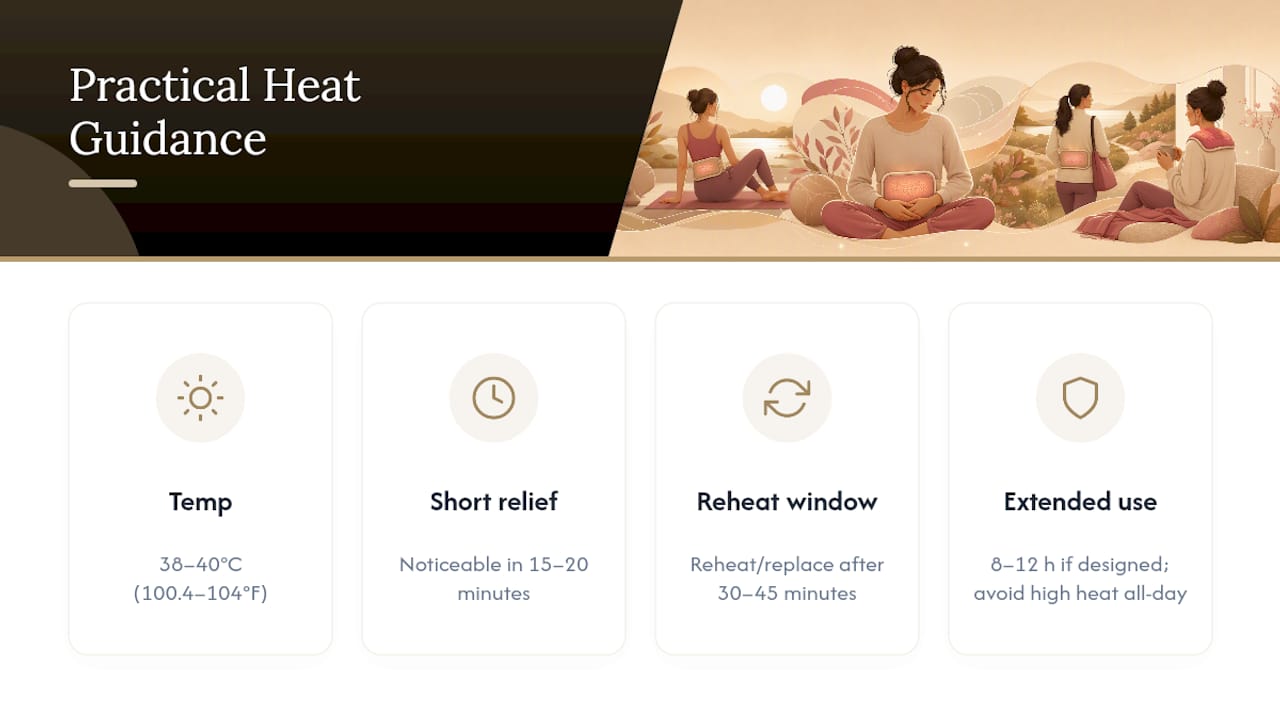
Duration depends on the device and the goal. A hot water bottle or basic heating pad typically delivers noticeable relief within 15 to 20 minutes, though it usually needs reheating or replacing within 30 to 45 minutes as it cools. Wearable devices designed for extended use, including disposable patches and rechargeable belts, are built for a longer window, with Frontiers in Medicine suggesting 8 to 12 hours of continuous use for devices engineered for that duration.
If you want device-specific guidance on matching heat settings to timing, Rebire has a detailed breakdown of heat settings by device and timing worth reviewing before you commit to a routine.
For most women, a practical rhythm looks like this: use moderate, sustained heat during waking hours when pain builds, reserve higher settings for short sessions rather than all-day wear, and drop the temperature or remove the device before sleep unless it’s specifically rated for overnight use.
A Reader’s-Eye View on Living With Heat Therapy
Talk to enough women managing endometriosis and a pattern shows up fast: heat rarely eliminates the pain, but it buys back function. Fewer missed workdays, fewer canceled plans, more nights where sitting through dinner with family doesn’t feel like an endurance test. That’s not a small thing.
The honest note here is that heat works best when you stop expecting it to be the whole answer. Pair it with what your clinician recommends, whether that’s pelvic floor therapy, NSAIDs, or hormonal treatment, especially if your pain is intensifying rather than holding steady. Heat is a tool you control every day. Use it that way, and loop in your doctor when the pattern changes.
— Lavinia
Why NuFemme Is Worth Considering for Daily Relief
Rebire built NuFemme around a simple frustration: heating pads work, but only if you can sit still near an outlet while they do. NuFemme skips that trade-off entirely. It’s a cordless wearable belt combining heat, vibration massage, and red-light therapy, so you get the muscle-relaxing benefit heat therapy is known for without pausing your day to get it.
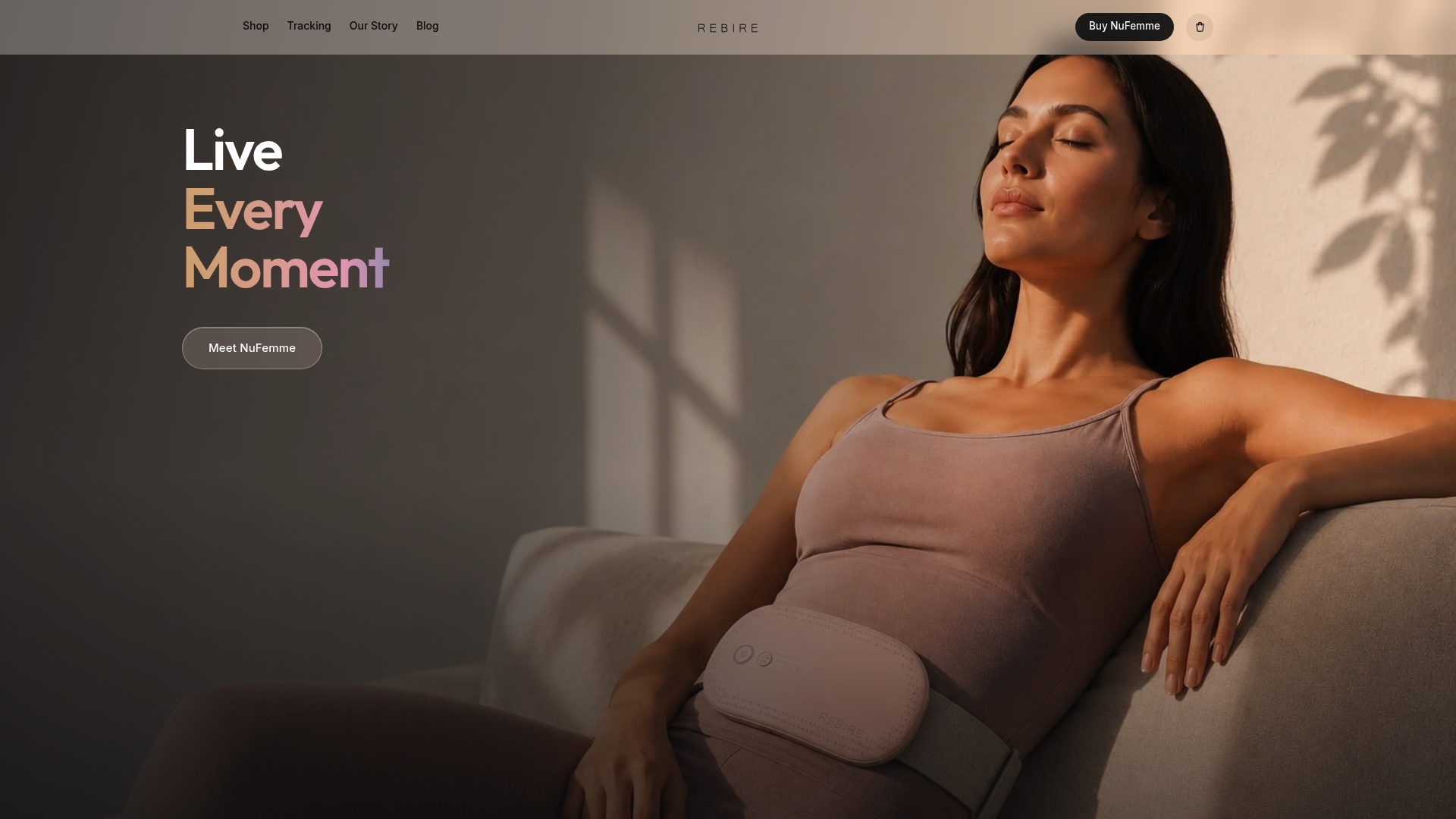
The belt runs on a rechargeable battery, offers three heat levels and three massage speeds, and stays hidden under clothing whether you’re at your desk, picking up groceries, or traveling. It comes finished in Rose Gold or Ivory, which makes it a thoughtful gift option too, the kind a partner gives when they’ve actually paid attention to what she deals with every month rather than grabbing something at the last minute. It works equally well as something you buy for yourself, no explanation required.
If you’re ready to try a heat option that moves with your schedule instead of pinning you to a couch, check out the full NuFemme collection to compare finishes and see current availability. For anyone considering it as a gift, the Mother Daughter Gift page has ideas worth a look too.
Sources
For deeper reading on the research and clinical guidance behind this article, these sources are worth bookmarking. Frontiers in Medicine’s 2026 review covers the temperature and duration data in full. Cleveland Clinic’s endometriosis pain guide explains the pelvic floor connection in plain language. Mayo Clinic’s diagnosis and treatment overview situates heat within broader clinical care. And the Journal of Pain’s 2026 meta-analysis offers the clearest comparative data on non-drug interventions available today.
This article is general information, not a substitute for advice from a qualified doctor. Consult a qualified healthcare professional about your own circumstances before acting on anything here.
- Frontiers in Medicine — Superficial heat therapy recommendations (2026)
- Managing endometriosis pain — Cleveland Clinic
- Endometriosis diagnosis and treatment — Mayo Clinic
- Comparative effectiveness of non-pharmacological interventions for pain and QoL in women with endometriosis — Journal of Pain (2026)