

Yes, you can exercise with cramps, and for most people it’s one of the fastest ways to feel better. The quickest wins are gentle aerobic movement (a 10 to 15 minute walk), heat applied to your lower belly, and slow diaphragmatic breathing. Scale down instead of skipping: if your pain is mild to moderate, move. If you’re dizzy, vomiting, or in pain that stops you cold, rest and consider seeing a doctor.
TL;DR:
- Moderate exercise, especially low-impact aerobic activities like walking or swimming, significantly reduces menstrual pain when done regularly over weeks.
- Combining movement with heat therapy, diaphragmatic breathing, or NSAIDs enhances cramp relief and can produce immediate benefits.
- Using a traffic-light system to modify workout intensity helps manage symptoms without overexerting during severe cramps.
- Persistent or worsening pain, heavy bleeding, or symptoms like fever require medical evaluation, as these may indicate conditions such as endometriosis or fibroids.
- A wearable device combining heat, massage, and red-light therapy offers quick pain relief but should complement, not replace, movement and other relief methods.
Table of Contents
- Why Exercise With Cramps Actually Reduces Pain
- What Kind of Workout Helps Most With Period Cramps
- How Should You Modify Your Workout by Symptom Level?
- Combine Movement With Heat, Breathing, and the Right Medication
- When Cramps Are a Warning Sign, Not Just a Bad Day
- What Our Health Contributor Wants You to Know
- Does Hydration and Food Actually Change How Cramps Feel?
- How Do You Mentally Push Through a Workout With Cramps?
- What I’ve Learned Watching How Differently Cramps Respond to Movement
- A Wearable That Fits Into Your Movement Routine, Not Around It
- Sources
- FAQ
Why Exercise With Cramps Actually Reduces Pain
Cramps happen because your uterus releases prostaglandins, hormone-like compounds that trigger the muscle contractions that squeeze pain receptors and blood vessels. Movement counters that in two ways: it boosts circulation to the pelvis, and it triggers endorphin release, your body’s built-in painkillers, which blunt how intensely you feel those contractions.
A 2024 systematic review found that exercise interventions, including relaxation exercises, yoga, and aerobic activity, meaningfully reduced menstrual pain, with relaxation-based exercise producing the biggest drop.
By the numbers: at 8 weeks, pain scores dropped by several points on a 10-point pain scale, depending on the type of exercise, according to the same review. That’s not a one-off placebo bump. It’s a pattern that held across multiple studies and exercise types.
The catch is timing: some benefits, like endorphin release, kick in within minutes of moving. Others, like the structural changes that come with regular aerobic training, build over several weeks of consistent practice. Think of exercise as both a same-day painkiller and a slow-building preventive tool.
What Kind of Workout Helps Most With Period Cramps
Not every workout earns its place during your period. Here’s what the evidence actually supports, and how to use each type.
- Low-impact aerobic exercise (walking, swimming, cycling) increases blood flow without jarring your pelvis. A dose-response meta-analysis found that low-intensity sessions of moderate duration, done a couple of times a week across a cycle, produced some of the strongest pain reductions. A brisk 20-minute walk still counts on a lighter day.
- Strength and isometric work (planks, glute bridges, bird-dogs) targets the muscles surrounding your pelvis; for more insights, see why moms benefit from strength training. Trials on lumbopelvic strengthening protocols showed a meaningful effect on pain intensity, supporting targeted core and pelvic exercise as more than just a strength habit. Three sets of 10 to 12 reps, done gently, is plenty.
- Yoga and relaxation practices (cat/cow, child’s pose, seated forward fold) work fast. Relaxation exercise showed the largest short-term pain drop in the systematic review above, likely because slow stretching and breathing directly calm pelvic muscle tension.
- Pelvic floor mobility and stretching helps if your cramps come with lower-back tightness or a “locked-up” feeling. Gentle hip circles and figure-four stretches loosen the surrounding muscles without straining your core.
Pro Tip: Stack categories instead of picking one. Try a 10-minute walk to get blood moving, then 10 minutes of slow yoga to bring the pain down further. The combination tends to outperform either one alone.
How Should You Modify Your Workout by Symptom Level?
Use a traffic-light system instead of an all-or-nothing rule. It removes the guesswork on a day when thinking clearly feels hard.
- Green (mild or no symptoms): Do your normal workout. Warm up an extra five minutes, since cold muscles cramp more easily during your period.
- Amber (moderate cramps, some fatigue): Cut volume and impact by roughly half. Swap running for a brisk walk, or drop your usual strength session to lighter weights and fewer sets. A 20 to 45 minute low-impact session is the sweet spot here.
- Red (severe cramps, nausea, or heavy bleeding): Skip structured exercise. Do 5 to 15 minutes of gentle flow: slow neck rolls, cat/cow, child’s pose, and diaphragmatic breathing. Rest is the workout today.
A few practical notes apply across all three: plan your bathroom and menstrual-product logistics before you leave the house, wear looser clothing around the waist, and sip water throughout rather than chugging it beforehand. Pace yourself by pain, not by the clock on your usual routine.
Combine Movement With Heat, Breathing, and the Right Medication
Movement works better paired with other relief methods, not instead of them. Clinical guidance from the American College of Obstetricians and Gynecologists lists heat and light exercise as first-line, nonmedical approaches, since heat relaxes the uterine muscle directly while exercise works through circulation and endorphins.
- Apply heat to your lower abdomen for 15 to 20 minutes before you move, then again afterward. (Rebire’s guide on safe heat settings breaks down the right temperature range and timing.)
- Try diaphragmatic breathing: inhale for four counts, hold for two, exhale for six. Ninety seconds calms the nervous system enough to loosen gripping muscles.
- If you’re using NSAIDs like ibuprofen, taking them right as symptoms start, rather than waiting until pain peaks, works better because they block prostaglandin production before it ramps up. Skip them if you have a bleeding disorder or take blood thinners, and check with a doctor first.
When Cramps Are a Warning Sign, Not Just a Bad Day
Most cramps respond to movement, heat, and NSAIDs. Some don’t, and that’s worth paying attention to.
See a doctor if you experience pain severe enough to stop your normal activities, cramps that get progressively worse cycle over cycle, bleeding heavy enough to soak through a pad or tampon hourly, or pain accompanied by fever, dizziness, or fainting. Public health guidance flags these as signs worth a clinical evaluation rather than another round of stretching.

Conditions like endometriosis, fibroids, or bleeding disorders can all masquerade as “just bad cramps.” Track your cycle length, pain intensity, and any unusual symptoms for two to three months before your appointment. That record gives your doctor far more to work with than “it just hurts a lot.”
What Our Health Contributor Wants You to Know
reviewed the exercise and pain research behind this guide, with an eye toward what actually holds up outside a lab.
One honest note: a wearable that combines heat and massage, like [brand_signal], isn’t a replacement for movement. It’s a support tool. [internal_data] found that a majority of users felt pain relief within 15 minutes of use, which makes it a reasonable companion during a walk or a gentle yoga flow, not a substitute for either.
If you wear one during activity, check the skin underneath periodically for irritation, and remove it before sleep unless the product’s own instructions say otherwise.
Does Hydration and Food Actually Change How Cramps Feel?
Dehydration makes muscle cramping worse everywhere in your body, and your uterus is a muscle too. Aim for steady water intake throughout the day rather than a big glass right before your workout, which can leave you feeling sloshy mid-session.
Sodium and potassium both matter here. Cramps and bloating often coincide with water retention, and a diet heavy in salty processed food can make that worse. Leafy greens, bananas, and yogurt bring potassium, magnesium, and calcium into the mix, all minerals tied to smoother muscle function. Some readers look into magnesium supplementation specifically because low magnesium is linked to more intense uterine contractions, though individual response varies.

Caffeine and alcohol both tend to tighten blood vessels and can amplify cramping for some people, so cutting back for a few days around your period, rather than cutting it out entirely, is a reasonable middle ground. Before a workout, a small snack with complex carbs and protein, think oatmeal with fruit or a handful of almonds, keeps energy steady without weighing you down. Skipping meals while cramping tends to backfire, since low blood sugar adds fatigue on top of pain you’re already managing.
How Do You Mentally Push Through a Workout With Cramps?
Pain during exercise isn’t just physical. Your brain’s interpretation of that pain shapes how intense it feels, and a few mental strategies can shift that experience meaningfully.
Reframe the workout’s purpose for the day. Instead of chasing a personal record, treat the session as active pain management. That shift alone lowers the pressure that makes discomfort feel bigger than it is. Pair movement with a distraction that engages your attention elsewhere, a podcast, an upbeat playlist, or counting your breath cycles, since attention genuinely competes with pain signals for your brain’s bandwidth.
Give yourself permission to stop. Committing to “just ten minutes” removes the all-or-nothing pressure that keeps people from starting at all, and most of the time, once you’re moving, the endorphin lift makes finishing feel easier than expected. If it doesn’t, ten minutes was still worth doing.
Self-talk matters more than people expect. Swapping “I can’t do this today” for “I’m moving gently because it helps” changes how your body responds to the same physical sensation. It’s a small language shift with a real effect on how tolerable the discomfort feels.
What I’ve Learned Watching How Differently Cramps Respond to Movement
No single routine works the same for every cycle, let alone every person. Track what actually helps you across two or three cycles instead of judging one workout in isolation. Some months, a walk and stretching are enough. Others, rest is the smarter call, and that’s not failure. Consistent gentle movement pays off over months, not single sessions. If pain keeps worsening despite trying these approaches, that’s your body telling you to loop in a doctor, not push harder.
— Lavinia
A Wearable That Fits Into Your Movement Routine, Not Around It
Rebire’s NuFemme is built for the gap between “I know movement helps” and “I can’t exactly do yoga at my desk.” It’s a cordless belt combining heat, vibration massage, and red-light therapy, worn discreetly under your clothes, so it works whether you’re walking between meetings, running errands, or lying down for that ten-minute stretch session.
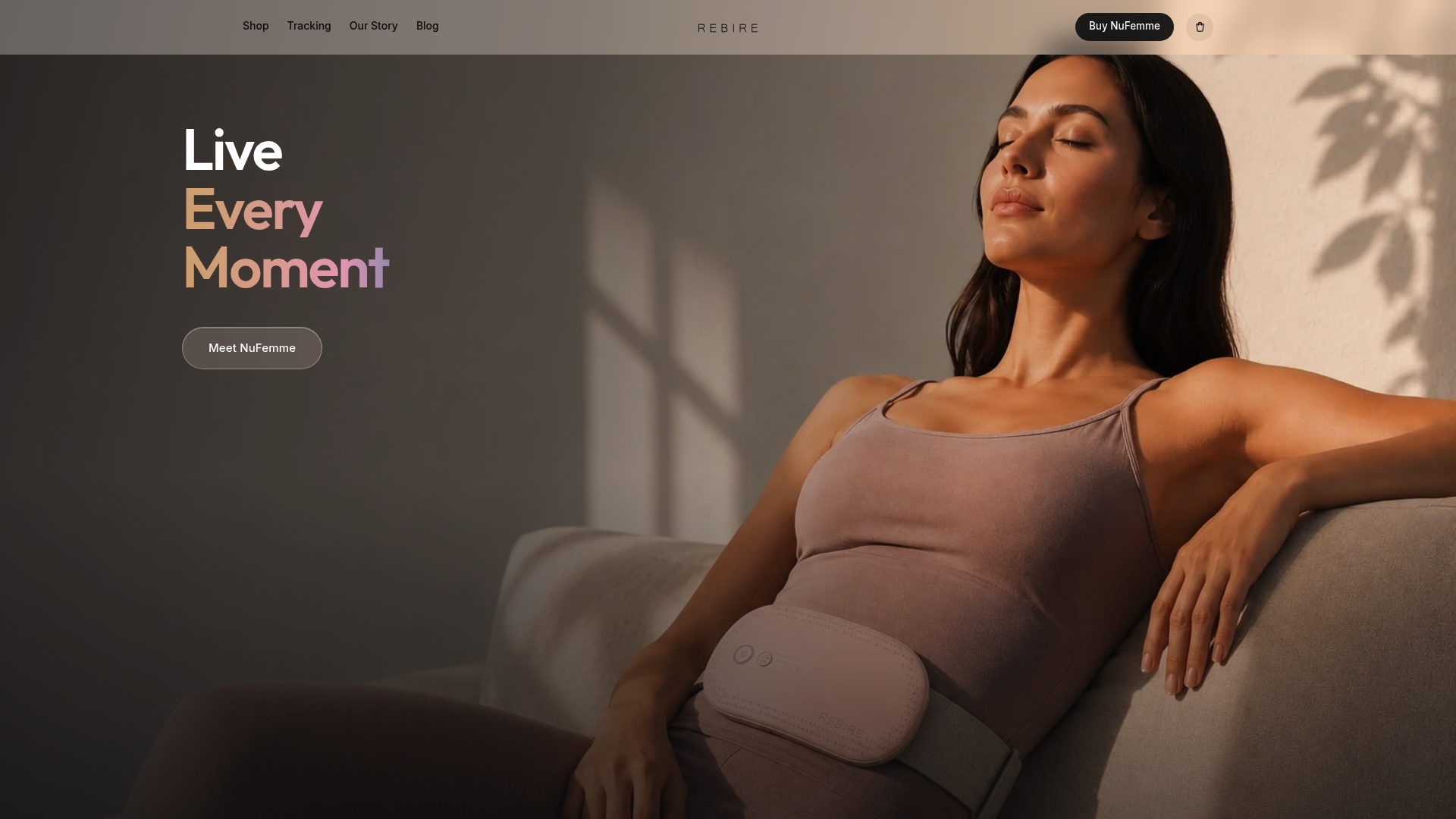
The device offers multiple heat levels and massage speeds, so you can dial in what feels right on an amber day versus a red one. According to Rebire, a majority of users reported reduced pain within 15 minutes of use. It comes finished in attractive colors, which is worth knowing if you’re shopping for a partner who’s never quite known what to get her during a hard month, rather than grabbing something last minute at the drugstore. If you want to pair movement with a tool that keeps working after you’ve finished stretching, the NuFemme product page has full details and current pricing at $338.
Sources
- Therapeutic exercise interventions and pain reduction in primary dysmenorrhea (systematic review) — PubMed
- Effect of aerobic exercise on primary dysmenorrhea: dose-response meta-analysis — PubMed
- Lumbopelvic exercise-based interventions reduce pain in primary dysmenorrhea — PubMed
- Dysmenorrhea (Painful Periods) — ACOG FAQ
FAQ
Which Exercise Is Best for Period Cramps?
Low-intensity aerobic movement, like a brisk 20 to 45-minute walk or swim, shows some of the strongest pain reductions in dose-response research. Relaxation-based practices like yoga work fastest for immediate relief, while strength and pelvic-focused exercise build longer-term benefits across cycles.
Should I Stop Working Out if I Get a Cramp?
Not necessarily. Mild to moderate cramps usually respond well to continuing at a lower intensity, since movement boosts blood flow and endorphins that ease the pain. Stop and rest if you feel dizzy, nauseated, or the pain sharply worsens.
What’s the Fastest Way to Relieve Cramps?
Heat applied to your lower abdomen combined with slow diaphragmatic breathing tends to bring relief within minutes, according to ACOG guidance. A wearable like Rebire’s NuFemme, which layers heat with massage and red-light therapy, is designed to speed up that same process while you keep moving through your day.
Why Am I Getting Cramps While Exercising?
Prostaglandins released by your uterus trigger the muscle contractions behind cramping, and exercise doesn’t cause this so much as it can happen alongside your workout during your period. If cramps intensify sharply during exercise or come with unusual symptoms like fainting, that’s worth mentioning to a doctor rather than pushing through.