

Heat eases period cramps by relaxing uterine muscle and boosting local blood flow, and there’s no solid evidence it increases your total menstrual blood loss. A heavier-feeling flow after a heating pad or hot bath usually reflects sweating, dehydration, or a saturated pad, not more actual bleeding. For most people, heat is safe to use liberally, as long as you follow sensible temperature and duration guidelines.
TL;DR:
- Heat therapy relaxes uterine muscles and improves blood flow, which can reduce cramps without increasing actual menstrual blood loss.
- Hot weather may lead to perceptions of heavier periods due to dehydration or product saturation, but evidence does not support increased flow volume.
- Clinical studies show heat reduces menstrual pain effectively, with some trials indicating relief comparable to ibuprofen, especially when used continuously for up to 12 hours.
- Proper application, including low temperatures and correct placement, enhances relief and minimizes risks such as burns or skin irritation.
- Heat does not influence hormone levels or cycle length, so consistent external warmth during periods has no effect on your menstrual cycle timing.
Table of Contents
- How Heat Affects the Uterus and Period Pain
- Does Heat Make Your Period Heavier? What the Evidence Shows
- What Clinical Studies Say About Heat for Period Pain
- How to Use Heat Safely for Cramps
- When Heavy Bleeding Needs Medical Attention
- Does Heat Therapy Affect Your Hormones or Cycle Length?
- Lavinia’s Take: Why Discreet Heat Changes How People Actually Use It
- NuFemme: Heat, Massage, and Red Light in One Wearable
- Sources
- FAQ
How Heat Affects the Uterus and Period Pain
Cramps happen because your uterus contracts to shed its lining, driven largely by prostaglandins, the hormone-like compounds that trigger those contractions. The more prostaglandins your body releases, the stronger the cramp. Heat interrupts that cycle in a few specific ways, and understanding the mechanism helps explain why a heating pad works faster for some people than a pill.
Applying warmth to your lower abdomen relaxes the smooth muscle of the uterus directly, which reduces the intensity of spasms. That’s the same reason a warm compress loosens a stiff shoulder or a tight lower back. Less spasm means less pain, plain and simple.
Heat also triggers local vasodilation, meaning it widens blood vessels near the skin’s surface and in the tissue beneath it. That increased blood flow may help clear out some of the prostaglandins pooling in the area, according to the systematic review published in Scientific Reports, which found heat therapy reduced menstrual pain versus placebo. Better perfusion, fewer irritants sitting in the muscle, less cramping.
A few things worth separating out:
- Local heat (a wrap on your belly) targets the uterus directly and is what actually relieves cramps.
- Environmental heat (a hot summer day) affects your whole body’s circulation and hydration, not just your pelvis.
- Dehydration from either source can make you feel more drained or bloated, which your brain may interpret as “my period feels worse,” even when bleeding volume hasn’t changed.
- Hormonal temperature shifts are a separate story entirely. Progesterone raises your basal body temperature by roughly 0.3 to 0.7 degrees Celsius during the luteal phase, which is why you might feel warmer right before your period starts. That’s your body’s internal thermostat, not an external heat effect, and it’s easy to confuse the two.
Pro Tip: If you notice your cramps ease within 20 to 30 minutes of applying heat but you’re still uncomfortable, the issue may be positioning. Move the pad or wearable slightly lower, toward the pelvic bone, rather than centering it on your navel. That’s usually where the uterus is doing most of the contracting.
Does Heat Make Your Period Heavier? What the Evidence Shows
No well-designed study has shown that external heat, from a heating pad, a hot bath, or a warm climate, increases how much blood you actually lose during your period. What exists instead is a pattern of people reporting heavier-feeling periods in hot weather, and a set of plausible but unproven explanations for why.
Clinical commentary has floated a few mechanisms. One theory: summer heat causes systemic vasodilation and sweating, which can concentrate prostaglandins in the body and intensify cramping sensations, according to one OB-GYN practice’s patient-education piece. Another angle worth considering: heat stress plausibly increases cardiovascular strain and dehydration, which can make a normal period feel more draining even without any change in blood loss.
None of that is the same as proof that flow volume increases. It’s a difference between perception and measurement, and it matters for how you respond.
A few practical factors that skew perception in hot weather:
- Sweating more means you might feel generally weaker or lightheaded, which gets misattributed to blood loss.
- Lighter summer clothing can make small leaks more visible or noticeable than they’d be under thicker fabric.
- Menstrual products can saturate faster if you’re also dealing with sweat and humidity, giving a false sense of higher volume.
- Sitting near a heating pad for hours can cause localized flushing that makes the area feel “fuller,” which isn’t the same as increased flow.
The practical rule: judge your flow by established medical thresholds, not by how the season feels. If you’re soaking through protection faster than usual regardless of temperature, that’s worth tracking. If it only feels heavier on hot days but your pad count and product changes stay the same, that’s very likely perception, not volume. Period underwear designed for heavier flow can also help you track saturation more accurately than guessing from discomfort alone.
What Clinical Studies Say About Heat for Period Pain
The research on topical heat for menstrual cramps, known clinically as dysmenorrhea, is small but consistent in direction. A 2018 systematic review and meta-analysis pooled six randomized controlled trials through mid-2018 and found heat therapy reduced pain compared with placebo, with effects sometimes rivaling those of common analgesics. The catch: the trial pool is small, and study designs vary enough that researchers stop short of calling heat a proven replacement for medication.
Individual trials add texture to that picture. A randomized study on continuous low-level topical heat found it produced pain relief comparable to ibuprofen, and in some comparisons, relief arrived faster, with a median time to noticeable relief of 1.5 hours versus 2.79 hours for ibuprofen alone in one analysis. A separate RCT testing an iron-chip heat patch against ibuprofen in 147 students found comparable analgesic effects overall, though not every timepoint reached statistical significance.
| Study type | Comparison | Reported outcome |
|---|---|---|
| Systematic review | Heat vs. placebo | Heat reduced pain; occasionally comparable to analgesics |
| RCT, continuous low-level heat | Heat vs. ibuprofen | Comparable relief; faster onset in some measures |
| RCT, iron-chip heat patch | Heat patch vs. ibuprofen | Similar pain reduction; mixed statistical significance |
The trials consistently point one direction: heat therapy meaningfully reduces menstrual pain, even where sample sizes stay modest. That’s a real, evidence-backed effect, not a wellness myth.
The limitations matter, too. Devices differ (patches, wraps, electric pads), sample sizes rarely exceed a couple of hundred participants, and most follow-up periods only track one or two cycles. Heat is genuinely evidence-supported for pain relief. It’s not automatically a substitute for medication when your provider has recommended one for a diagnosed condition like endometriosis or adenomyosis.
How to Use Heat Safely for Cramps
Getting the technique right changes how much relief you actually feel. Here’s how to do it without overthinking it.
- Choose continuous low-level heat over short blasts. Wraps, heat patches, or a wearable heating device worn for up to 8 to 12 hours tend to outperform brief, high-intensity sessions for sustained comfort, based on the modality comparisons in the dysmenorrhea research.
- Keep surface temperature in the safe range. Topical relief generally works well between 40 and 45 degrees Celsius (about 104 to 113 degrees Fahrenheit). Higher settings don’t speed relief. They just raise your burn risk, which is exactly why most wearable devices cap out around this range.
- Place it low, not centered. Your lower abdomen and lower back are where the uterus and surrounding muscles do the work. A pad centered too high on the belly wastes heat on tissue that isn’t cramping.
- Use a thin barrier between skin and heat source. A T-shirt or the device’s built-in liner prevents burns, especially during long sessions when you might lose track of how hot the pad has actually gotten against your skin.
- Check your skin periodically. Redness that fades quickly is normal. Persistent redness, blistering, or a mottled pattern means stop and let the skin cool.
A few cautions apply across the board. Skip heat therapy if you have reduced sensation in the area, open skin, or a fever, since you won’t reliably notice if the temperature climbs too high. Pregnant individuals should check with their provider before using heat on the abdomen, and anyone experiencing unusually heavy bleeding should treat that as a separate issue from cramp management, not something to power through with a hotter pad.
Pro Tip: *Pairing heat with gentle movement, a short walk, or some light stretching often outperforms heat alone.

When Heavy Bleeding Needs Medical Attention
Heat helps with cramps. It does not fix heavy bleeding, and conflating the two delays care that some people genuinely need. Watch for these signals:
- Soaking through a pad or tampon in under two hours, repeatedly
- Passing clots larger than a quarter
- Bleeding that lasts longer than seven days
- Dizziness, fainting, or symptoms consistent with anemia (fatigue, shortness of breath, pale skin)
If you feel faint or unstable, treat that as urgent and seek care right away rather than waiting it out with a heating pad. For persistent but non-emergency heavy bleeding, contact your primary care provider or OB-GYN. Clinical guidance from ACOG on evaluating heavy menstrual bleeding recommends checking for anemia and bleeding disorders as a starting point, with options like tranexamic acid, hormonal therapy, or referral for structural causes (fibroids, polyps) depending on what turns up.
Does Heat Therapy Affect Your Hormones or Cycle Length?
Short answer: not in any way the evidence supports. Applying a heating pad to your abdomen for a few hours during your period doesn’t reach your ovaries, uterus lining, or hypothalamus with enough thermal effect to shift hormone production or push your cycle earlier or later.
The confusion usually traces back to basal body temperature tracking. Many people notice their body runs warmer in the days after ovulation, a normal effect of rising progesterone, and then wonder whether using a heating pad during their period might interfere with that pattern or somehow throw off timing the following month. It doesn’t. BBT shifts are internally generated by hormonal changes; they’re a completely separate phenomenon from applying external warmth to your skin.
Cycle length is governed by the hypothalamic pituitary ovarian axis, a hormonal feedback loop that responds to things like stress, body weight, and underlying health conditions, not surface temperature applied for a few hours at a time. If your cycle length changes noticeably from month to month, that’s worth discussing with a provider, but heat therapy for cramps isn’t a plausible cause. Worth remembering if you’re tracking your cycle closely: consistent heat use for pain relief is one of the few interventions here you genuinely don’t have to second-guess.

Lavinia’s Take: Why Discreet Heat Changes How People Actually Use It
The research on heat and dysmenorrhea is solid, but it assumes you’ll actually use the heat consistently, and that’s where most bulky pads fail people. A wired heating pad tied to an outlet means you’re stuck on the couch right when cramps hit during a meeting or a commute.
Cordless, low-profile heat changes that equation entirely. When relief doesn’t require rearranging your day, you use it earlier and more consistently, which is exactly when heat therapy works best. If you’re comparing device types and settings, Rebire’s breakdown of wearable heating options is a useful starting point before you buy anything.
— Lavinia
NuFemme: Heat, Massage, and Red Light in One Wearable
If everything above has you convinced that consistent, well-placed heat is worth prioritizing, the real obstacle is usually logistics, not belief. NuFemme solves the logistics. It’s a cordless wearable belt that combines heat therapy, vibration massage, and red-light therapy in one device, so you’re not choosing between relief and getting through your day.
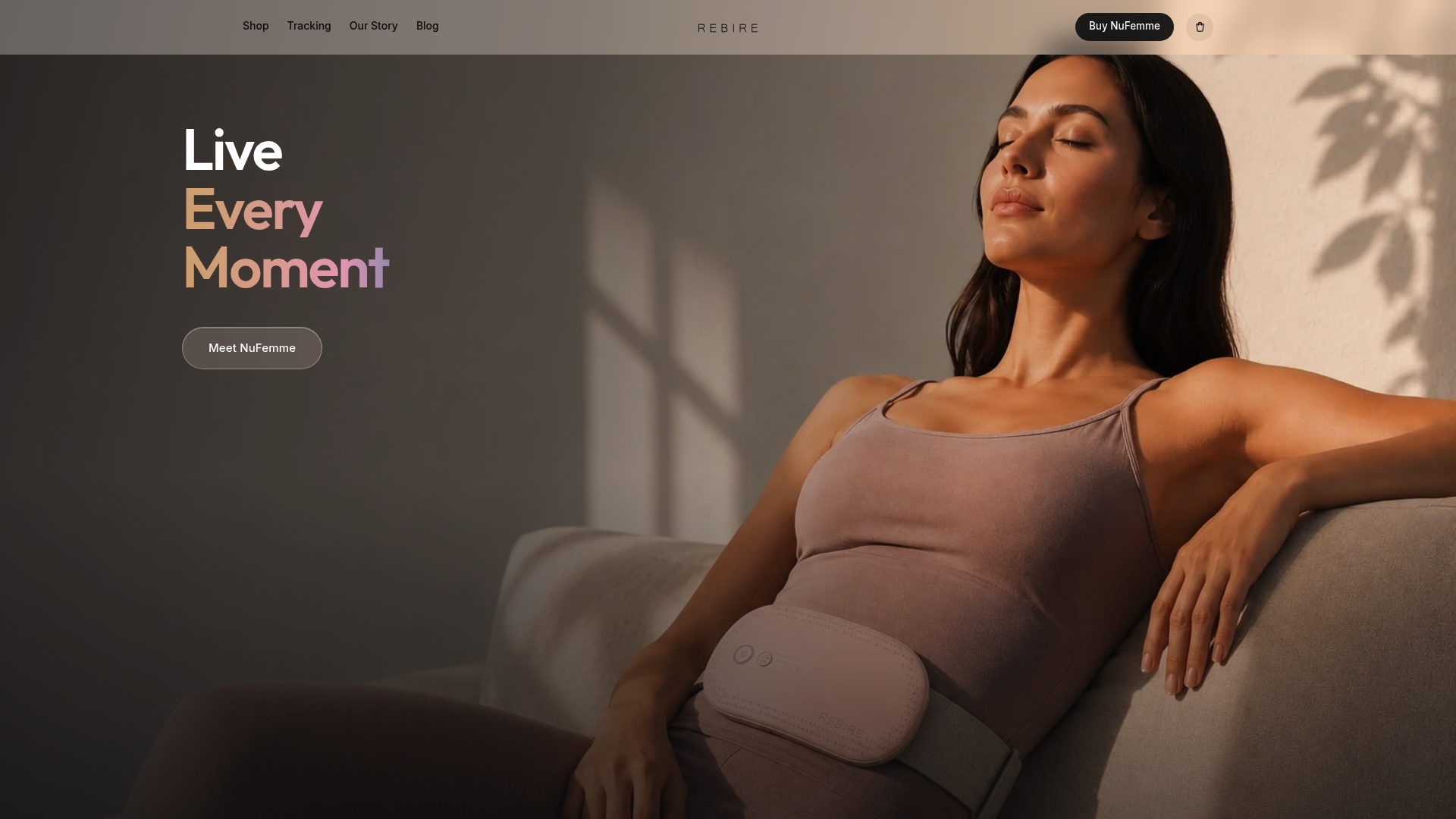
Three heat levels and three massage speeds mean you can dial in exactly what your body needs, whether you’re at a desk, running errands, or just need five quiet minutes to reset. According to Rebire’s own user data, 93% of users reported reduced pain within 15 minutes of use, faster relief than the drive-and-plug-in routine a traditional heating pad demands.
NuFemme also works as a genuinely thoughtful gift, available in appealing finishes, for a partner who’s paying attention to what she deals with every month instead of grabbing something at the last minute. If that’s the goal, Rebire’s gift-focused option is worth a look too. Ready to try it yourself? Head to the NuFemme product page to see current pricing and pick your color.
This article is general information, not a substitute for advice from a qualified doctor. Consult a qualified healthcare professional about your own circumstances before acting on anything here.
Sources
- Heat therapy for primary dysmenorrhea: A systematic review and meta-analysis of its effects on pain relief and quality of life | Scientific Reports
- Continuous Low-Level Topical Heat in the Treatment of Dysmenorrhea
- Comparing the analgesic effect of heat patch containing iron chip and ibuprofen for primary dysmenorrhea | BMC Women’s Health
- ACOG committee opinion: Screening and management of bleeding disorders in adolescents with heavy menstrual bleeding
FAQ
Does Heat Make Your Menstrual Flow Heavier?
No strong evidence shows external heat increases actual blood loss. A period may feel heavier in hot weather due to sweating, dehydration, or faster pad saturation, but that’s a perception effect rather than a true increase in volume.
How Do I Stop Sudden Gushes When I Stand Up?
Gushing on standing usually happens because blood pools in the vaginal canal while you’re seated or lying down, then releases when you move. It’s common and not usually a sign of heavier total flow, though period underwear built for heavier flow can add a helpful buffer during active days.
What Is the 7-2-1 Rule for Periods?
Definitions of this rule vary by source, and it isn’t a standardized clinical guideline. Rather than rely on an informal rule, track your own pattern (days of flow, pad or tampon changes, and pain levels) and bring that record to a medical evaluation if something feels off.
At What Age Are Periods Typically Heaviest?
Menstrual flow tends to run heaviest in the years right after your first period and again in the years leading up to perimenopause, when cycles become less predictable. If flow suddenly changes at any age, that shift matters more than your age itself.
Can NuFemme Help With Both Cramps and Discreet Wear?
Yes. NuFemme is built specifically for cordless, under-clothing wear, with three heat levels and three massage speeds so you can adjust relief without stepping away from your day. Details and pricing are available on the NuFemme product page.