

For most people, local heat relieves menstrual cramps about as well as ibuprofen, with far fewer side effects, so it’s worth trying first. If cramps are moderate to severe, adding scheduled ibuprofen to heat often works better than either alone. Watch for red flags like fever, heavy bleeding, or pain that keeps worsening. Those need a clinician, not another heating pad.
TL;DR:
- Heat therapy can provide relief from menstrual cramps as effectively as ibuprofen, often with fewer side effects, especially within the first 24 hours.
- Combining heat and ibuprofen targets both symptom management and the root chemical cause, improving pain relief for moderate to severe cramps.
- Proper application of heat involves using comfortable, steady warmth for 15 to 30 minutes, preferably with cordless devices for continuous relief during daily activities.
- Ibuprofen dosing of 200 to 400 mg every 4 to 6 hours is typical, with a maximum of 1,200 mg daily, and proactive use before pain peaks enhances effectiveness.
- People with severe, worsening, or abnormally heavy cramps should seek medical evaluation to rule out underlying conditions like endometriosis or fibroids.
Table of Contents
- Heat vs Ibuprofen Cramps: How Each One Actually Works
- What the Research Says About Heat vs Ibuprofen for Cramps
- How to Apply Heat and Take Ibuprofen the Right Way
- Choosing Heat, Ibuprofen, or Both Based on Your Pain
- Safety and Side Effects: Heat vs Ibuprofen
- When Period Cramps Need a Doctor, Not Just Heat and Ibuprofen
- Why I Tell People to Start With Heat, Not a Pill
- A Drug-Free Option Worth Adding to Your Routine
- Sources
Heat vs Ibuprofen Cramps: How Each One Actually Works
To understand why heat and ibuprofen both dull period pain, you need to know what’s happening inside your uterus in the first place. Cramps come from a hormone-like compound called prostaglandins. Your uterine lining releases them right before your period, and they trigger the uterus to contract so it can shed that lining. High prostaglandin levels mean stronger contractions, and stronger contractions temporarily choke off blood flow to the uterine muscle. That oxygen deprivation, called ischemia, is what turns a contraction into a cramp you actually feel.
Heat works on the mechanical side of that equation. Warmth dilates blood vessels near the skin and muscle, which restores blood flow to the area and eases the muscle spasm directly. It also seems to interrupt local prostaglandin activity at the site of pain, which is part of why a heating pad can bring relief within minutes rather than hours.
Ibuprofen works upstream, at the source. As an NSAID, it blocks an enzyme called cyclooxygenase (COX), which your body needs to manufacture prostaglandins in the first place. Less prostaglandin production means gentler contractions and less ischemia, but that process takes time. Oral ibuprofen typically needs 30 to 60 minutes to start working and longer to reach full effect.
That difference in mechanism is exactly why the two pair well:
- Heat acts fast and locally, easing muscle tension and blood flow within minutes.
- Ibuprofen acts slower but addresses the chemical trigger causing the contractions in the first place.
- Using both means you’re managing the symptom and the source at the same time, rather than relying on one pathway to do all the work.
What the Research Says About Heat vs Ibuprofen for Cramps
A systematic review and meta-analysis pooling data from 57 randomized controlled trials found that heat therapy relieves primary dysmenorrhea pain about as well as ibuprofen, and in some comparisons slightly better, within the first 24 hours.
The numbers: Heat reduced pain intensity by a weighted mean difference of 1.50 cm on a standard pain scale compared to NSAIDs, and adverse events were far less common with heat (relative risk 0.30, meaning roughly 70% fewer side-effect reports than with NSAID use).
That’s a meaningful gap in a category where “comparable efficacy” usually gets read as a tie. Heat didn’t just match ibuprofen. In several of the pooled trials, it edged it out on early pain relief while producing a fraction of the adverse events.
A few things temper how confidently you should read that number:
- The certainty of evidence across these reviews is rated low to moderate, largely because trials used different heat modalities (patches, pads, wraps) and different pain scales.
- Sample sizes in individual trials varied widely, and heat delivery wasn’t standardized the way a drug dose is.
- A separate review published in Frontiers reinforces the same direction of effect, describing heat as an accessible, nonpharmacological option worth positioning as first-line care rather than a fallback.
In practical terms, “comparable efficacy” doesn’t mean heat and ibuprofen feel identical minute to minute. It means that if you tracked pain scores across a large enough group of people, the two approaches land in a similar range by the end of the day, with heat often winning on how quickly relief shows up and how few people report stomach upset or other side effects. It doesn’t mean heat eliminates severe pain from underlying conditions like endometriosis, and it doesn’t mean every person will respond the same way.
How to Apply Heat and Take Ibuprofen the Right Way
Getting relief comes down to using each tool correctly, not just having access to it. Here’s how to do both.
Heat therapy application: For readers interested in enhancing heat treatment, topical options like magnesium spray can ease cramps through massage and plant care benefits (Evidence First: Magnesium Spray eases cramps by massage, plant care).
- Choose your heat source. A microwavable heating pad, a hot water bottle, a self-heating adhesive patch, or a cordless wearable all work through the same mechanism.
- Keep the temperature comfortably warm, not hot. You want steady warmth against the lower abdomen, not a burn risk.
- Apply for 15 to 30 minutes at a time for pads and bottles. Continuous low-level heat wraps and wearables, which run cooler and steadier, can typically be worn for hours.
- Check your skin periodically for redness, and never fall asleep with an electric heating pad still running.
Wearable heat devices solve a problem that traditional pads don’t: you can’t exactly walk into a meeting with a hot water bottle taped to your stomach. A cordless heating pad worn under clothing lets you keep low, steady warmth going through a full workday, a commute, or a workout, which matters because consistent heat tends to outperform sporadic heat.
Ibuprofen dosing:
Common over-the-counter dosing for cramps runs 200 to 400 mg every 4 to 6 hours, and some clinicians support doses up to 600 mg per dose for period-specific pain. The maximum OTC daily limit is 1,200 mg without a doctor’s guidance. Timing matters more than most people realize: starting ibuprofen at the very onset of bleeding, or the day before if your cycle is predictable, works better than waiting until pain peaks, according to Mayo Clinic guidance.
Pro Tip: Set a recurring phone reminder two days before your period is due. Starting ibuprofen proactively, before prostaglandins fully ramp up, works better than chasing pain after it’s already peaked.
Choosing Heat, Ibuprofen, or Both Based on Your Pain
Not every cramp deserves the same response, and matching your approach to the severity saves you from over-medicating or under-treating.
- Mild cramps: Start with heat alone. A wearable or a heating pad for 20 to 30 minutes often takes the edge off completely, with zero systemic exposure.
- Moderate cramps: Combine heat with a scheduled, lower-dose NSAID, such as 200 to 400 mg of ibuprofen every 6 hours, starting at the first sign of cramping rather than after pain builds.
- Severe cramps: Use heat continuously alongside a higher, clinician-discussed ibuprofen dose on a fixed schedule. If pain isn’t controlled within a cycle or two, that’s a signal to talk to a doctor rather than just increasing the dose yourself.
Scheduled dosing beats reactive dosing because prostaglandins accumulate ahead of and during early bleeding. Waiting until pain is severe means you’re trying to catch up to a chemical process that’s already well underway, which is part of why ibuprofen taken “too late” often feels like it barely works.
A few groups should lean more heavily on heat and less on NSAIDs. If you’re pregnant, breastfeeding, or manage a condition that involves frequent NSAID use already (like a chronic pain condition treated with regular anti-inflammatories), talk to a clinician before adding more ibuprofen into the mix. Heat carries essentially no systemic risk, which makes it the safer default when medication use needs to stay minimal.
Safety and Side Effects: Heat vs Ibuprofen
Both approaches are safe for the vast majority of people when used correctly, but each comes with its own list of things to watch.
Heat safety checklist:
- Check your skin every 15 to 20 minutes for redness or irritation, especially with electric pads.
- Never apply heat directly to broken skin, open wounds, or areas with reduced sensation.
- Avoid falling asleep with high-heat electric pads running unattended.
- Choose devices with adjustable, moderate settings. Practitioners generally recommend comfortable warmth over maximum heat, since lower, steady temperatures tend to produce better results with less burn risk than brief blasts of high heat.
Ibuprofen precautions:
- Regular or high-dose use carries a real risk of gastrointestinal bleeding and kidney strain, particularly with long-term or frequent use.
- Ibuprofen interacts with blood thinners and certain other medications, so check with a pharmacist if you take anything else regularly.
- If you find yourself needing the maximum dose every single cycle, or using it outside of your period for other pain, that’s worth flagging to a doctor.
The comparative safety picture is stark: pooled trial data put heat’s adverse-event rate at roughly 70% lower than ibuprofen’s. That makes heat the more sensible option for frequent, preventive use, while ibuprofen stays a strong tool for breakthrough or more severe pain.
When Period Cramps Need a Doctor, Not Just Heat and Ibuprofen
Most cramps respond to the combination above, but a subset of cases point to something beyond typical dysmenorrhea. Pay attention if you notice:
- Pain that’s getting worse cycle over cycle instead of staying stable.
- Cramps severe enough to interfere with work, school, or daily activities despite heat and ibuprofen.
- Heavy bleeding, fever, new pelvic pain outside your period, or unusual discharge.
If any of these apply, a clinician evaluation typically starts with a history and pelvic exam, sometimes followed by an ultrasound to rule out fibroids or check for signs of endometriosis. As a general timeline, if two or three cycles of consistent heat-and-ibuprofen management aren’t cutting it, that’s a reasonable point to schedule an appointment rather than waiting it out further.
Why I Tell People to Start With Heat, Not a Pill
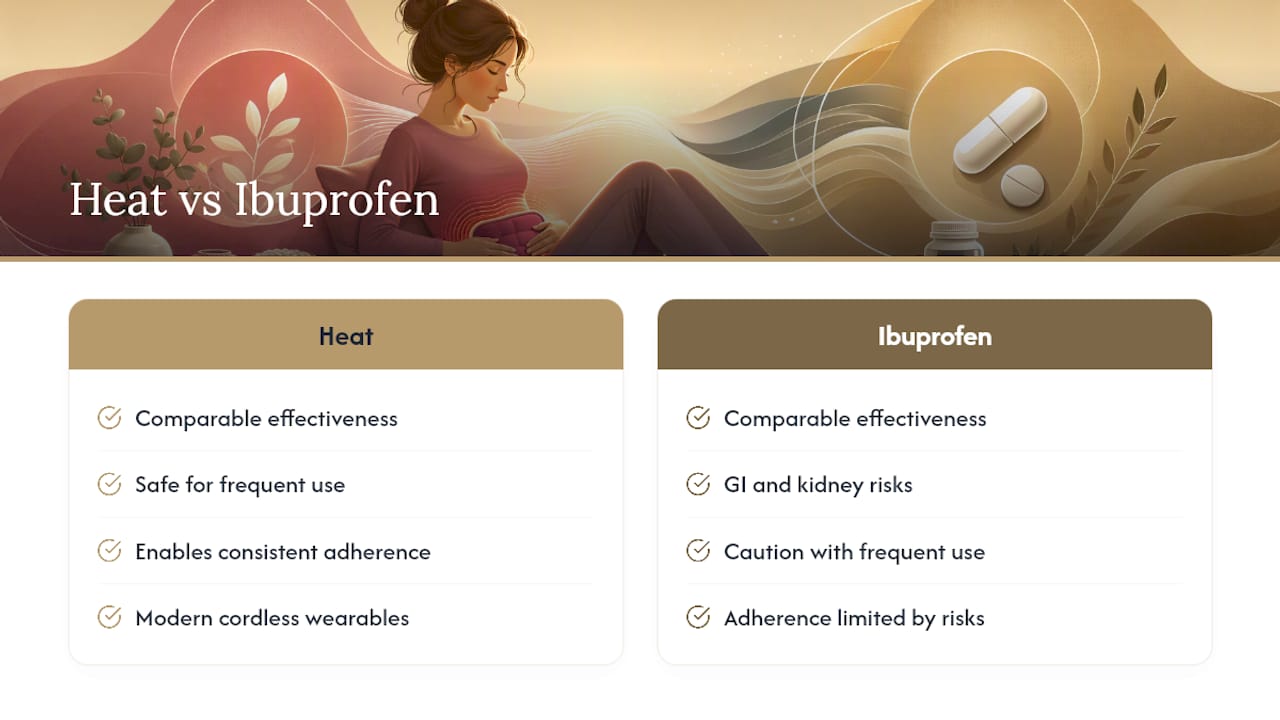
If there’s one thing I’d want every reader to walk away with, it’s this: pain relief that fits into your actual day gets used, and pain relief that requires lying down with a hot water bottle for an hour often doesn’t. That’s the real argument for heat as a first-line strategy. It’s not that it’s dramatically more powerful than ibuprofen. The evidence says they’re close. It’s that heat is safe to use constantly, proactively, and without the GI or kidney trade-offs that come with frequent NSAID use.
Modern cordless heat wearables close a real gap here. They make consistent, adherent use possible in a way a hot water bottle taped to your waistband under a sweater never quite managed.
— Lavinia
A Drug-Free Option Worth Adding to Your Routine
If heat is your first move and ibuprofen is your backup, NuFemme gives you a way to keep heat working for you without staying home to do it. It’s a cordless wearable that combines heat therapy, vibration massage, and red-light therapy in one belt, worn discreetly under clothing so you can keep it on through a workday, a commute, or errands instead of being stuck near an outlet.
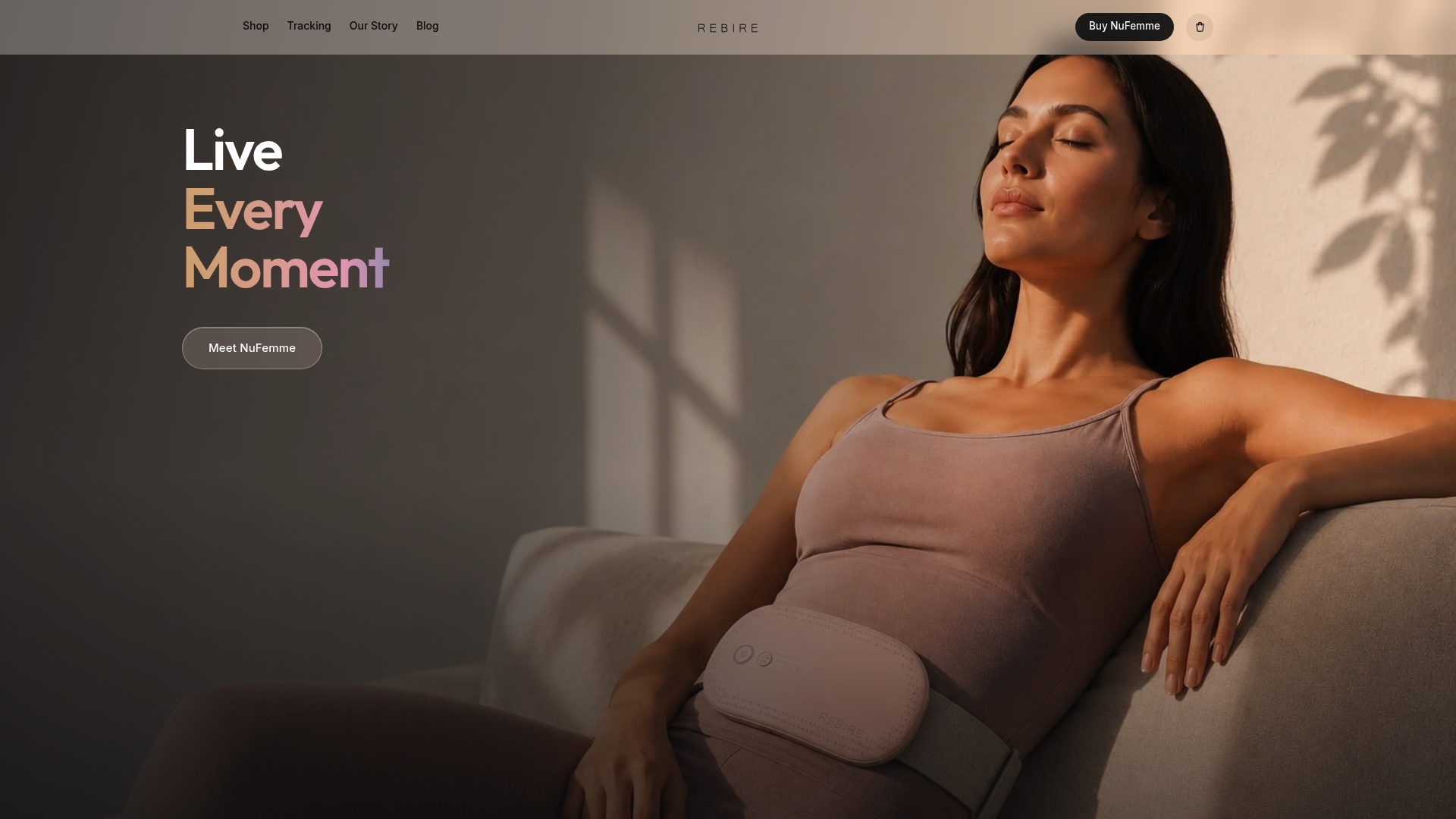
You get three heat levels and three massage speeds, so you can dial in exactly the intensity that matches a mild ache versus a rough day. NuFemme also comes finished in elegant color options, making it a thoughtful gift for a partner who wants to show care beyond last-minute choices. If you want discreet relief you can wear through a full workday, check out the NuFemme collection and see which finish and setting fits your routine.
This article is general information, not a substitute for advice from a qualified doctor. Consult a qualified healthcare professional about your own circumstances before acting on anything here.
Sources
- Heat therapy for primary dysmenorrhea: A systematic review and meta-analysis
- Heat therapy for primary dysmenorrhea: systematic review (Frontiers)
- What Actually Helps Period Cramps? (Cleveland Clinic)
- Menstrual cramps: Treatment (Mayo Clinic)
- Ibuprofen - MedlinePlus Drug Information