

Yes. For many people who menstruate, drinking more water measurably reduces cramp severity, and pairing that habit with a portable heat, vibration, or red-light wearable can bring relief even faster. Try these two things right now:
- Sip, don’t chug. Start working toward a moderate daily water intake spaced across meals and snacks.
- Add local heat. A warm compress or wearable heat source on your lower abdomen can ease cramping within minutes.
One semi-experimental study found that increasing water intake to this range significantly lowered pain scores and cut painkiller use across two menstrual cycles. Keep reading for the mechanism, a full hydration plan, and when cramps mean it’s time to call a clinician.
Key Takeaways
Hydration reduces menstrual cramp severity for many people, and pairing a steady water habit with a combined heat, vibration, or red-light wearable delivers faster, more complete relief than either approach alone.
| Point | Details |
|---|---|
| Hit your daily water target | Aim for 1.6 to 2.0 liters a day, especially in the days leading up to and during your period. |
| Layer relief methods | Combine hydration with heat first, then add vibration or red-light therapy for sustained comfort. |
| Watch the 48 to 72 hour window | Try nonpharmacologic measures first, but escalate sooner if red-flag symptoms appear. |
| Know when to see a clinician | Sudden pain changes, heavy bleeding, fever, or new irregular cycles warrant medical evaluation. |
| Consider a combined-mode wearable | NuFemme pairs heat, massage, and red-light therapy in one cordless belt, with many users reporting rapid pain relief. |
Table of Contents
- How Hydration Affects Period Cramps and Menstrual Pain
- What Drug-Free, Portable Relief Options Actually Work?
- How Much Water Should You Drink to Ease Cramps?
- When Do Period Cramps Signal Something More Serious?
- How Do You Choose a Portable Wearable for Cramp Relief?
- A Combined-Mode Option Worth Considering: NuFemme
- Frequently Asked Questions
- Sources
How Hydration Affects Period Cramps and Menstrual Pain
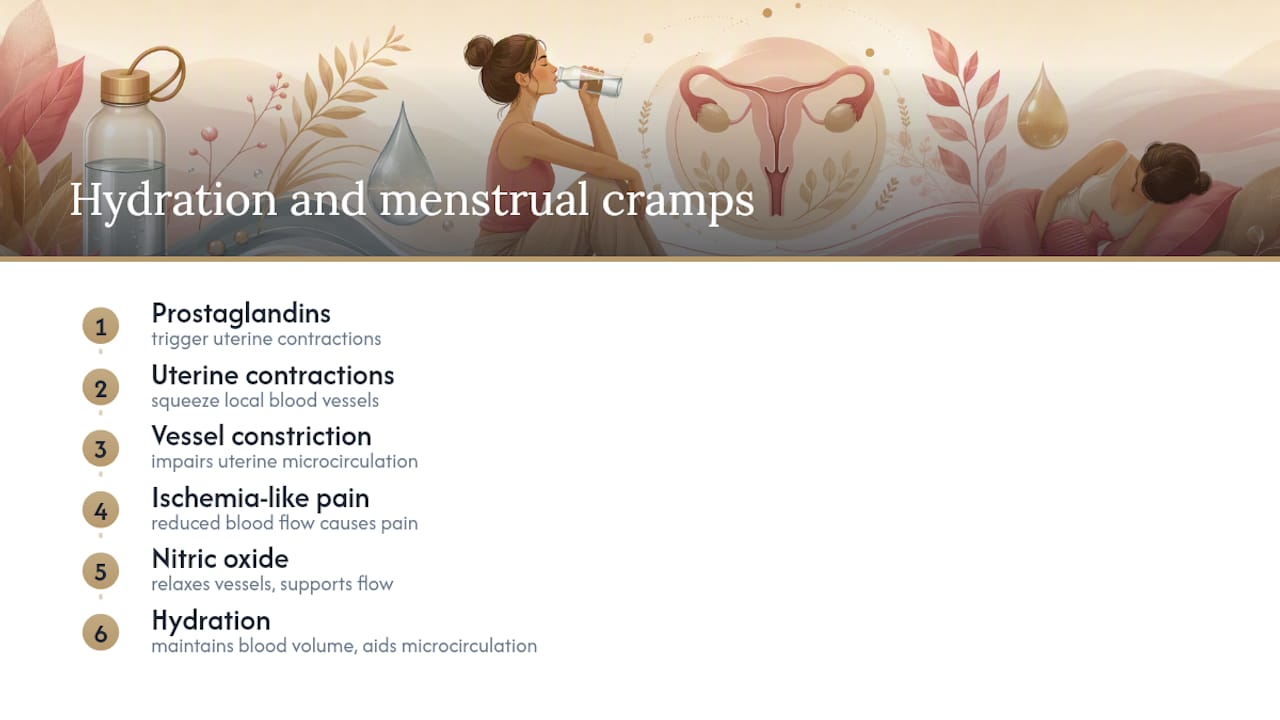
Dehydration doesn’t cause menstrual cramps, but it can make an already painful process worse. Here’s the physiology: your uterus contracts during your period because of prostaglandins, hormone-like compounds that trigger muscle contractions to shed the uterine lining. When prostaglandin levels run high, those contractions squeeze blood vessels tightly enough to briefly cut off local blood flow, a condition similar to the ischemia that causes chest pain during a heart attack, just on a much smaller and temporary scale.
Fluid status plays into this cycle directly. Recent research using rat models found that primary dysmenorrhea involves disrupted prostaglandin and nitric oxide signaling that impairs microcirculation in the uterus. Nitric oxide helps blood vessels relax and stay open. Good hydration supports healthy blood volume and circulation, which may help counteract this vascular squeeze.
The clinical evidence backs this up. A semi-experimental trial involving 140 women with primary dysmenorrhea asked one group to raise their daily water intake to roughly 1.6 to 2.0 liters. That group showed statistically significant reductions in pain intensity and needed fewer painkillers across two cycles compared to the control group.
That’s a meaningful signal, though not a guarantee. It’s one relatively small study, not a large multi-center trial, and researchers themselves called for more replication.
Hydration works best as one piece of a larger toolkit. Clinical overviews consistently list local heat and moderate exercise as established first-line, nonpharmacologic options for dysmenorrhea. Hydration adds a third layer, one that’s easy to start today and costs nothing.
What Drug-Free, Portable Relief Options Actually Work?
Hydration sets the stage, but most people need something more immediate for active cramping. Several drug-free methods have real evidence behind them, and they layer well with good fluid intake.
- Heat relaxes superficial pelvic muscles and boosts local blood flow at roughly 40 to 45°C, penetrating about a centimeter into tissue.
- Vibration and massage interrupt pain signals through mechanical stimulation and encourage muscle relaxation.
- Photobiomodulation (PBM), or red-light therapy, uses red and near-infrared wavelengths that mitochondria absorb, potentially boosting cellular energy and nitric oxide activity in a way that supports microvascular function.
- TENS (transcutaneous electrical nerve stimulation) works through neuromodulation, essentially jamming pain signals before they reach the brain.
- Exercise, even light movement like walking, increases circulation and may ease prostaglandin-driven tension.
The most compelling evidence right now points toward combining modes rather than relying on just one. A clinical trial testing combined vibration and heat found faster, larger reductions in abdominal, lower back, and leg pain compared to routine care, with many participants reporting relief within minutes. Separately, a systematic review of heat therapy confirmed pain reductions across multiple randomized trials, though the studies involved were small.
Pro Tip: Layer your relief in order: hydrate throughout the day, apply heat the moment cramps start, then add vibration or red-light therapy for sustained comfort. Documenting how quickly each layer kicks in over two cycles helps you figure out what your body actually responds to.
How Much Water Should You Drink to Ease Cramps?
Consistency beats intensity here. The protocols used in hydration research didn’t ask participants to flood their system right before their period. They built a steady daily habit.
Aim for a consistent daily water intake starting a few days before your period and continuing through the peak pain period, when prostaglandin activity and cramping typically peak. Sip before meals and again the moment you notice cramp onset, rather than saving it all for one sitting.
Here’s a simple way to build the habit:
- Fill a marked 1-liter bottle each morning and finish it by early afternoon.
- Refill it once more before dinner to hit your daily target.
- Set two phone reminders, one mid-morning and one mid-afternoon, if you tend to forget.
- Keep a smaller bottle in your bag or car for the days you’re out and about.
A few practical notes:
- A bottle with time markers removes the guesswork.
- Herbal tea and water-rich foods count toward your total.
- If you have kidney issues, heart conditions, or take medications affecting fluid balance, talk to a clinician before increasing intake significantly.
When Do Period Cramps Signal Something More Serious?
Most menstrual cramps are primary dysmenorrhea, meaning there’s no underlying condition causing them. But certain patterns point toward secondary dysmenorrhea, where something like endometriosis or fibroids needs medical attention.
Watch for:
- Pain that suddenly worsens or changes in character from previous cycles
- Bleeding heavy enough to soak through a pad or tampon hourly
- Pain severe enough to prevent work, school, or daily activities
- Fever alongside pelvic pain
- New irregularity in your cycle length or timing
- Cramps that started after years of relatively painless periods
Give hydration and nonpharmacologic measures 48 to 72 hours to work, since that window covers peak prostaglandin activity. If you notice any red flag above, don’t wait that long. This information doesn’t replace an evaluation from a qualified clinician, especially if pain is new, escalating, or unlike anything you’ve experienced before.
How Do You Choose a Portable Wearable for Cramp Relief?
Whether you’re buying for yourself or shopping for someone who deals with cramps every month, a few criteria separate a genuinely useful wearable from a gimmick.
Run through this checklist:
- Effectiveness and onset time: Does it combine modes (heat, vibration, PBM) shown to work faster than single-mode devices?
- Therapy modes: More options mean more ways to match the day’s pain level.
- Portability and discreetness: Can it be worn under regular clothes without a visible cord or bulk?
- Battery life: Cordless and rechargeable beats anything tethered to an outlet.
- Ease of use: Adjustable straps and intuitive controls matter more than they sound.
- Safety and contraindications: Look for clear guidance on who shouldn’t use heat or PBM devices, such as people with certain skin conditions or pacemakers.
- Price and warranty: A warranty signals the maker stands behind build quality.
If you’re buying as a gift, presentation counts. A thoughtfully packaged period kit with a finish she’d actually choose for herself, rather than a purely functional plastic device, tells her you paid attention.
Pro Tip: A device that only offers heat is fine, but one combining heat with vibration or red-light therapy gives you options as pain intensity shifts throughout the day. A small PBM case series documented dramatic pain score reductions in three women using a dual-wavelength belt, though the sample was tiny and researchers called for larger trials before drawing firm conclusions.
Why Pairing Hydration With a Wearable Beats Either Alone
Most guidance treats hydration and physical relief devices as separate categories, one lifestyle advice, the other a purchase decision. That’s a mistake. The mechanisms actually complement each other: hydration supports circulation over hours and days, while heat and vibration deliver fast, localized relief in the moment cramps hit. Neither replaces solid research on individual results, and expectations should stay realistic. But combining a steady water habit with something like a combined heat and vibration wearable addresses both the slow-building and the acute sides of cramp pain, which is exactly why it also makes a genuinely thoughtful gift.
A Combined-Mode Option Worth Considering: NuFemme
If you’ve been nodding along thinking “heat and vibration sound great, but I don’t want three separate gadgets,” that’s exactly the gap NuFemme fills. It’s a cordless, rechargeable wearable combining heat, massage vibration, and red-light therapy in one belt worn discreetly under clothing, no cord, no waiting around next to an outlet for a heating pad to warm up.
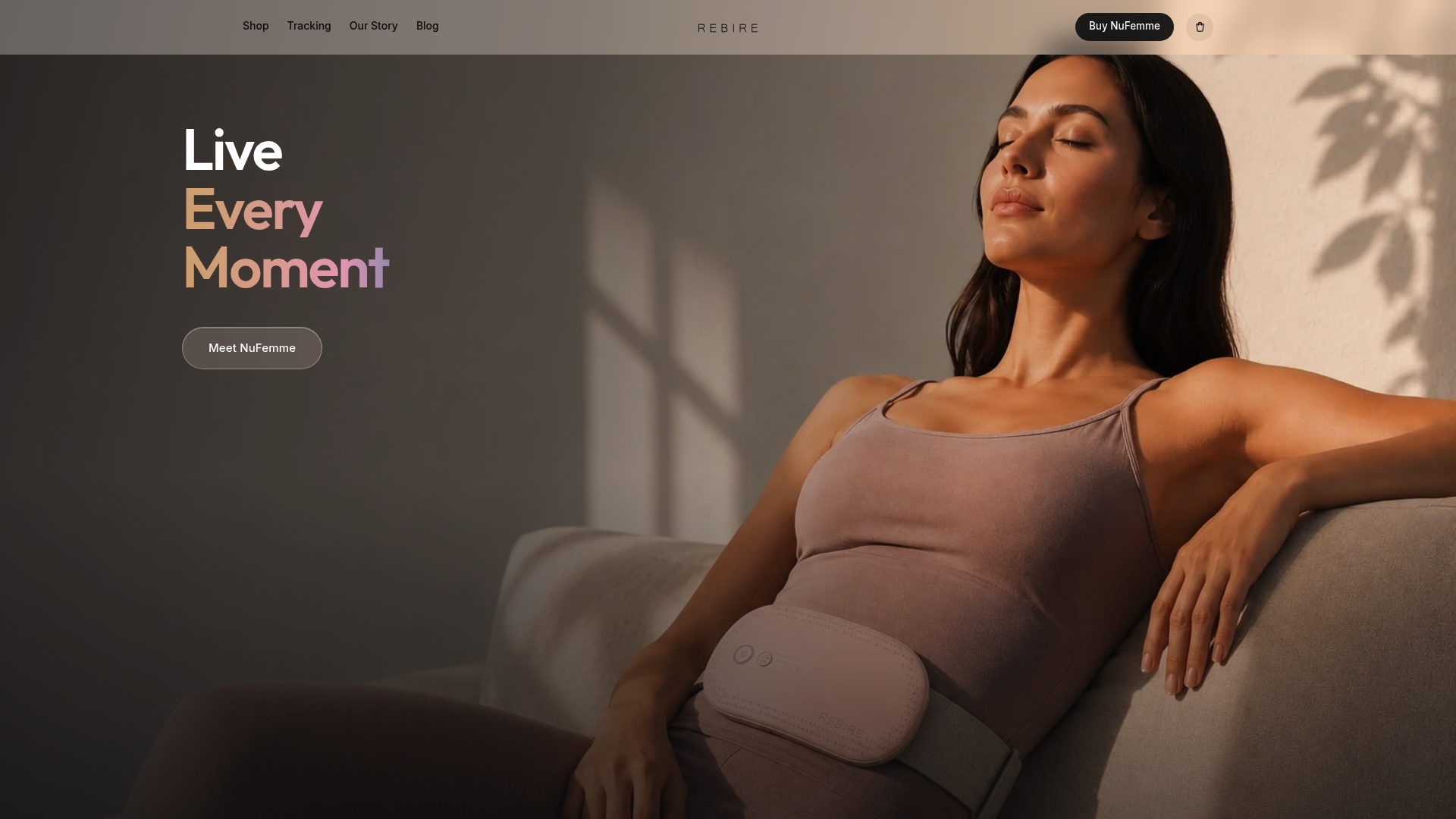
Rebire built NuFemme with three heat levels and three massage speeds, so you can dial in comfort whether you’re at a desk, running errands, or curled up at home. It also works as a genuinely considered gift: finished in Rose Gold or Ivory, it reads as something chosen with real attention rather than a last-minute drugstore grab. As with any heat or vibration device, skip use over broken skin or if you have a pacemaker, and check with a clinician if you have a condition affecting circulation or sensation. Ready to try it? Check out NuFemme’s full details and see if it fits your cycle, or your gift list.
Frequently Asked Questions
Does drinking more water actually reduce period cramps? Research suggests it can. A controlled study found that women who increased their water intake to 1.6 to 2.0 liters daily experienced significantly less menstrual pain and used fewer painkillers across two cycles.
How much water should I drink during my period to help with cramps? Target 1.6 to 2.0 liters a day, spread evenly rather than consumed all at once, starting a few days before your period and continuing through the first 48 to 72 hours.
Can dehydration make period cramps worse? Dehydration doesn’t cause cramps, but poor circulation linked to inadequate fluid intake may worsen the microvascular impairment already happening during prostaglandin-driven contractions.
What’s the fastest drug-free way to relieve period cramps? Local heat combined with vibration tends to produce the quickest relief, with clinical trial participants reporting pain reduction within minutes of combined use.
Is a heat and vibration wearable safe to use every cycle? Generally yes for most people, though anyone with a pacemaker, circulation disorder, or skin condition near the intended wear area should check with a clinician first.
This article is general information, not a substitute for advice from a qualified doctor. Consult a qualified healthcare professional about your own circumstances before acting on anything here.
Sources
The strongest evidence in this article comes from a mix of controlled trials, systematic reviews, and smaller preliminary studies, so it’s worth knowing the difference in strength between them.
- The role of water intake in the severity of pain and menstrual distress among females suffering from primary dysmenorrhea: a semi-experimental study
- Heat therapy for primary dysmenorrhea: systematic review and meta-analysis
- EFFECT OF VIBRATION AND HEAT COMBINATION ON PRIMARY DYSMENORRHEA
- Dysmenorrhea - StatPearls - NCBI Bookshelf