

The most reliable period bloating relief comes from stacking a few simple habits at once: drink water instead of cutting back, dial down sodium, take a short walk, apply heat or massage your belly, and consider magnesium if you start it before symptoms hit. Most bloating peaks right before your period and eases within one to three days of bleeding, so relief is usually closer than it feels.
TL;DR:
- Drinking water consistently and reducing sodium intake a few days before your period can significantly decrease bloating caused by hormonal shifts.
- Engaging in brief physical activity, such as a 15-minute walk, helps stimulate digestion and reduce trapped gas, alleviating discomfort.
- Starting magnesium supplements during the luteal phase provides evidence-based relief for water retention and cramping, especially when begun early.
- Using heat therapy and gentle abdominal massage relaxes muscles and promotes movement of trapped gas, offering quick, drug-free relief.
- Maintaining regular sleep patterns and managing stress through relaxation techniques can prevent hormonal impacts that worsen bloating.
Table of Contents
- What Causes Period Bloating and How Long It Lasts
- Fast At-Home Tactics for Period Bloating Relief
- Does Magnesium Help With Period Bloating?
- When Period Bloating Signals Something Beyond Normal
- How Stress Makes Period Bloating Worse
- Can Probiotics Reduce Period Bloating?
- Why Poor Sleep Makes Period Bloating Feel Worse
- Herbal Remedies Worth Trying for Bloating
- An Editorial Take on Drug-Free Period Bloating Relief
- A Portable Heat and Massage Option Worth Knowing About
- Sources
- FAQ
What Causes Period Bloating and How Long It Lasts
Bloating shows up because of a hormone shift, not because you did anything wrong. In the days before your period, progesterone and estrogen drop, and that shift signals your body to hold onto extra water. At the same time, progesterone slows down gut motility, so digestion drags, gas builds up, and constipation becomes more likely. That combination, fluid retention plus a sluggish gut, is why your stomach feels tight and your jeans feel smaller during the same week every month.
For most women, this pattern follows the luteal phase, the stretch between ovulation and your period. Bloating typically starts a few days before bleeding begins and fades within one to three days once your period is underway. It’s a predictable, temporary rhythm, not a sign that something is wrong.
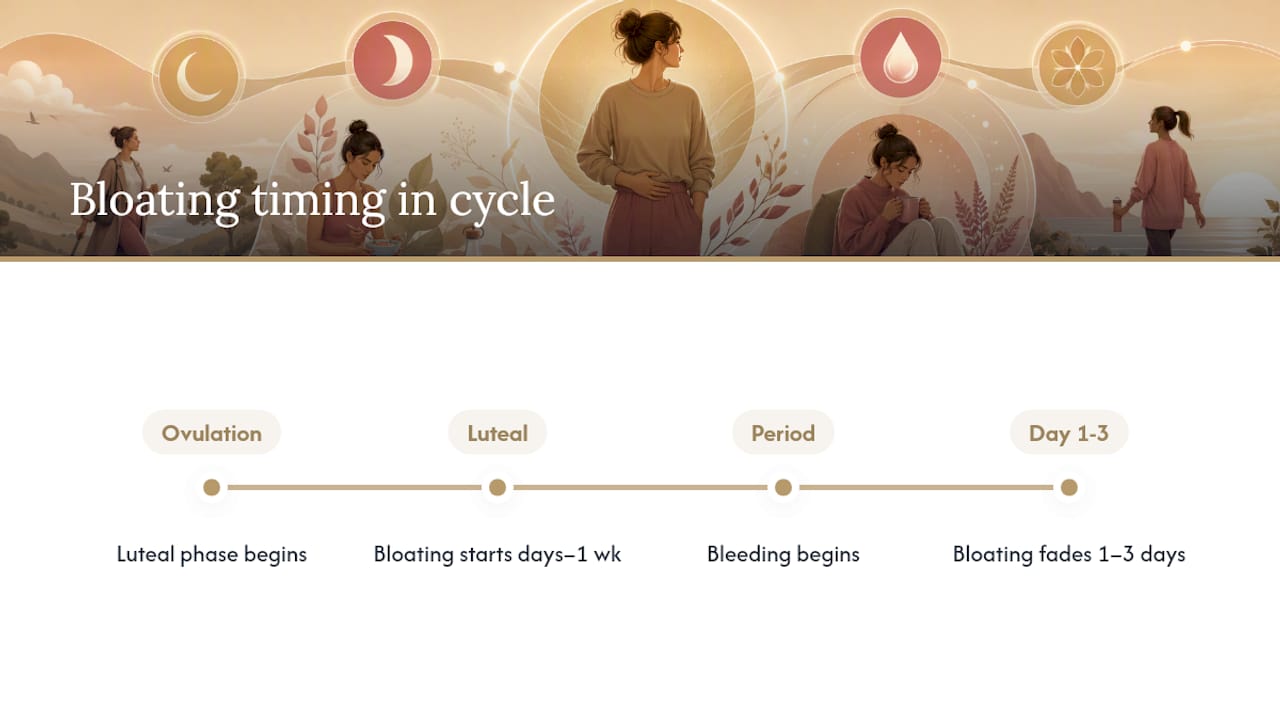
That said, timing varies. Some women notice bloating a full week out; others barely notice it until the day their period starts. If your bloating consistently lasts far longer than that window, or shows up at random points in your cycle, that’s worth tracking, since it may point to something beyond typical hormonal bloating (more on that below).
Fast At-Home Tactics for Period Bloating Relief
You don’t need a prescription to feel less puffy. These are the moves worth trying first, in roughly the order they’ll make a difference.
Drink more water, not less. It sounds backward, but dehydration actually worsens bloating. When your body senses low fluid intake, it conserves water more aggressively, which intensifies retention. Aim for steady sips throughout the day rather than a single big glass, and treat water as your first line of defense, not a last resort.
Cut back on sodium for a few days. The American Heart Association recommends capping sodium at 1,500 mg a day for anyone managing water retention, since excess salt tells your body to hold fluid rather than release it. Swap salty restaurant takeout for a home-cooked meal, and check labels on canned soups, deli meat, and packaged snacks. A few days of lower sodium can visibly reduce puffiness.
Add potassium-rich foods. Bananas, avocados, sweet potatoes, and spinach help balance sodium’s effect and support fluid regulation. You don’t need to overhaul your diet, just lean toward these when you’re planning meals during your luteal phase.
Move, even briefly. An aerobic exercise program over several weeks has been shown to reduce PMS-related bloating in women who stuck with it. You don’t need a full workout right now, a 15-minute walk gets your gut moving and helps release trapped gas.
Use heat and gentle massage. Cleveland Clinic recommends heat as a first-line, non-drug approach to menstrual discomfort, since it relaxes uterine muscles and makes movement more comfortable, which in turn helps digestion along. Pair heat with a gentle abdominal massage that follows your colon’s path: start with firm circular pressure at your lower right abdomen, move up toward your ribs, across to the left side, then down. This physically helps move trapped gas.
Watch your personal triggers. Carbonated drinks and heavy refined sugar are common bloating culprits for almost everyone. But cruciferous vegetables and beans, despite being healthy, increase gas for some people and not others. Pay attention to your own patterns rather than assuming a “healthy” food is automatically bloat-friendly for you.
Keep fiber steady, not sudden. Fiber prevents constipation, but a sudden jump in fiber intake right before your period can backfire and add gas. Keep your intake consistent rather than loading up all at once.
Try peppermint or ginger tea. Both are traditional digestive aids that can ease gas and settle an unsettled stomach, making them an easy add to your evening routine.
Pro Tip: Start your sodium cut and hydration habit about five days before your period is due, not on the day symptoms show up. Prevention works better than damage control.
For more ways to combine these tactics, Rebire’s guide to drug-free period cramp relief walks through additional options step by step.
Does Magnesium Help With Period Bloating?
Magnesium has real evidence behind it. Supplementing with roughly 300 mg daily has been shown to ease PMS symptoms, including water retention, likely through a mild laxative effect combined with its role in regulating prostaglandins, the compounds involved in cramping and inflammation.
Timing matters more than most people realize. Magnesium works best when you start it during the luteal phase, around day 15 of a typical 28-day cycle, and continue taking it daily until your period begins. Waiting until bloating peaks means you’re starting too late to get the full benefit.
A quick safety note: magnesium can cause diarrhea or stomach upset at higher doses, and it can interact with certain antibiotics and blood pressure medications. Check with a doctor before starting, especially if you’re pregnant or on prescription medication. For a closer look at dosing and formulations, see Rebire’s breakdown of magnesium for period cramps, or explore a magnesium glycinate supplement formulated for easier absorption.
When Period Bloating Signals Something Beyond Normal
Typical period bloating is mild to moderate, predictable, and resolves within a few days of your period starting. It shouldn’t stop you from going about your day.
Pay attention if you notice severe pain that doesn’t respond to heat or rest, bloating that shows up outside your usual cycle pattern, a persistent change in bowel habits, unintended weight loss, or fever. These aren’t typical hormonal signs, and MedlinePlus notes that severe or unusual menstrual symptoms warrant medical evaluation, since conditions like endometriosis or ovarian cysts can mimic bloating.
Before an appointment, track your symptoms for one or two cycles: when bloating starts, how severe it feels, what you ate, and any medications you’re taking. That record helps a clinician distinguish a normal pattern from one that needs closer attention, and it saves you from trying to recall details on the spot.
How Stress Makes Period Bloating Worse
Stress doesn’t just affect your mood during your cycle, it changes how your gut behaves. Cortisol, the body’s main stress hormone, can slow digestion further on top of the slowdown progesterone already causes, compounding gas and bloating rather than adding a separate problem.
There’s also a feedback loop worth knowing about: bloating itself can be stressful, especially if it affects how you feel in your clothes or at work, and that stress can then tighten your gut further. Breaking the cycle usually matters more than fighting bloating directly.
Mayo Clinic includes relaxation techniques alongside diet and exercise as a legitimate way to ease premenstrual water retention, not just a nice-to-have. Simple options work: slow breathing for a few minutes, a short guided meditation, or even ten minutes away from a screen. None of these require special equipment or training.
If you’re someone who tenses your shoulders or clenches your jaw under stress, notice whether you’re also unconsciously tensing your abdomen. Releasing that tension, through stretching, a warm bath, or gentle yoga poses like child’s pose or a seated twist, can support digestion at the same time it calms your nervous system.
Can Probiotics Reduce Period Bloating?
Gut bacteria respond to hormonal shifts the same way the rest of your digestive system does. When progesterone slows gut motility, the balance of bacteria in your gut can shift too, sometimes leading to more gas production during digestion.
Probiotics, whether from yogurt, kefir, fermented foods like sauerkraut, or a supplement, support a more stable gut microbiome, which can make digestion smoother overall. The evidence for probiotics specifically targeting period bloating is still limited, but the broader link between gut health and digestive comfort is well established, and a steadier gut generally handles hormonal slowdowns better.
If you want to try probiotics, consistency matters more than timing around your cycle. Daily use over several weeks gives your gut bacteria time to establish a new balance, rather than expecting results from a single dose right before your period. Pair probiotics with the fiber consistency mentioned earlier. Sudden dietary swings, in either direction, tend to undo any gains from probiotic use.
If you already deal with a sensitive stomach, introduce probiotics slowly and watch for any temporary adjustment period, since a new bacterial balance can cause mild, short-term gas before things settle.
Why Poor Sleep Makes Period Bloating Feel Worse
Sleep and bloating are more connected than most people expect. Poor sleep raises cortisol levels, which, as covered above, slows digestion and worsens fluid retention. It also disrupts the hormones that regulate hunger and cravings, which can push you toward the salty or sugary foods that make bloating worse in the first place.
Many women also sleep worse in the days leading up to their period, thanks to the same hormonal shifts driving bloating, creating a cycle where poor sleep and bloating reinforce each other. Prioritizing sleep during this window isn’t indulgent, it’s a direct lever on how your body handles fluid and digestion the next day.
Practical steps help here: keep a consistent bedtime in the days before your period, limit caffeine in the afternoon since it can worsen both sleep and water retention, and consider a warm shower or heat pack before bed, since warmth promotes relaxation and can ease cramping that might otherwise keep you awake. Even one extra hour of sleep during your luteal phase can measurably improve how you feel the next day.
Herbal Remedies Worth Trying for Bloating
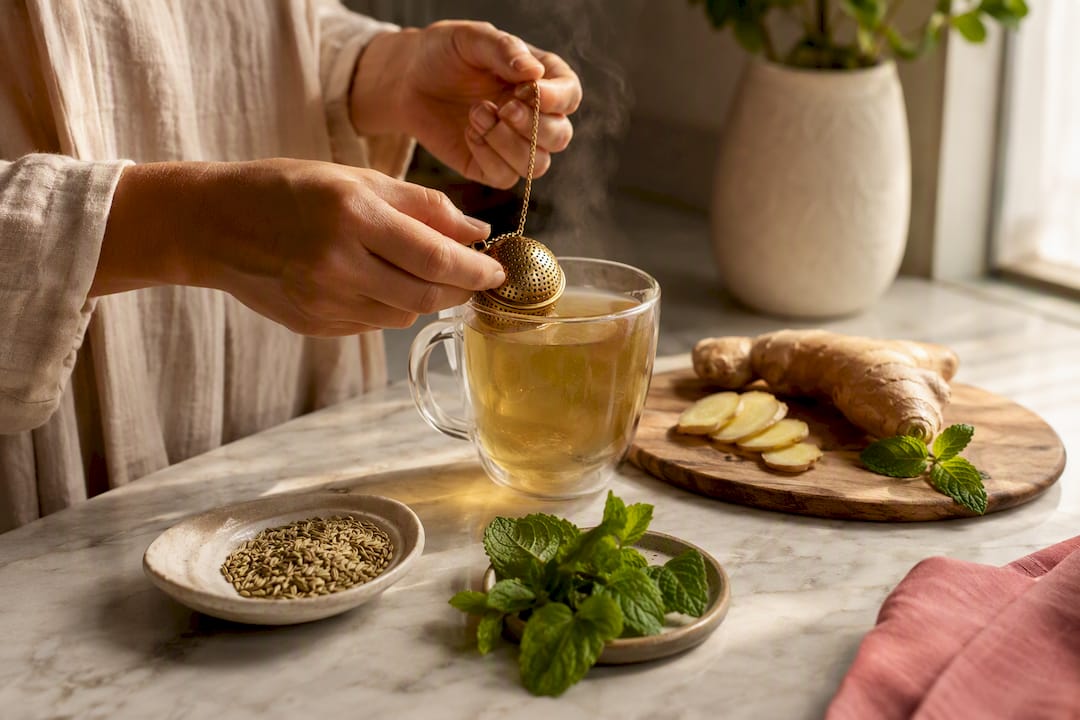
Certain herbs have a long track record for easing digestive bloating, and the evidence lines up with traditional use in several cases. Ginger is one of the most versatile options: it can calm an upset stomach, ease nausea, and support digestion, whether taken as tea, in capsule form, or grated fresh into food.
Peppermint relaxes the muscles of the digestive tract, which can help gas move through more easily instead of getting trapped. Peppermint tea after meals is a simple way to work it in, though people with acid reflux should use it cautiously, since it can worsen reflux symptoms for some.
Fennel is less well known but has a similar reputation for easing bloating and gas, often used as a tea or chewed as seeds after a meal in cultures where digestive discomfort is treated with food-based remedies rather than medication.
None of these herbs are a cure for hormonal bloating on their own, but they pair well with the hydration, movement, and heat strategies above. Think of them as a supporting layer rather than a standalone fix, something you sip on while your body works through the rest of the process.
An Editorial Take on Drug-Free Period Bloating Relief
The evidence doesn’t point to one dramatic fix. It points to stacking small, low-risk habits, water, less salt, a short walk, heat, and well-timed magnesium, before reaching for anything stronger. That’s not a compromise; it’s what actually works for most people, most cycles.
What gets overlooked is fit. A tactic that requires you to lie down with a heating pad doesn’t help much if you’re commuting or in back-to-back meetings. Discreet, portable relief, the kind you can use while still moving through your day, tends to get used consistently, and consistency is what makes any of these strategies work.
Track what helps you specifically. Bodies vary, and so do triggers.
— Lavinia
A Portable Heat and Massage Option Worth Knowing About
Heat and movement work together, and that’s exactly the gap NuFemme from Rebire is built to close. It’s a cordless, wearable belt that combines heat therapy, vibration massage, and red-light therapy in one device, designed to relax cramping muscles so you can actually get up and move, the same movement that helps push gas along and ease bloating.
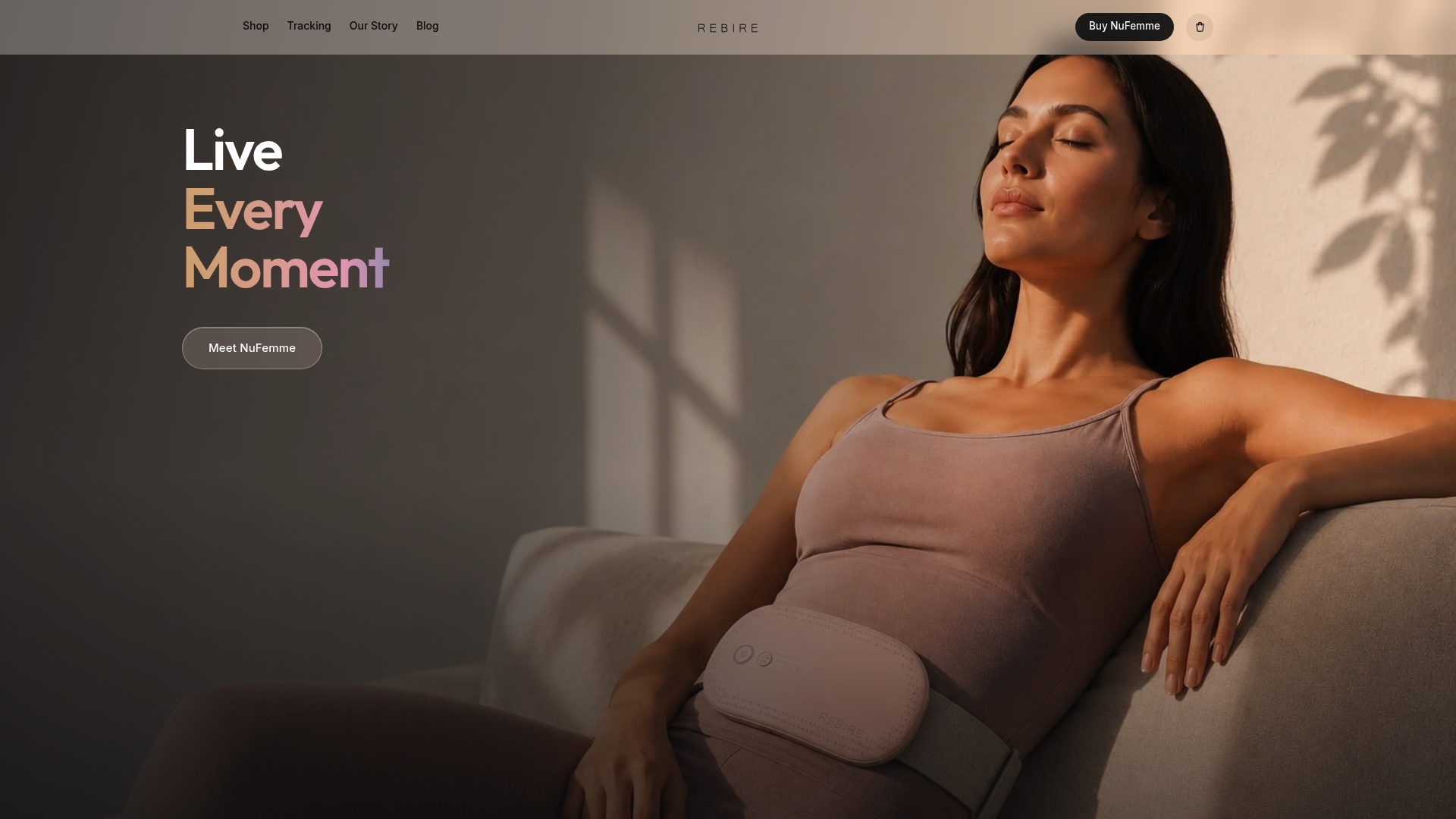
NuFemme runs on three heat levels and three massage speeds, so you can adjust intensity whether you’re at a desk, running errands, or just need a quiet ten minutes to reset. It slips on discreetly under clothing, no cord, no waiting around near an outlet for a traditional heating pad to warm up. Most users report feeling reduced pain within 15 minutes of use, which matters most on the days when getting through your to-do list and finding relief feel like competing priorities.
It’s also considered a meaningful gift for partners who want to show they’ve noticed what someone goes through every month rather than grabbing something last-minute at a drugstore. Pair it with the hydration and sodium habits covered earlier for a fuller approach to bloating and cramps, and check out NuFemme’s workday relief page to see how it fits into a normal workday, or browse the full NuFemme collection to find your color and get started.
Sources
The medical guidance in this article draws on the following sources, all worth bookmarking if you want to dig deeper:
- Sodium facts and recommendations | American Heart Association
- Water retention: Relieve this premenstrual symptom | Mayo Clinic
- How to de-bloat during your period — Women’s Health
- How to stop period cramps — Cleveland Clinic
- Period pain — MedlinePlus
This article is general information, not a substitute for advice from a qualified doctor. Consult a qualified healthcare professional about your own circumstances before acting on anything here.
FAQ
How Do I Stop Bloating During My Period?
Focus on hydration, cutting sodium for a few days, light movement like walking, and heat or abdominal massage, since staying hydrated actually reduces water retention rather than making it worse.
What Is the 7-2-1 Rule for Menstruation?
This isn’t a recognized medical guideline, and definitions of it vary widely across sources, so it’s best not to rely on it as a formal framework for managing your cycle.
Why Is My Lower Belly So Big on My Period?
Dropping progesterone and estrogen levels trigger fluid retention and slower gut motility, which causes gas to build up and your lower abdomen to feel visibly larger and tighter.
How Do I De-Bloat My Stomach ASAP?
Drink water steadily, apply heat to relax your abdominal muscles, take a short walk, and try a colon-path abdominal massage. Cleveland Clinic notes heat helps relax uterine muscles, which supports easier movement and digestion within the same day.