

Red light therapy science backs up what a growing number of clinical trials have found: near-infrared photobiomodulation reduces menstrual cramp pain, with results measured in randomized, placebo-controlled trials rather than anecdotes. The catch is that it works best as a cumulative habit, not a one-time fix. Effects tend to build over two or three cycles, and pairing it with heat and vibration tends to give you the fast relief you want while you wait for the deeper benefits to show up.
TL;DR:
- Red light therapy reduces menstrual cramps by targeting inflammation and prostaglandin levels, with deeper infrared wavelengths penetrating more effectively.
- Consistent use starting one or two days before periods, for about 20 minutes daily across multiple cycles, yields the best pain reduction results.
- Trials show significant pain drops, decreased need for rescue medication, and safety, but device protocols vary and larger U.S. studies are still needed.
- Combining red light with heat and vibration improves immediate relief and addresses different pain mechanisms simultaneously.
- Devices like NuFemme incorporate red light, heat, and massage in a portable design, supporting ongoing use and practical daily relief.
Table of Contents
- What Red Light Therapy Science Says About How It Eases Cramps
- What Do Clinical Trials Show About Red Light For Cramps?
- How Should You Use a Red Light Wearable for Cramps?
- Is Red Light Therapy Safe for Period Cramps?
- Why Combine Red Light, Heat, and Vibration?
- What Else Does Red Light Therapy Do at the Cellular Level?
- Do Different Wavelengths Produce Different Results?
- Where Does Photobiomodulation Research Go From Here?
- What This Research Means for How You Choose Relief
- If You Want a Ready Wearable: NuFemme
- Sources
- FAQ
What Red Light Therapy Science Says About How It Eases Cramps
Photobiomodulation starts at the cellular level. When red and near-infrared light hits your skin, it gets absorbed by cytochrome c oxidase, an enzyme sitting inside your cell’s mitochondria. That absorption boosts ATP production and triggers a release of nitric oxide, which your body uses to widen small blood vessels and calm inflammatory signaling.
For period cramps specifically, this matters because primary dysmenorrhea is driven largely by prostaglandins, especially PGE2. Your uterus overproduces this compound during menstruation, and it drives the muscle contractions that cause cramping pain. Research on photobiomodulation applied to acupoints has linked treatment with measurable drops in PGE2 levels, pointing to an anti-inflammatory mechanism rather than a simple numbing effect.
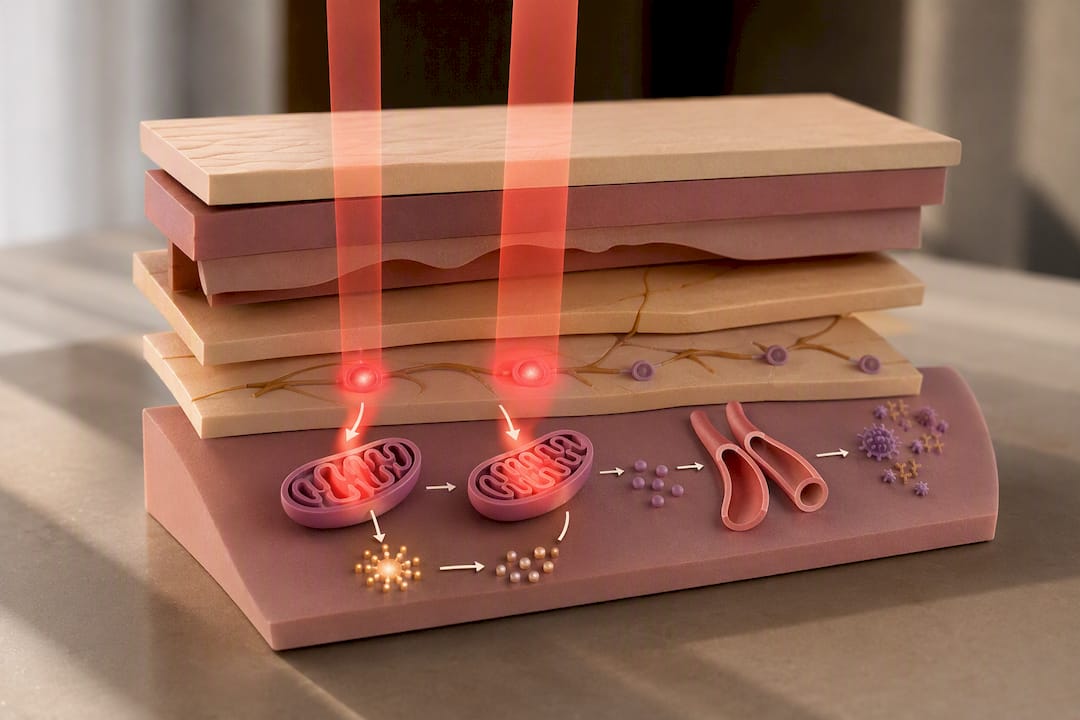
That is a fundamentally different action than heat. A heating pad relaxes muscle and dilates surface blood vessels, which feels good fast but does nothing to the underlying prostaglandin cascade. Red light works slower, but at the source of the problem.
Dysmenorrhea trials have tested a specific range of wavelengths, including:
- 630 nanometers (red light), often pulsed rather than continuous
- 808 to 940 nanometers (near-infrared), which penetrates deeper into abdominal tissue
- Combined red and near-infrared protocols in some skin-adhesive devices
Deeper penetration matters for cramps because the uterus sits below several layers of tissue that surface-level light alone cannot always reach effectively.
What Do Clinical Trials Show About Red Light For Cramps?
The clinical evidence here isn’t a single small study. It’s a cluster of randomized, controlled trials, including double-blind, placebo-controlled designs, testing different wavelengths and delivery methods against real placebo devices.
By the numbers: In a randomized, double-blind, placebo-controlled trial of a skin-adhesive low-level light therapy device, active-treatment participants saw their pain scores drop by 4.34 points on a standard pain scale, compared to a 1.79-point drop in the placebo group, a statistically significant difference (P<0.001).
That same trial found something gift-buyers and self-purchasers both care about: women using the active device needed less rescue pain medication than the placebo group by later cycles, suggesting the effect isn’t just psychological.
Other trials back this up with different wavelengths and protocols:
- A randomized cross-over trial of pulsed 630 nm LED therapy worn 20 minutes a day before and during menstruation found 55% of participants had pain reductions greater than 50%, with no adverse events reported.
- A trial of 940 nm low-level laser therapy applied daily to the CV4 acupoint over three consecutive cycles found significant drops in pain scores, with the biggest improvement showing up by the third cycle.
- A comparative trial found LED-based LLLT at acupoints CV4 and CV6 produced pain relief comparable to hormonal treatment in some measures, without the systemic effects of medication.
These are genuinely encouraging results, and they come from peer-reviewed, controlled research rather than marketing claims. Still, the field has real limits. Sample sizes in most trials range from around 40 to 100 participants. Devices, wavelengths, and dosing protocols vary from study to study, which makes it hard to say exactly what the “ideal” dose is. Most trials so far have also been conducted outside the United States, so larger domestic studies would help confirm how these results translate here.
How Should You Use a Red Light Wearable for Cramps?
Consistency drives the outcome more than any single session does. Trial protocols that produced the strongest pain reductions had women start treatment before their period began and continue through the first few days of bleeding.
- Start early. Begin sessions a day or two before your period is expected, not after the cramps hit.
- Aim for about 20 minutes per day, matching the duration used in the pulsed 630 nm trial that reported meaningful pain drops.
- Stay consistent across cycles. The 940 nm trial found the biggest improvement showed up by the third consecutive cycle, not the first.
- Target the right spot. Trials using acupoints CV4 (below the belly button) and CV6 (slightly lower) reported more consistent results than scattered placement across the general abdomen.
Pro Tip: If cramps catch you off guard mid-cycle, don’t skip sessions just because you “missed the window.” Starting late still gives you the anti-inflammatory benefit for the days ahead, even if this cycle’s full cumulative effect kicks in next month instead.
A cordless, adhesive-free wearable makes this realistic to actually stick with, since you’re not confined to a couch waiting on a plugged-in heating pad. Combining the light with heat and gentle massage gives you something to feel working right away, while the light does its slower job underneath.
Is Red Light Therapy Safe for Period Cramps?
The safety profile across these trials is reassuring. Reported adverse events were rare, and the pulsed 630 nm trial and the skin-adhesive LLLT trial both reported no serious adverse events among participants.
That said, red light isn’t a universal fix, and a few situations call for a conversation with your doctor first:
- Cramps that are unusually severe, worsening over time, or paired with heavy bleeding could point to secondary dysmenorrhea or endometriosis, which needs medical evaluation, not just symptom management.
- If you’re actively trying to conceive or managing a pregnancy, check with your provider before starting any new pain-relief routine.
- If you have an implanted electronic device like a pacemaker, confirm compatibility before using any electronic wearable.
Results vary person to person. Some women in these trials saw pain drop by more than half; others got a more modest reduction. Photobiomodulation can meaningfully cut how much rescue medication you need, but for some people it works best alongside NSAIDs rather than replacing them entirely.
Why Combine Red Light, Heat, and Vibration?
Each mode targets a different part of the pain cycle, which is why layering them tends to outperform any single mode alone.
- Red light works on inflammation and prostaglandin levels at the cellular level, a slower but deeper mechanism.
- Heat delivers fast vasodilation and muscle relaxation the moment you feel a cramp start.
- Vibration massage interrupts pain signaling and eases muscle tension in real time, similar to how vibration therapy for cramps has been shown to help on its own.
Used together, you get the immediate comfort of heat and massage while the red light works on the underlying inflammatory driver in the background. That’s the practical case for a device that does all three at once instead of asking you to choose.
What Else Does Red Light Therapy Do at the Cellular Level?
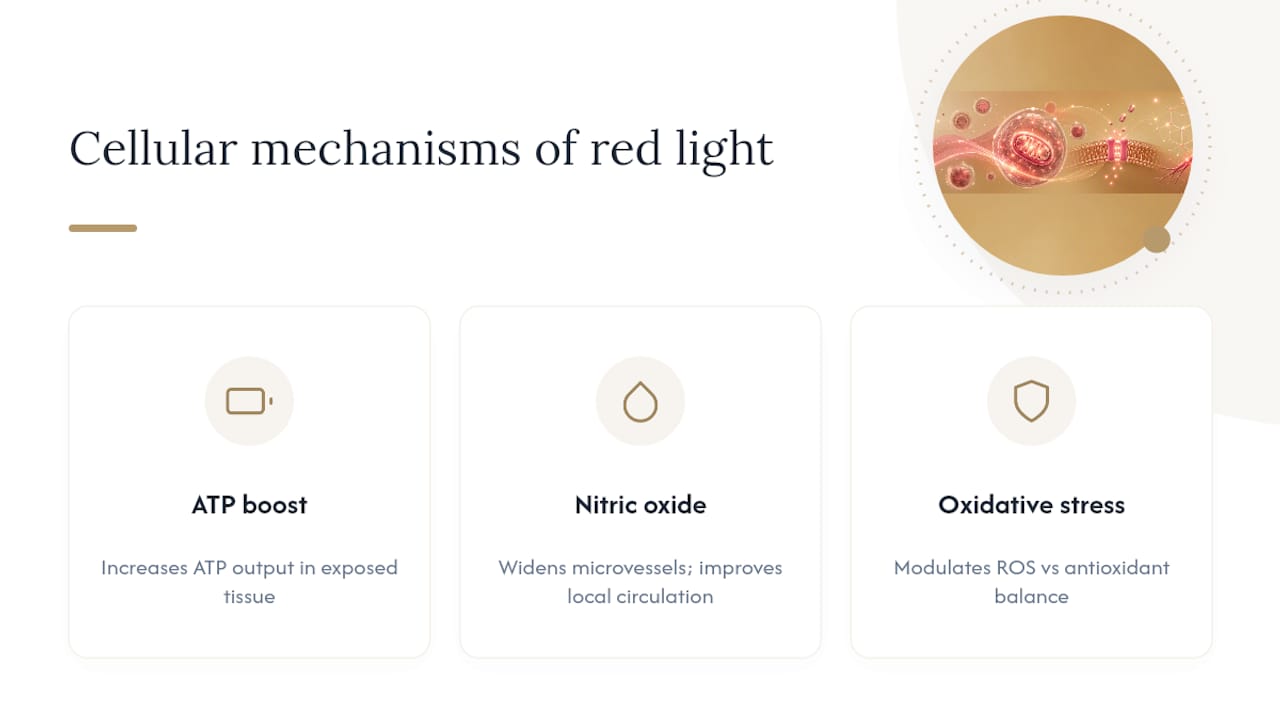
The same mitochondrial mechanism behind cramp relief drives most other applications of photobiomodulation, which is part of why the research base here is broader than most people realize. Cytochrome c oxidase activation increases ATP output in any tissue it reaches, not just uterine muscle, which is why researchers have studied red and near-infrared light for joint stiffness, muscle recovery, and general tissue repair.
Nitric oxide release is another shared pathway. It widens small blood vessels wherever the light reaches, improving local circulation and helping clear inflammatory byproducts faster than they’d clear on their own. This is the same perfusion effect researchers point to when they explain reduced menstrual pain, just applied to different tissue.
Light also appears to modulate oxidative stress at the cellular level, nudging the balance between reactive oxygen species and the body’s antioxidant defenses. Reviews of photobiomodulation across multiple conditions describe this as a secondary mechanism that supports the primary ATP and nitric oxide effects, rather than acting independently.
None of this means red light is a cure-all. It means the same basic cellular machinery, mitochondria responding to specific wavelengths of light, shows up across a range of applications, and menstrual cramp relief is one well-studied example of that machinery in action. For general background on how photobiomodulation is discussed outside the menstrual health space, Yuka+Face’s overview of red light therapy covers the broader landscape.
Do Different Wavelengths Produce Different Results?
Not all red light is doing the same job, and the trial data reflects that. Wavelength determines how deep the light travels and which cellular structures absorb it most efficiently.
Shorter red wavelengths around 630 nanometers tend to concentrate their effect closer to the skin’s surface, which is part of why the pulsed 630 nm dysmenorrhea trial was specifically engineered to reduce surface heating while still pushing enough energy deeper into tissue. Pulsing the light, rather than running it continuously, was a deliberate design choice to manage that heat and intensity tradeoff.
Near-infrared wavelengths in the 808 to 940 nanometer range scatter less and penetrate further, which is why the 940 nm trials targeting the CV4 acupoint could reach tissue closer to the uterus itself. That deeper reach is likely part of why those trials showed a cumulative benefit that built over three cycles rather than peaking immediately.
Neither wavelength is universally “better.” Red light in the 630 nm range has the stronger evidence base for pulsed, lower-heat protocols, while near-infrared has stronger data for deeper penetration and multi-cycle cumulative effects. Devices combining both wavelengths are trying to capture surface and deep tissue benefits in a single session, though head-to-head trials comparing combined versus single-wavelength devices for dysmenorrhea specifically are still limited.
Where Does Photobiomodulation Research Go From Here?
The current evidence base, while genuinely encouraging, leaves real gaps that researchers are actively working to close. Most existing trials involve fewer than 150 participants, and dosing protocols differ enough between studies that establishing one standardized “best” protocol remains a work in progress.
A few directions stand out. Researchers are interested in whether combining biomarker tracking, specifically PGE2 levels, with pain scores across larger trials could better establish the dose-response relationship between light exposure and inflammatory suppression. Right now, most trials measure pain outcomes without also tracking the biochemical pathway in the same participants over multiple cycles.
There’s also growing interest in comparing wearable, continuous-wear devices against the shorter, clinic-style sessions used in most existing trials. Almost all dysmenorrhea trials to date tested fixed daily sessions rather than the kind of flexible, all-day wearable use that’s now commercially available, so how that changes outcomes is still an open question.
Larger trials conducted in the United States would also help confirm whether results seen in existing international studies hold up across a broader, more diverse population. Given how consistent the mechanism and early results have been across different research teams and wavelengths, dysmenorrhea is shaping up to be one of the more promising near-term applications for photobiomodulation research generally.
What This Research Means for How You Choose Relief
Here’s what I think gets lost in most conversations about period pain relief: people treat every option as either “real medicine” or “wellness fluff,” with nothing in between. Red light therapy for cramps doesn’t fit neatly into either box, and that’s exactly what makes it interesting.
It’s not a placebo dressed up in clinical language. Multiple randomized, placebo-controlled trials have found statistically significant pain reductions, and that’s a bar most wellness trends never clear. But it’s also not a miracle cure that replaces medication for everyone. The trials that showed the strongest results all shared one thing in common: consistency over multiple cycles, not a single desperate session during the worst of the pain.
That’s the part self-purchasers and gift-buyers both need to hear. If you buy a device expecting it to erase a bad cramp in one use, you’ll probably be disappointed. If you use it as a monthly habit starting a day or two before your period, the evidence says you have a real shot at needing less medication and hurting less by your second or third cycle. [Lavinia’s medical or scientific credentials]
— Lavinia
If You Want a Ready Wearable: NuFemme
NuFemme is built around exactly the multimodal approach this research points to: red-light therapy, heat, and vibration massage in one cordless belt you wear under your clothes. No cord means no waiting around for a plugged-in heating pad to kick in, and the discreet design means you can keep working, running errands, or just living your day while it does its job.
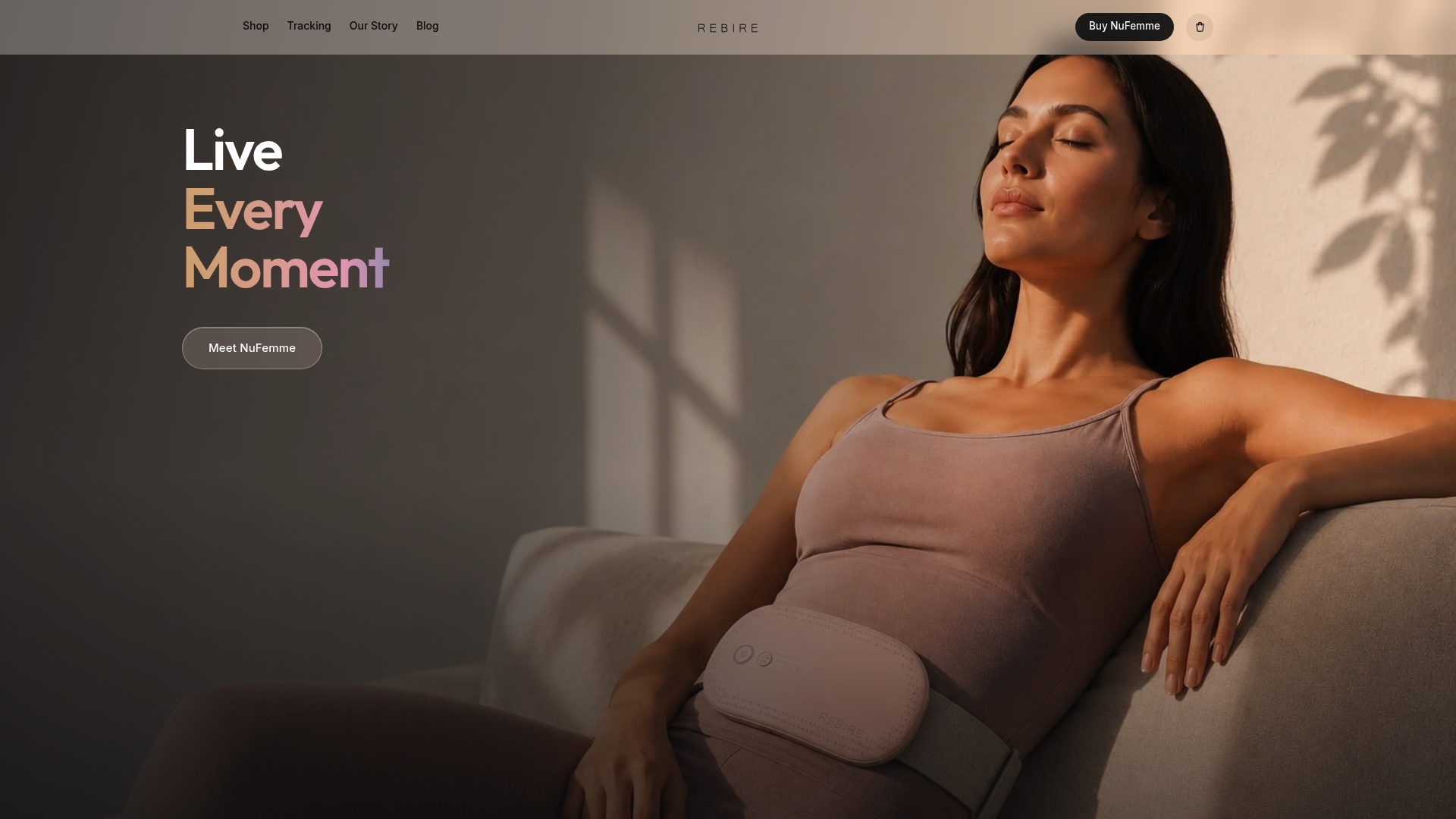
Three heat levels and three massage speeds let you dial in what feels right that day, whether you want gentle warmth at your desk or something stronger during a rough afternoon. In internal reporting, 93% of users said their pain eased within 15 minutes of putting it on, which lines up with the fast-relief role heat and vibration play alongside the slower-building benefits of red light.
It’s also become a genuinely popular gift. NuFemme is designed as a premium, thoughtful gift that shows care and attention for what women experience every month. If you want to see the full feature set or check the workday relief option for discreet daily wear, visit rebire.com to explore the current lineup, including the dedicated gift page for moms and daughters if you’re shopping for someone else.
This article is general information, not a substitute for advice from a qualified doctor. Consult a qualified healthcare professional about your own circumstances before acting on anything here.
Sources
- Randomized controlled trial of skin-adhesive low-level light therapy for primary dysmenorrhea (PubMed)
- Effects of 940 nm low-level laser therapy for the treatment of primary dysmenorrhea (2023)
- Comparative evaluation of LLLT and ethinyl estradiol/desogestrel for primary dysmenorrhea (Lasers Med Sci)
FAQ
Does red light therapy actually reduce period cramps?
Yes. Multiple randomized, placebo-controlled trials have found statistically significant pain reductions in participants using red or near-infrared light versus placebo or sham devices.
How long before red light therapy starts working on cramps?
Some trials report pain relief within a single session, but the strongest results, including larger drops in pain scores and reduced need for rescue medication, showed up after two to three consecutive cycles of consistent use.
Where should I place a red light device for period cramps?
Trials targeting the CV4 and CV6 acupoints, both located on the lower abdomen below the navel, reported more consistent pain reduction than general, untargeted placement.
Is red light therapy safe to use every day during my period?
Yes, based on current trial data. Reported studies found no serious adverse events, though anyone with an implanted electronic device or symptoms suggesting secondary dysmenorrhea should check with a doctor first.
Can red light therapy replace pain medication for cramps?
Not necessarily for everyone. Trials show it can meaningfully reduce how much rescue medication you need, but some people still find NSAIDs or other medication helpful alongside it.
Does NuFemme use the same red light wavelengths studied in these trials?
NuFemme combines red-light therapy with heat and vibration massage in one cordless wearable, reflecting the same multimodal approach that research on photobiomodulation for dysmenorrhea supports.