

The fastest way to ease period cramps is gentle, supported stretching paired with slow breathing and, when you can, a little heat. Try adapted child’s pose, gentle supine twists, pelvic tilts, cat and cow, and reclining bound angle, holding each one for a comfortable period while you breathe deeply. A heating pad or warm tea alongside these stretches for period cramps often brings relief within minutes.
TL;DR:
- A network meta analysis of 49 randomized trials found exercise reduced menstrual pain, with noticeable improvements emerging after 4 to 8 weeks.
- A separate review of 29 trials ranked relaxation focused exercise highest at reported follow ups and found it had the lowest dropout risk.
- When cramps radiate into the lower back, place a pillow between your knees during twists and apply heat there; stop if pain turns sharp.
- Keep sessions short and repeat them as needed, but seek medical advice for fainting, unusually heavy bleeding, fever, or sudden severe localized pain.
Table of Contents
- Stretches That Ease Menstrual Cramps and How to Do Them
- Lower-Back Relief When Cramps Radiate to Your Back
- How to Stretch Safely During Your Period
- Three Ready-to-Follow Stretch Routines
- What the Research Shows About Stretching and Exercise for Period Pain
- When to Stop Stretching and Call Your Doctor
- Making a Stretching Habit That Actually Sticks
- A Hands-Free Companion for Your Stretching Routine
- FAQ
- Sources
Stretches That Ease Menstrual Cramps and How to Do Them
These poses work because they release tension in the lower abdomen, hips, and lower back, the areas that tighten up when your uterus cramps. You’re not stretching for flexibility here. You’re stretching to let your body soften, so hold each pose longer than you think you need to and breathe slower than feels natural at first.
- Adapted child’s pose: Kneel with knees wide, hips toward your heels, and rest your forehead on a folded blanket or bolster. Exhale as you sink deeper into your hips. Hold comfortably, breathing into your lower back.
- Cat and cow: On hands and knees, inhale as you drop your belly and lift your chest (cow), then exhale as you round your spine toward the ceiling (cat). Repeat for a few breaths to loosen the pelvis and low back.
- Pelvic tilts: Lying on your back with knees bent, feet flat, gently rock your pelvis to flatten your low back into the floor, then release. Move slowly for a few breaths, syncing the tilt with your exhale.
- Gentle supine twist: Still on your back, drop both knees to one side while keeping shoulders grounded. Hold comfortably on each side, letting gravity do the work rather than forcing the twist.
- Reclining bound angle (supported): Lie back with the soles of your feet together, knees falling open, a pillow under each knee for support. Stay here comfortably, breathing into your belly.
- Gentle happy baby: On your back, hold the outer edges of your feet with knees bent toward your chest, rocking gently side to side. Hold for a few breaths to release the lower back and hips.
- Bridge prep (gentle backbend): Lying on your back with knees bent, lift your hips just a few inches off the floor, pressing through your feet. Hold for a few breaths, then lower slowly. This counters the hunched posture many people adopt around cramping.
- Seated forward fold with bent knees: Sit with knees softly bent, fold forward over a bolster or pillow placed on your thighs. Breathe here comfortably, letting your back round rather than forcing a flat spine.
Keep a bolster, folded blanket, or firm pillow nearby. Props let you stay in a pose longer without strain, which matters more here than depth or alignment ever will.
Lower-Back Relief When Cramps Radiate to Your Back
When period pain settles into your lower back rather than staying in your abdomen, a few adjustments help target that area without aggravating it.
- Supine knee-to-chest: Lying on your back, draw one or both knees toward your chest, holding behind the thighs rather than the knees. Hold comfortably, breathing slowly into your low back.
- Supine twist with a pillow between the knees: Add a pillow between your knees during the twist described above to reduce strain on the lower spine while still releasing tension.
- Child’s pose over a bolster: Place a bolster lengthwise under your torso for extra support if your lower back feels too tight to fold forward comfortably.
- Cat and cow with a pelvic tilt emphasis: Slow the movement down and focus on the lumbar curve rather than the full spine, which targets the exact muscles involved in back-referred cramping.
- Standing or seated hamstring stretch: If lying down isn’t accessible, a standing forward fold with bent knees or a seated hamstring stretch on a chair eases the same referred tension.
Pay attention to the type of discomfort you feel. A dull stretch or release is normal; sharp pain, especially during rotation, means you should ease out of the pose immediately.
Pro Tip: Place your heating pad directly on your lower back, not just your abdomen, during child’s pose or knee-to-chest stretches to relax the muscles that are actually spasming.
How to Stretch Safely During Your Period
A few simple rules keep your stretching routine both safe and effective, whether you’re doing a few poses or a longer session.
- Keep sessions short and frequent. A short session, done once or several times a day as cramps flare, may feel more manageable than one long session.
- Start with heat if you’re very sore. A little warmth on your lower abdomen or back before stretching can make the poses feel more accessible.
- Use props generously. A bolster, folded blanket, or firm pillow under your knees, hips, or chest lets you hold poses longer without tensing up.
- Wear something loose. Fitted waistbands and restrictive fabric work against the goal of letting your belly and hips soften.
- Watch for warning signs. Stop and check in with a clinician if you feel dizziness, fainting, unusually heavy bleeding, or sharp pain that feels different from your normal cramps.
- Consider NSAIDs as a complement, not a replacement. Over-the-counter options are a common first-line approach alongside movement and heat, according to Cleveland Clinic guidance.
Consistency matters more than intensity. A simple daily plan you can stick to all week tends to outperform one intense session.
Three Ready-to-Follow Stretch Routines
Pick the routine that fits your day. All three can be repeated as needed, and a short heat break between poses never hurts.
Short routine (for relief between tasks):
- Adapted child’s pose, held comfortably
- Pelvic tilts, for a few breaths
- Gentle supine twist, held comfortably on each side
Mobility and relaxation routine:
- Cat and cow, for a few breaths
- Pelvic tilts, for a few breaths
- Gentle supine twist, held comfortably on each side
- Supported child’s pose, held comfortably
Restorative routine:
- Cat and cow, for a few breaths
- Reclining bound angle, held comfortably
- Gentle happy baby, for a few breaths
- Bridge prep, for a few breaths
- Seated forward fold, held comfortably
- Child’s pose over a bolster, held comfortably
If you’re curious how stretching compares to other low-impact movement, a yoga versus pilates comparison can help you decide what fits your energy level on any given day.
What the Research Shows About Stretching and Exercise for Period Pain
The evidence behind movement for period pain is stronger than most people expect. A network meta-analysis of 49 randomized controlled trials found that exercise interventions, including stretching and mind-body approaches, significantly reduced menstrual pain compared to no exercise at all, with noticeable improvements appearing after 4 to 8 weeks.
Relaxation-focused exercise performed especially well. A separate systematic review of 29 trials found relaxation exercise was the most effective approach at the reported follow-up points and had the lowest dropout risk among the exercise types studied.
A related meta-analysis on therapeutic exercise reported measurable drops in pain scores, with longer programs of eight weeks or more, higher weekly frequency, and sessions over 30 minutes producing larger effects in several analyses. Separately, a review on abdominal stretching concluded that stretching can increase pelvic and spinal muscle elasticity and strength, supporting its use for primary dysmenorrhea.

None of this means you need a long program to feel something. It means consistency over several weeks tends to compound the relief you get from any single stretching session.
When to Stop Stretching and Call Your Doctor
Most cramps respond to rest, heat, and gentle movement, but a few signs mean it’s time to pause and get medical advice instead.
- Dizziness or fainting during or after stretching
- Heavy or unusual bleeding that doesn’t match your normal pattern
- Fever alongside pelvic pain
- Sudden, severe pain in one specific spot that feels different from your usual cramps
If your cramps change abruptly or worsen despite a consistent stretching and heat routine, reach out to your OB-GYN rather than pushing through. NSAIDs are commonly used as first-line medical self-care, but persistent or severe symptoms deserve a clinician’s input.
Making a Stretching Habit That Actually Sticks
The habit that works is the small one you repeat, not the ambitious one you abandon after day two. Pair your stretches with a cup of warm tea, set a daily reminder on your phone for the days you expect cramps, and keep your bolster or pillow somewhere you’ll actually see it. Gentle and consistent beats intense and occasional every time.
— Lavinia
A Hands-Free Companion for Your Stretching Routine
Stretching eases cramps from the inside out, but there are moments, mid-commute, at your desk, halfway through a task you can’t pause, when you need relief without getting on the floor. That’s where NuFemme fits in.
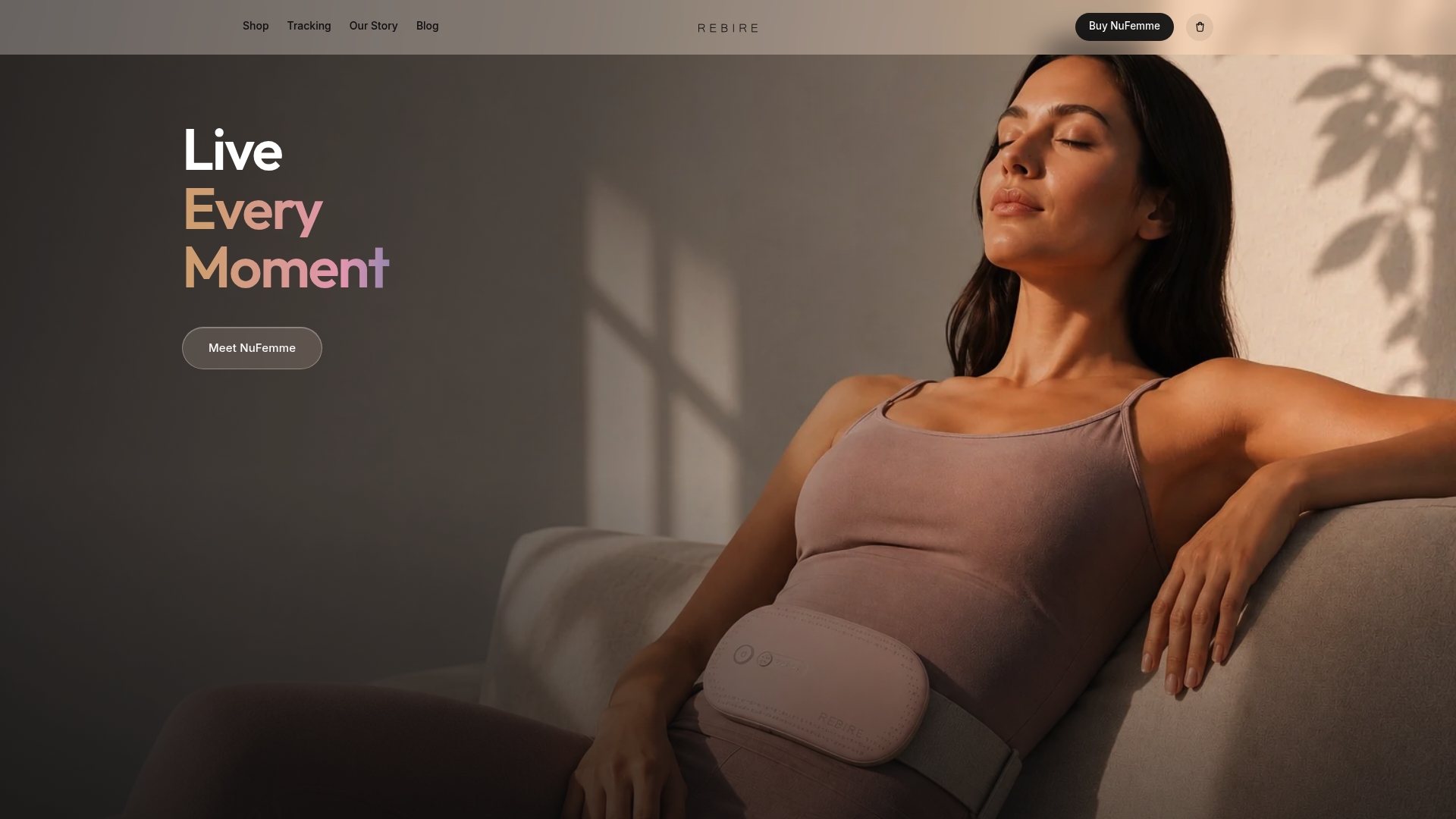
NuFemme is a cordless wearable that combines heat, massage, and red-light therapy in one belt you wear discreetly under your clothes. It pairs naturally with the stretches above: use it to warm your lower back or abdomen before child’s pose, or wear it through your day when a full routine isn’t possible.
- Three heat levels and three massage speeds let you adjust comfort to the moment, whether you’re working, running errands, or resting.
- No cords and no waiting for a heating pad to warm up, so relief travels with you.
- Finished in Rose Gold or Ivory, it also works as a genuinely thoughtful gift from a partner who’s paid attention to what you go through every month.
If you want a relief option that moves with you between stretching sessions, explore NuFemme and see which setting fits your day.
This article is general information, not a substitute for advice from a qualified doctor. Consult a qualified healthcare professional about your own circumstances before acting on anything here.
FAQ
Can stretching help period cramps?
Yes. Gentle stretching, especially poses like child’s pose, supine twists, and pelvic tilts, can ease menstrual pain by releasing tension in the pelvic and lower back muscles.
What is level 10 period pain?
Extremely severe pain on a standard pain scale describes the most intense pain imaginable, pain so intense it usually warrants medical attention rather than self-care alone. If your cramps reach this level, especially alongside dizziness or heavy bleeding, contact your doctor rather than relying on stretching or heat.
What day is heaviest on your period?
Flow can peak early in a period for some people, though this varies by individual and cycle. Cramps often feel strongest during these same early days, which is when gentle stretching and heat tend to offer the most noticeable relief.
What can worsen period cramps?
Dehydration, high stress, lack of movement, and skipping sleep can all intensify menstrual cramps. Smoking and a diet low in anti-inflammatory foods are also commonly cited factors, alongside underlying conditions that a clinician can help rule out if your pain seems unusually severe.
Sources
- Comparative effectiveness of exercise interventions for primary dysmenorrhea: a systematic review and network meta-analysis - PMC
- What Helps With Period Cramps?
- Dysmenorrhea: Painful Periods | ACOG