

If you need hands-free relief while you keep moving through your day, a cordless wearable is your best bet. If you need to cover a large area, want the highest possible heat, or care most about upfront cost, a traditional plug-in heating pad still does that job well. Either way, treat heat as the proven part of the routine, and check with a doctor if your pain is new, severe, or getting worse.
TL;DR:
- Cordless wearable heat devices are more portable and discreet but typically cost more and have limited runtime compared to traditional plug-in pads.
- Steady, moderate heat delivery is more effective for pain relief than brief bursts of higher temperature, with adjustable settings helping to tailor comfort.
- The best device depends on the pain location: wearables excel for cramps and travel, while larger pads better cover back or hip pain areas.
- Using heat devices safely requires monitoring skin, avoiding sleep with the device, and ensuring proper placement to prevent burns.
- Evidence strongly supports steady heat therapy for menstrual cramps, with red-light therapy being an uncertain addition rather than a replacement.
Table of Contents
- Comfort, portability, heat control, and cost: how they really compare
- Matching the device to your pain: cramps, back pain, joints, or travel
- Avoiding burns: a safety checklist for either device type
- What the research actually supports
- Fitting wearable heat into a real day, and giving it as a gift
- NuFemme: a cordless option built for discreet, on-the-go relief
- Sources
- FAQ
Comfort, portability, heat control, and cost: how they really compare
Both device types deliver the same basic therapy, warmth against your skin, but they get you there in very different ways.
Comfort and fit depend on shape more than anything else. A wearable belt or wrap uses adjustable straps to sit against your lower abdomen or back and moves with you, including under a sweater or waistband. A traditional pad is flat and flexible enough to drape over a larger area, but you generally need to stay still, or close to it, for it to stay in place.
Portability is where the split becomes obvious. A cordless wearable runs on a rechargeable battery, so there is no outlet to find and no cord limiting how far you can walk. That also makes it easier to bring on a flight, though it is worth checking your airline’s battery rules before you pack one, as detailed in this guide to wearable heating pads on a plane. A plug-in pad has no such restriction, but it keeps you tethered to a wall.
Heat delivery matters more than peak temperature. Devices that hold a steady, tolerable warmth against the skin appear to be the more effective design, according to randomized-trial evidence on continuous low-level heat, rather than devices that run hotter for shorter bursts. Some pads offer moist heat, which can feel more penetrating, while most wearables use dry heat delivered through a flexible pad.
Runtime and power vary by device. Wearables typically run for a few hours per charge and often include an auto-off timer. Plug-in pads run as long as they are plugged in, and microwavable packs need a few minutes of reheating each time they cool.
Cost and maintenance favor traditional pads upfront, since they are generally cheaper to buy, while wearables add the cost of a battery and charging cable but remove the ongoing cost of buying replacement microwavable packs. For a closer look at what to check before buying either style, see this wearable heating pad buyer’s guide.
- Comfort: wearables move with your body, pads cover more surface area.
- Portability: wearables go cordless and travel-friendly, pads stay near an outlet.
- Heat control: steady, moderate warmth outperforms brief high heat for cramps.
- Runtime: wearables need charging, pads need only an outlet or a microwave.
- Cost: pads are cheaper upfront, wearables cost more but need less ongoing upkeep.
Pro Tip: Look for a device with at least two or three heat settings so you can lower the temperature during longer sessions without giving up warmth entirely.
Matching the device to your pain: cramps, back pain, joints, or travel
The right choice depends less on the device itself and more on where you’ll be when the pain hits.
- Menstrual cramps: a wearable’s biggest advantage here is adherence. You are far more likely to keep steady heat against your lower abdomen for hours if you can wear it to work or while running errands, instead of lying down next to an outlet.
- Back or hip pain covering a larger area: a full-size plug-in pad usually wins, since it can drape across your lower back in a way a smaller wearable band cannot.
- Joint pain in a knee, shoulder, or wrist: a small wrap or a microwavable pack shaped for that joint tends to fit better than either a full pad or a torso-focused wearable.
- Travel, work, or public settings: cordless wearables let you apply heat discreetly underclothing, without an outlet or an obvious pad visible during a meeting or a commute. Readers who need a portable option specifically for these settings can compare choices in this heating pad alternative for cramps on the go.
Before you buy, run through a short checklist: how much surface area do you need covered, how many heat settings does the device offer, how many hours of runtime you’ll realistically need, and whether the material is washable or wipeable.
Avoiding burns: a safety checklist for either device type
Heat therapy is generally low-risk, but not risk-free, and the same rules apply whether you’re wearing the device or lying on it.
- Check your skin periodically during use and stop if it turns red or feels irritated.
- Avoid sleeping with either device unless the manufacturer explicitly rates it for overnight use.
- Follow the labeled session time rather than guessing.
- Be extra cautious if you have reduced skin sensation, a skin condition, or if clothing compresses the device against your body.
- Choose a device with an auto-off timer, a capped maximum temperature, and a washable cover.
FDA adverse-event reports for heat-wrap products document burn injuries, including second- and third-degree burns, many tied to misuse or compression under tight clothing. That pattern is a strong argument for correct placement and for never layering a heat device under something tight enough to trap heat against one spot.
What the research actually supports
Topical heat has the strongest evidence base of any modality discussed here, and it’s worth knowing where that evidence stops.
- A systematic review of heat therapy for primary dysmenorrhea found suggestive benefit across six qualifying randomized trials, though the overall pool of studies remains small.
- A randomized, multisite study comparing continuous low-level heat to acetaminophen found the heat wrap produced better pain relief over several hours in a large participant group.
- A recent systematic review on photobiomodulation found the evidence for red and near-infrared light heterogeneous, with results ranging from very low to moderate certainty depending on the outcome measured.
The practical takeaway: prioritize a device that delivers steady, even heat first. Treat vibration or red-light features as reasonable extras, not as a substitute for proven heat delivery, since device-specific trials for combined modalities are still limited.
Fitting wearable heat into a real day, and giving it as a gift

I’ve found the appeal of a wearable comes down to timing you can’t always control. Cramps do not wait for you to get home, and a cordless device that works under a coat or a desk means you don’t have to choose between comfort and your schedule, whether you’re commuting, sitting through meetings, or running errands.
A premium wearable also makes a thoughtful gift, since it signals that someone paid attention to a pain you deal with every month rather than grabbing something generic at the last minute.
— Lavinia
NuFemme: a cordless option built for discreet, on-the-go relief
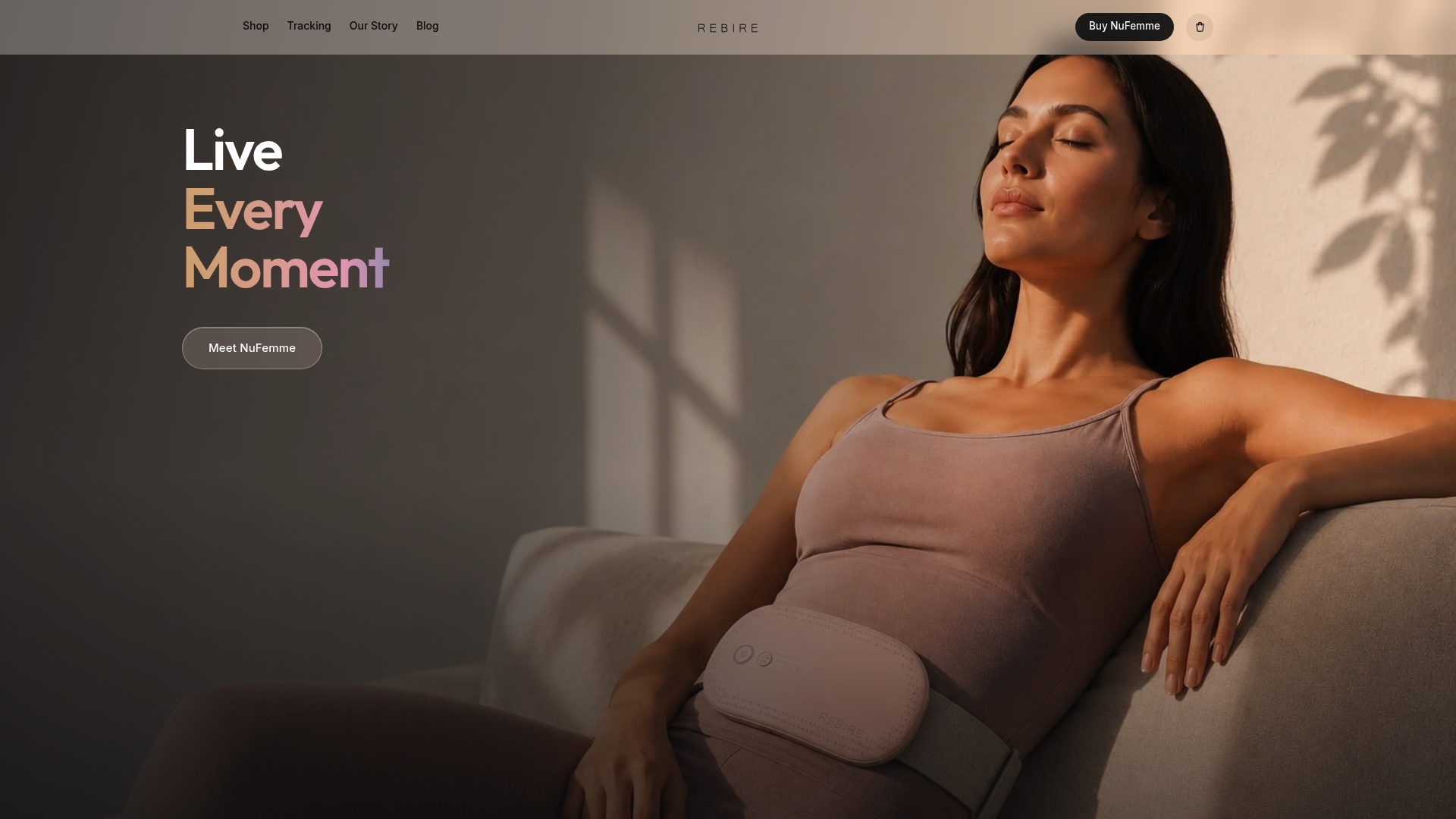
If a cordless wearable sounds like the right fit, NuFemme combines heat, massage, and red-light therapy in one belt you wear under your clothes, with no cord and no waiting at home for a plug-in pad to warm up. It offers three heat levels and three massage speeds, so you can adjust the intensity whether you’re at a desk, out running errands, or just need a few quiet minutes to recover. NuFemme also works well as a gift for a partner who wants to show care, with finishes available in appealing colors.
- Best for: people who want portable, discreet relief without sitting near an outlet.
- Best for: gift buyers looking for something more personal than a drugstore pickup.
- Best for: anyone who wants adjustable heat and massage settings in one device.
| Feature | NuFemme |
|---|---|
| Power source | Rechargeable, cordless |
| Modalities | Heat, vibration massage, red-light therapy |
| Settings | 3 heat levels, 3 massage speeds |
| Price | Please see the NuFemme product page for current pricing details |
Before you buy, check your preferred heat range against your own comfort using this guide to heat settings for cramps, then visit the NuFemme product page to see current availability.
Sources
- Heat therapy for primary dysmenorrhea: A systematic review and meta-analysis
- Continuous, low-level, topical heat wrap therapy as compared to acetaminophen for primary dysmenorrhea
- Systematic review on photobiomodulation for pain
- MAUDE adverse event database report for disposable heat wraps
This article is general information, not a substitute for advice from a qualified doctor. Consult a qualified healthcare professional about your own circumstances before acting on anything here.
FAQ
Is there a wearable heating pad?
Yes, wearable heating pads exist as cordless belts or wraps that deliver heat while you move around, unlike traditional plug-in pads that require you to stay near an outlet. Some, like NuFemme, add massage and red-light therapy alongside heat in one device.
What are the downsides of using a heating pad?
Traditional plug-in pads tie you to an outlet, limit movement, and carry a documented burn risk when misused or compressed under tight clothing. They also should not be used while sleeping unless the manufacturer explicitly says the model is rated for it.
What is a good replacement for a heating pad?
A cordless wearable is a practical replacement when you need heat that travels with you, since it delivers the same continuous low-level warmth that clinical research links to cramp relief, without a cord. Microwavable packs and hot water bottles also work, though they need reheating and offer less precise temperature control.
Is red light therapy better than a heating pad?
Not based on current evidence. Reviews of photobiomodulation describe the research as heterogeneous and inconsistent, while heat therapy has more consistent randomized-trial support for menstrual cramps, so red light is best treated as an addition rather than a stand-in for heat.