

For some people, yes. Human studies link higher coffee and caffeine intake to more severe menstrual cramps, though the effect isn’t universal. Your best move is a quick self-test: track your caffeine intake for one cycle, then try a gradual reduction in the days before your period to see if your pain score actually drops. If cutting back isn’t realistic, drug-free tactics like heat and movement still work on their own.
TL;DR:
- Most evidence linking caffeine to menstrual cramps is observational, and individual responses can vary widely, making personal testing essential.
- Gradually reducing caffeine intake starting three to seven days before bleeding and tracking cramp severity helps determine personal impact.
- Non-drug tactics like heat therapy, gentle movement, hydration, and dietary adjustments can relieve cramps independently of caffeine consumption.
- Severe or worsening cramps, heavy bleeding, or additional symptoms like fever require medical evaluation beyond self-tracking.
- Using devices like NuFemme, which combines heat and massage, can provide effective relief while testing caffeine’s effect on cramps.
Table of Contents
- What the Research Says About Caffeine and Cramps
- How to Test Whether Caffeine Affects Your Cramps
- Drug-Free Ways to Ease Cramps Right Now
- When Cramps Signal Something More Than Caffeine
- Why I Don’t Trust Blanket “Quit Caffeine” Advice
- A Discreet Option While You Run Your Trial
- Sources
- FAQ
What the Research Says About Caffeine and Cramps
The connection between caffeine and cramps shows up most clearly in observational research on dysmenorrhea, the medical term for painful periods. One population-based study found moderate and high coffee intake associated with higher odds of moderate-to-severe dysmenorrhea, and a related analysis reported that 86.8% of frequent caffeinated-drink consumers experienced dysmenorrhea, compared with 13.2% of non-consumers. A separate study found a statistically meaningful link between caffeine and pain level, with a p-value of 0.009.
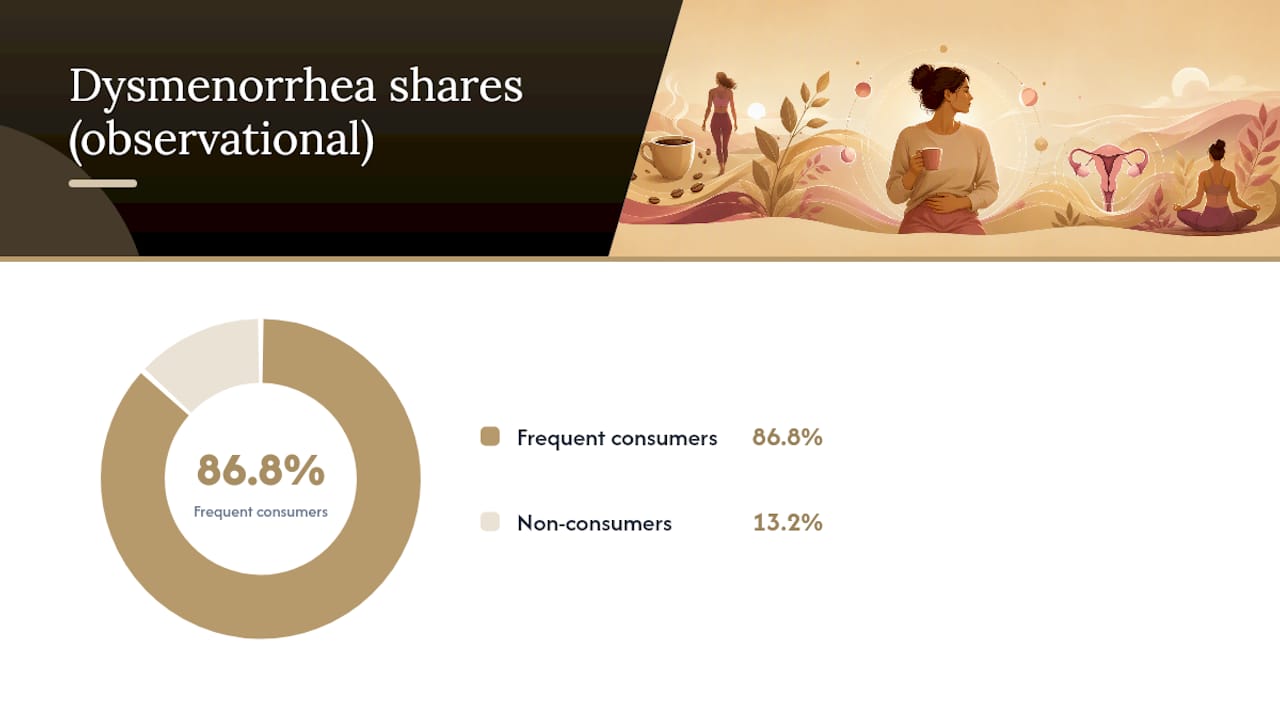
That’s a striking gap, and it deserves a closer look rather than blind acceptance. These are observational studies, which mean they show a pattern, not proof that caffeine causes the pain. People who drink a lot of coffee may also smoke more, sleep less, eat more sugar, or carry a higher BMI, and any of those factors could be doing some of the work.
Caffeine and PMS are a different story entirely. A large prospective cohort study found no compelling association between high caffeine intake and the development of PMS once researchers adjusted for smoking and BMI. That distinction matters: dysmenorrhea is uterine cramp pain, while PMS covers mood and physical symptoms in the days before bleeding starts. Caffeine looks more tied to the cramp itself than to the mood swings.
There’s a plausible biological reason for that. Caffeine blocks adenosine receptors throughout the body, and that blockade triggers vasoconstriction, narrowing blood vessels and potentially reducing blood flow to the uterus during a phase when it’s already contracting hard. Separately, mechanistic animal research found caffeine stimulates the release of uterine prostaglandins, the same compounds responsible for triggering cramping in the first place. More prostaglandins generally means stronger, more painful contractions.
A few limitations are worth naming honestly:
- Most human evidence is observational, not randomized, so reverse causation is possible (people in more pain might reach for coffee as self-medication).
- Confounders like smoking, sugar intake, and BMI are rarely fully controlled.
- Study populations vary widely by region, diet, and caffeine tolerance, which limits how far results generalize.
- Few randomized trials have tested caffeine reduction specifically for dysmenorrhea.
Interestingly, caffeine isn’t purely a villain here. A randomized crossover trial found that adding 130 mg of caffeine to 1 gram of paracetamol produced significantly greater pain relief at two hours than paracetamol alone. That’s a controlled clinical dose paired with medication, though, not your morning latte habit, and it doesn’t cancel out the observational link between everyday caffeine intake and cramp severity.
How to Test Whether Caffeine Affects Your Cramps
You don’t need a lab to figure out your own pattern. A short personal trial, paired with honest tracking, tends to be the most reliable way to find out whether coffee and period cramps are connected for you specifically, since individual response to caffeine varies widely.
- Log a baseline cycle first. Each day, jot down your drink type, an estimated caffeine amount in milligrams, your cramp score from 0 to 10, hours of sleep, stress level, and any sugary or processed food you ate.
- Start a gradual cutback three to seven days before your expected period. Sudden withdrawal can trigger its own headaches and fatigue, so ease down instead of quitting cold.
- Swap smart, not sudden. Try half-caf blends, smaller cup sizes, or switching your afternoon cup to decaf while keeping your morning routine intact.
- Watch the first 48 to 72 hours of bleeding closely. This is when cramps typically peak, and it’s the window where a caffeine effect would show up most clearly.
- Repeat for a second cycle if results are unclear. One cycle can be noisy thanks to stress, illness, or travel, so a second round strengthens your confidence in the pattern.
Pro Tip: Keep your sugar intake steady while you’re testing caffeine. Cutting both at once makes it impossible to tell which change actually helped, and sugary food and drinks are independently linked to higher rates of dysmenorrhea.
A meaningful result usually looks like a two-point or greater drop in your average cramp score, not a one-off good day. If your pain stays flat despite a real reduction in caffeine, that’s useful information too. It means your energy is better spent on other drug-free tactics instead of chasing a caffeine culprit that isn’t there.
Drug-Free Ways to Ease Cramps Right Now
While you’re running your caffeine trial, you don’t have to just wait it out. Several tactics have real evidence behind them and work independently of anything you drink.
- Heat therapy relaxes the uterine muscle and improves local blood flow, which is why a warm compress or heating pad remains one of the most consistently effective non-drug options for drug-free period pain relief.
- Massage and vibration can interrupt pain signals through the gate-control mechanism, and some people find vibration-based devices genuinely take the edge off within minutes.
- Gentle movement, like walking or light stretching, increases circulation and releases endorphins, both of which counter cramping.
- Hydration supports smoother muscle function, and dehydration tends to make cramping feel sharper. Here’s more on how water intake affects cramps.
- Dietary tweaks like adding omega-3s or magnesium and cutting back on processed sugar may reduce inflammation tied to prostaglandin production.
Pro Tip: Stack tactics instead of picking one. Heat plus light movement plus consistent tracking tends to outperform any single method used alone.
When Cramps Signal Something More Than Caffeine
Most menstrual cramps, whatever their relationship to your coffee habit, are manageable with the tactics above. But some patterns need a clinician’s eyes, not just a tracking sheet.
Watch for these red flags:
- Sudden, severe pain that’s different from your usual cramps
- Pain that keeps getting worse year over year, especially after age 25
- Heavy bleeding that soaks through protection every hour
- Fever alongside pelvic pain
- No improvement despite your usual heat, movement, and medication routine
If any of these apply, bring a one-line pain timeline to your appointment: when it started, how it’s changed, what you’ve tried, and your caffeine-trial notes. That level of detail helps a clinician move faster toward a diagnosis, whether that means PCOS, endometriosis, or another underlying cause worth treating directly.
Why I Don’t Trust Blanket “Quit Caffeine” Advice
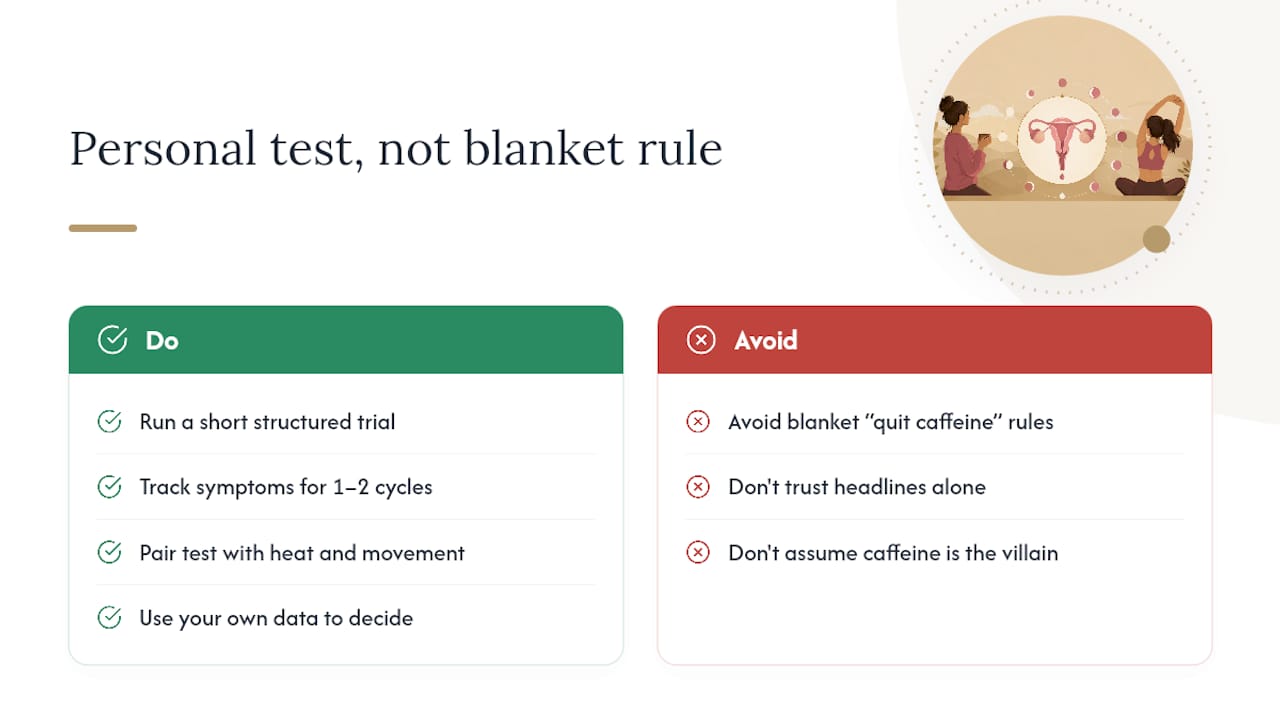
Most articles on this topic tell you to simply cut caffeine and call it solved. That’s lazy advice, and the research doesn’t actually support it as a universal rule. The prospective PMS data shows caffeine isn’t the villain for every menstrual symptom, and the crossover trial on paracetamol plus caffeine proves the compound isn’t purely destructive in every context. Individual variation is the real story here, not a clean cause and effect.
What I do trust is a short, structured trial over blanket elimination. Track it, test it, and let your own body’s data decide instead of a headline. In the meantime, pairing that experiment with heat and movement gives you relief regardless of what your coffee habit turns out to be.
— Lavinia
A Discreet Option While You Run Your Trial
Tracking caffeine takes a cycle or two to pay off. In the meantime, you still need something that works today, and NuFemme was built for exactly that gap. It’s a cordless wearable that combines heat, vibration massage, and red-light therapy in one belt worn discreetly under your clothes, with three heat levels and three massage speeds so you can dial in what actually feels like relief.
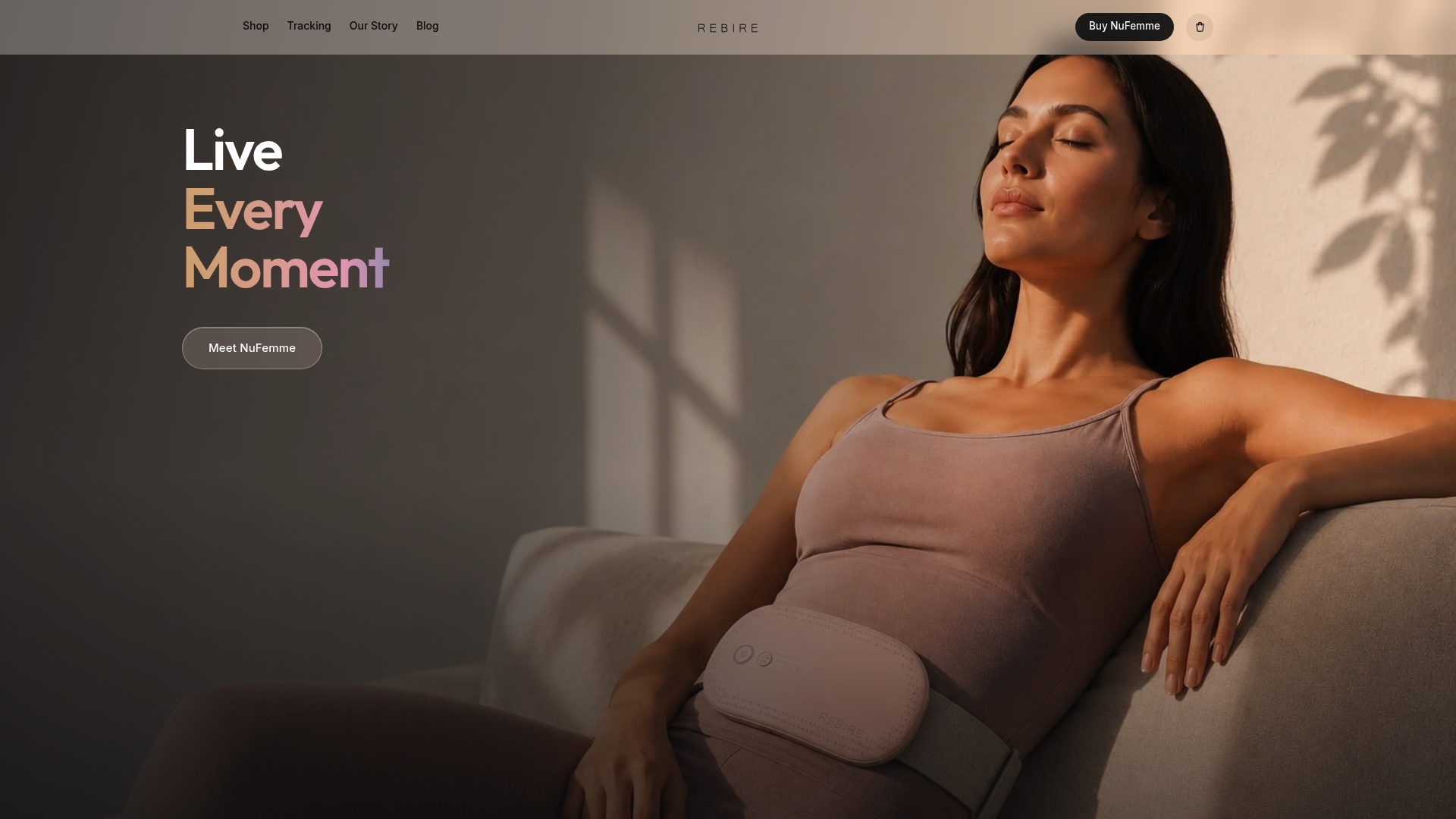
It suits two kinds of people equally well: those managing cramps solo who want relief without sitting near an outlet, and partners shopping for something more thoughtful than a last-minute drugstore run. Finished in Rose Gold or Ivory, it reads as a genuine gift, not a medical device in disguise. Visit the NuFemme product page to see the full feature set, priced at $338 one-off, and consider logging your cramp score for a cycle after you start using it alongside your caffeine trial to see what actually moves the needle for you.
Sources
- Multiple observational studies linking caffeine to increased dysmenorrhea severity (collected evidence)
- Prospective study of caffeine and PMS (no strong association after adjustment)
- Paracetamol plus caffeine enhances analgesia in primary dysmenorrhea (randomized crossover study)
- Caffeine increases uterine prostaglandin output (mechanistic animal study)
This article is general information, not a substitute for advice from a qualified doctor. Consult a qualified healthcare professional about your own circumstances before acting on anything here.
FAQ
Does Caffeine Make Cramps Worse for Everyone?
No. Observational studies link higher coffee intake to greater odds of moderate-to-severe dysmenorrhea, but the effect varies by person and isn’t confirmed by randomized trials. A short personal trial is the only way to know your own response.
Is Coffee and Period Cramps the Same Issue as Caffeine and PMS?
No, they’re different outcomes. Caffeine appears more consistently tied to cramp severity than to PMS symptoms, which cover mood and physical changes before bleeding starts rather than the cramp itself.
Can Caffeine Withdrawal Cause Cramps or Headaches Around My Period?
Cutting caffeine too fast can trigger withdrawal headaches and fatigue, which can feel like they’re adding to period discomfort. Reducing gradually, over three to seven days rather than quitting cold, usually avoids this overlap.
Does Caffeine Help Cramps in Any Situation?
In one controlled setting, yes. A randomized crossover trial found 130 mg of caffeine added to paracetamol improved pain relief more than paracetamol alone, but that’s a specific medication pairing, not a reason to increase daily coffee intake.
What Is NuFemme and How Does It Help With Cramps?
NuFemme is a cordless wearable combining heat, massage, and red-light therapy in one belt worn under clothing. User data shows many users report reduced pain within 15 minutes, and it’s available on the NuFemme product page for $338.