

Most IUD cramping is common, and it eases with local heat and an NSAID like ibuprofen or naproxen when those are medically safe for you. Pain tends to peak around insertion and improve steadily over the following weeks and months. If cramping is severe, worsening, or comes with fever, foul discharge, or a change in your IUD strings, call your clinician instead of waiting it out.
TL;DR:
- Copper IUDs are more likely to cause heavier bleeding and persistent cramping compared to hormonal IUDs, especially in the first three months.
- Applying heat, taking NSAIDs before or during cramping, and gentle movement often provide rapid relief within minutes.
- NSAIDs like ibuprofen or naproxen are effective because they block prostaglandins responsible for uterine contractions, but should be avoided if you have specific contraindications.
- Cramping usually improves significantly after three to six months post-insertion, but sudden or severe pain beyond this period warrants medical evaluation.
- Persistent or abnormal cramping, new patterns, or changes in string position should prompt a consultation to rule out expulsion or perforation.
Table of Contents
- Why IUDs Cause Cramps (And How Long They Really Last)
- What Actually Relieves Cramps Fast
- Do NSAIDs And Pain Relievers Actually Work For IUD Cramps?
- Home Remedies That Support (Not Replace) Medication
- When Cramping Means It’s Time To Call Your Clinician
- Managing Cramps That Won’t Quit
- Could Your Cramps Signal A Bigger Problem?
- A Caregiver’s View On Where Wearables Fit
- A Drug-Free Option Worth Trying Between Doses
- Sources
- FAQ
Why IUDs Cause Cramps (And How Long They Really Last)
Your uterus treats the IUD as a foreign object at first, and it responds the way any muscle does to irritation: it contracts. Those contractions release prostaglandins, the same pain-signaling compounds behind regular period cramps, which is why IUD cramping can feel like an intensified version of what you already know. Insertion itself causes immediate mechanical irritation to the cervix and uterine lining, which is why that first appointment is usually the sharpest pain point in the whole process.
Not all IUDs behave the same way afterward.
- Copper IUDs (like Paragard) commonly cause heavier bleeding and more persistent cramping than hormonal IUDs, since copper itself provokes a stronger inflammatory response.
- Hormonal IUDs (like Mirena or Kyleena) tend to calm down faster because the released progestin thins the uterine lining over time, often reducing cramps and bleeding after the first few cycles.
- Cramping typically runs its course over the first one to three months after insertion, with most people seeing real improvement by three to six months as the uterus adjusts to the device.
If you’re still in that early window and wondering whether what you’re feeling is normal, it likely is. The timeline matters more than the intensity on any single day.
What Actually Relieves Cramps Fast
When cramps hit, you want relief that works within the hour, not a long-term management plan. Here’s what clinicians and patients consistently rank as most effective, in order of how quickly it tends to help.
- Apply heat directly to your lower abdomen. A heating pad, a wearable heat device, or even a microwaveable rice sock pressed against your belly relaxes the uterine muscle and can ease pain within minutes. Keep it warm, not scalding. Fifteen to twenty minutes at a time is plenty, and never fall asleep with a plugged-in pad against bare skin.
- Take an NSAID as soon as cramping starts (more on dosing below), since it works on the actual chemical cause of the pain rather than just distracting from it.
- Move, don’t just rest. A slow walk or a few gentle yoga poses, like child’s pose or a supported cat-cow, can loosen the pelvic muscles that tense up around cramps. Lying rigid in bed often makes cramping feel worse, not better.
- Consider a TENS device if heat and NSAIDs aren’t enough. These small units send mild electrical pulses through the skin to interrupt pain signals before they reach your brain, and some people find them genuinely effective for period-related cramping. Talk to your clinician before relying on one regularly, especially if you have any underlying heart or nerve condition.
Pro Tip: Pair heat with movement instead of choosing one or the other. A ten-minute walk with a wearable heat wrap under your clothes covers both mechanisms at once, muscle relaxation and improved circulation, without requiring you to stop what you’re doing.
Do NSAIDs And Pain Relievers Actually Work For IUD Cramps?
NSAIDs are the closest thing to a first-line treatment for IUD cramping, because ibuprofen and naproxen block the prostaglandins directly responsible for uterine contractions. That’s a different mechanism than acetaminophen, which dulls pain perception but doesn’t touch the inflammatory cause, so most clinicians recommend NSAIDs first when they’re safe for you.
Practical dosing that clinicians commonly suggest:
- Take naproxen or ibuprofen with food to protect your stomach.
- For insertion day specifically, some clinicians recommend dosing about an hour before your appointment so the medication is active before the procedure starts.
- Avoid NSAIDs if you have a history of ulcers, kidney disease, or an NSAID allergy, and check with your clinician if you’re on blood thinners.
A review pooling 21 clinical trials across 3,689 participants found NSAIDs generally reduce IUD-related pain and bleeding, though many of the individual trials carried low certainty, meaning the exact best regimen still isn’t settled. That same review found naproxen sodium helped meaningfully with uterine pain in one trial, while six months of daily prophylactic ibuprofen didn’t reduce how often people discontinued their IUD, so more medication isn’t automatically better. For heavier bleeding that doesn’t respond to NSAIDs, some clinicians turn to tranexamic acid as a second-line option, though that conversation belongs with your provider, not a home remedy checklist.
Home Remedies That Support (Not Replace) Medication
Hydration and rest sound almost too simple to mention, but a dehydrated, exhausted body registers pain more intensely, so both genuinely blunt how cramps feel. Slow breathing or guided imagery won’t shut off a cramp, but they lower the stress response that makes pain feel sharper, which is worth five quiet minutes on a bad day.
A few supplements have modest supporting evidence, though none replace NSAIDs or a clinician conversation:
- Magnesium may help relax uterine muscle, and it’s worth discussing dosing with your provider rather than guessing.
- Vitamin B1 (thiamine) has some evidence for reducing menstrual cramp severity in general, though data specific to IUD cramping is limited.
- Omega-3 fatty acids show a modest anti-inflammatory effect that may complement, not replace, other relief methods.
For DIY heat, a microwaveable rice sock is cheap, reusable, and conforms to your belly better than most rigid heating pads. Contrast baths, alternating warm and slightly cooler water, can also ease pelvic tension for some people, though plain heat and gentle movement remain the best-studied combination.
When Cramping Means It’s Time To Call Your Clinician
Most cramping is annoying, not dangerous. But a few signs cross the line from normal adjustment into something that needs medical attention.
- Watch for fever, chills, or foul-smelling discharge, which can signal infection and needs same-day evaluation.
- Note any sudden, severe pain that’s different in character from your usual cramps, not just more intense.
- Check your IUD strings regularly. If they feel longer, shorter, or missing entirely, or if you can feel the hard plastic of the device itself, call your provider.
- Describe your symptoms specifically on the phone: when the pain started, whether it’s constant or comes in waves, and any bleeding changes. That detail helps your clinician decide whether you need an ultrasound, an in-office exam, or same-day removal.
Managing Cramps That Won’t Quit
If cramping is still disrupting your life well past the three to six month adjustment window, it’s worth revisiting your plan rather than just pushing through it.
- Ask your clinician about trialing a different NSAID or dosing schedule, since not every formulation works equally well for every person.
- If heavy bleeding is part of the picture, tranexamic acid may be worth discussing as a targeted, short-term option.
- Keep a simple symptom diary, noting pain level, timing, and any triggers like stress or exercise, so patterns become obvious instead of guesswork.
- If quality of life genuinely hasn’t improved after a fair trial period, removal or switching to a different contraceptive method is a completely reasonable conversation to have. An IUD is supposed to make your life easier, not harder.
Could Your Cramps Signal A Bigger Problem?
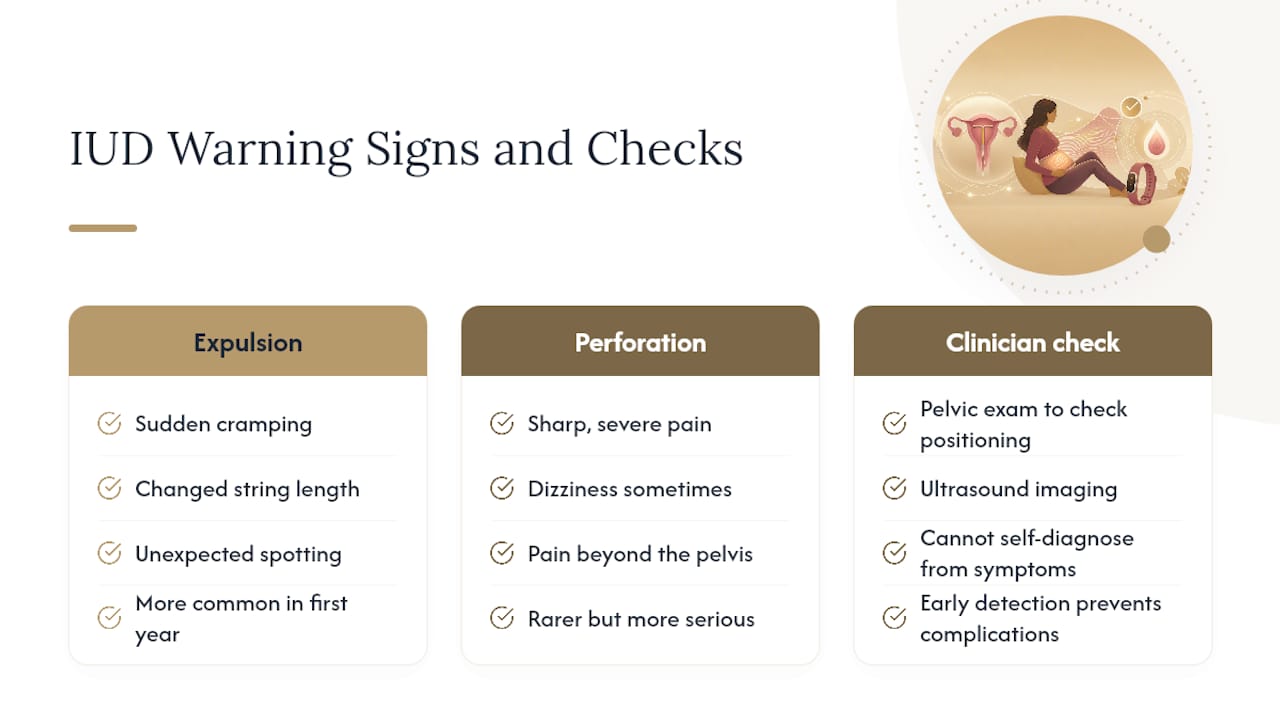
Occasionally, cramping that feels different from your baseline points to something mechanical rather than just hormonal adjustment. IUD expulsion, where the device partially or fully slips out of position, often shows up as sudden cramping paired with a change in string length, unexpected spotting, or a partner noticing the device during intimacy. It’s more common in the first year, and it’s more likely with copper IUDs and in people who haven’t given birth vaginally before.
Perforation, where the IUD pushes through the uterine wall, is rarer but more serious. It typically causes sharp, severe pain that doesn’t fit the usual cramping pattern, sometimes with dizziness or pain that spreads beyond the pelvis. Most perforations happen at the time of insertion itself, even if symptoms take time to become obvious.
Neither of these is something to diagnose from a symptom list at home. If your cramping pattern suddenly changes, if it’s dramatically worse than what you experienced in your first few months, or if you simply can’t feel your strings where you used to, your clinician can check positioning with a pelvic exam or ultrasound. Catching expulsion or perforation early keeps a manageable problem from becoming a complicated one.
A Caregiver’s View On Where Wearables Fit
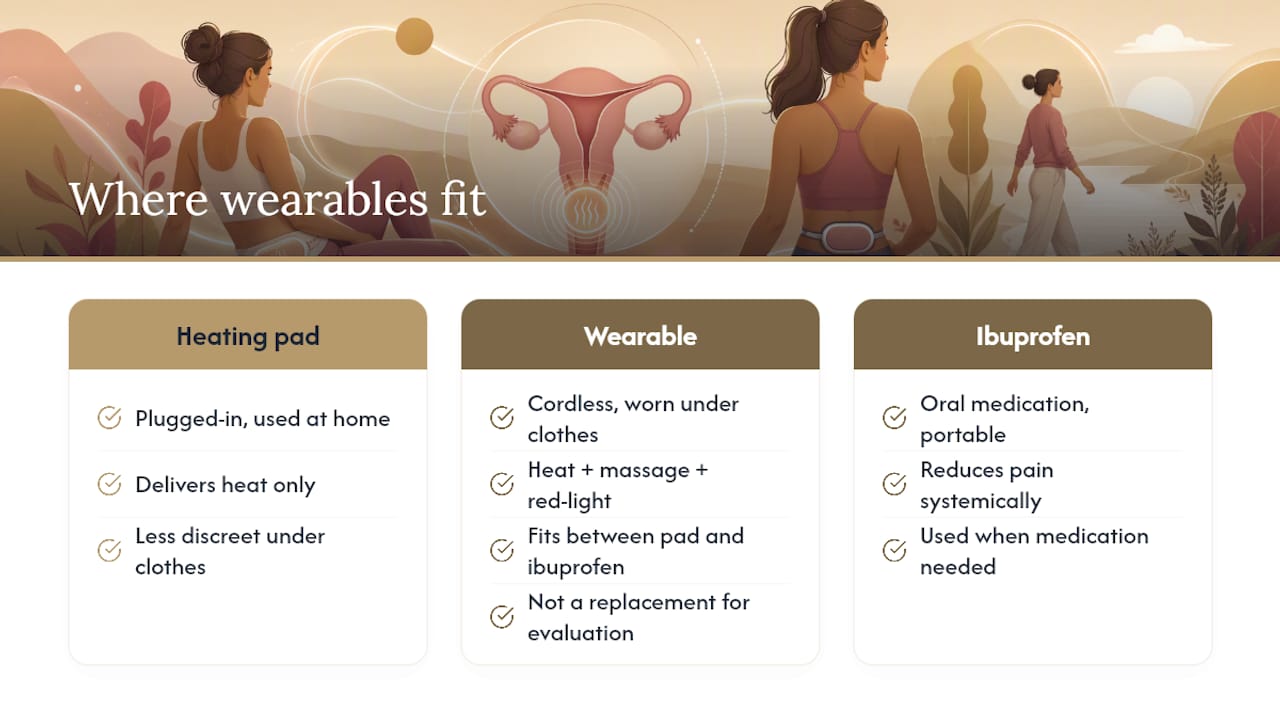
Cramp relief isn’t one-size-fits-all, and the research backs that up: no single method, medication or otherwise, works for everyone equally well. What actually helps most people is layering approaches, heat, movement, medication when needed, and now, wearable technology that fits into an actual day.
Rebire’s NuFemme is a cordless wearable that combines heat, massage, and red-light therapy in one belt, worn discreetly under clothes so you’re not stuck waiting at home for a plugged-in pad to work. It’s not a replacement for medical evaluation of red-flag symptoms. It’s a tool that fits between the heating pad and the ibuprofen, built for a body that still has somewhere to be.
— Lavinia
A Drug-Free Option Worth Trying Between Doses
If you’ve been reaching for a heating pad and losing the fight against its cord, a wearable device solves the actual problem: heat that moves with you instead of the other way around. It combines heat, vibration massage, and red-light therapy in one belt you wear under your clothes, at your desk, on a walk, or wherever your day actually happens.
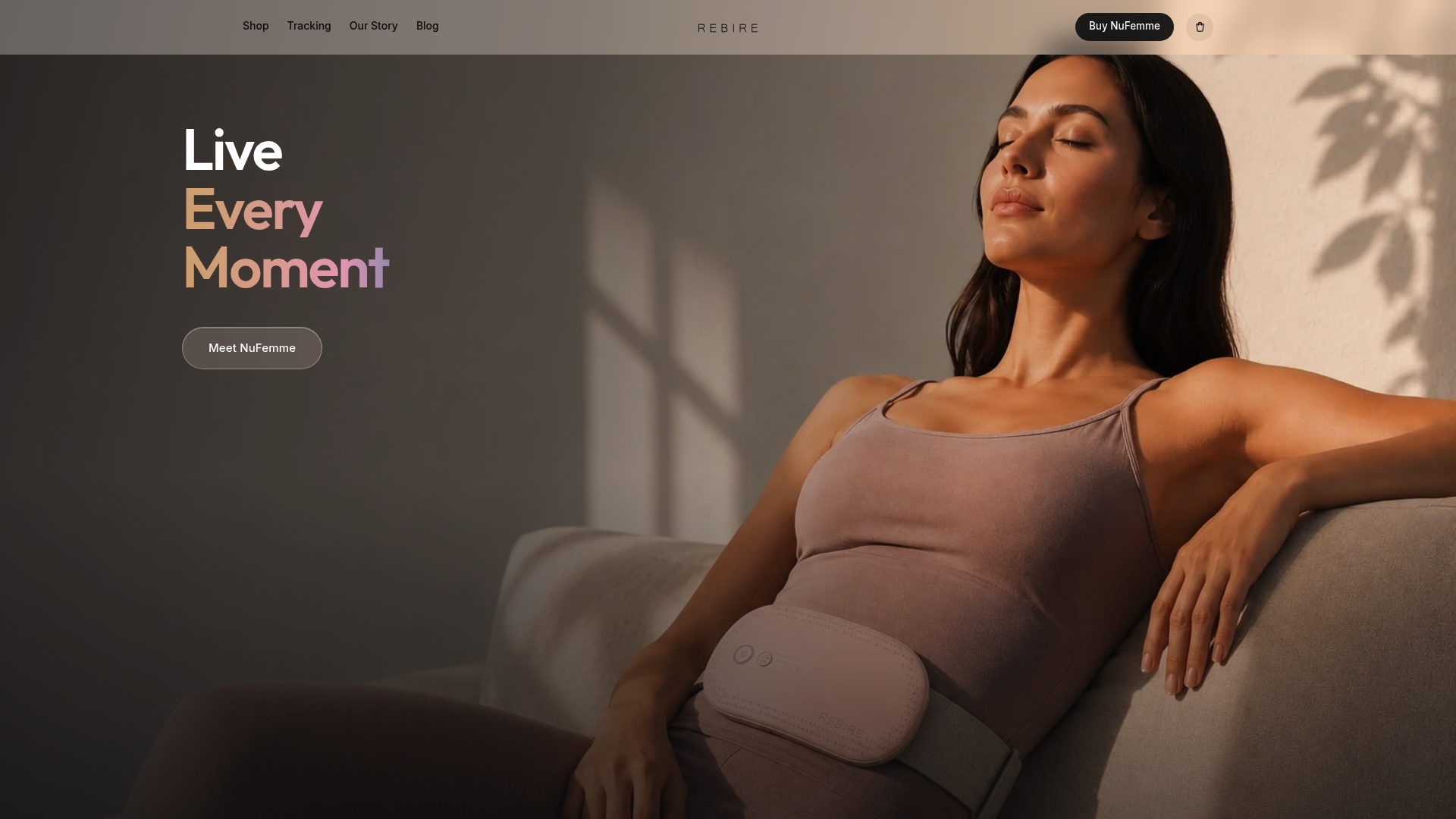
Three heat levels and three massage speeds let you dial in what your body needs on a given day, rather than settling for whatever a single-setting pad gives you. NuFemme is available as a one-time purchase for $338 on the NuFemme product page, where you can see full specs and place an order.
Sources
This guide draws on ACOG’s pain relief guidance, a Cochrane-linked systematic review on NSAIDs and IUD pain, and clinical resources from WebMD and UT Southwestern.
This article is general information, not a substitute for advice from a qualified doctor. Consult a qualified healthcare professional about your own circumstances before acting on anything here.
- Interventions for pain with intrauterine device insertion (systematic review) — PMC
- How to get rid of period cramps: Treatments and prevention | Medical News Today
- How to manage IUD pain: Tips for you and your doctor | UT Southwestern
FAQ
Why Are My Cramps So Painful With An IUD?
Your uterus reacts to the IUD by contracting and releasing prostaglandins, the same pain compounds behind regular menstrual cramps, but often at a higher intensity while your body adjusts. Copper IUDs tend to cause more noticeable cramping than hormonal ones because copper triggers a stronger local inflammatory response.
How Can I Relieve IUD Cramps Fast?
Local heat combined with an NSAID like ibuprofen or naproxen is the fastest, best-supported combination for most people, since heat relaxes the uterine muscle while NSAIDs block the prostaglandins causing the contraction. Gentle movement, like a short walk, and a wearable heat device such as NuFemme can add relief without requiring you to stop your day.
Why Am I Still Cramping With My IUD After Two Years?
Occasional cramping years after insertion can still be normal, especially around your period, but a new pattern or sudden increase in intensity is worth mentioning to your clinician. It can also signal a shift in IUD position, so checking your strings and getting a quick exam rules out expulsion or other changes.
When Do IUD Cramps Typically Go Away?
Most people see the sharpest cramping during the first one to three months after insertion, with steady improvement through the three to six month mark as the uterus adjusts. If pain hasn’t eased noticeably by six months, that’s a reasonable point to revisit your treatment plan with your provider.