

Yes, topical heat often reduces cramp-like pelvic pain from fibroids, but it will not shrink or remove them. Research on heat therapy for menstrual cramps supports it as short-term symptom relief, and MedlinePlus lists it as a reasonable home comfort measure. If pain is sudden, severe, or paired with heavy bleeding or fainting, heat is not enough: get medical care.
TL;DR:
- Heat therapy provides short-term relief by relaxing uterine muscles and improving blood flow but does not reduce fibroid size or number.
- Safe application involves using devices like heating pads, water bottles, or wearable belts at temperatures around 38 to 42 degrees Celsius for up to 20 minutes, avoiding damaged skin or areas with reduced sensation.
- Wearable heat devices offer discreet, hands-free relief during daily activities but require careful use over sensitive or compromised skin and should not replace medical evaluation for severe or unusual symptoms.
- Heat management is supported by evidence mainly from menstrual cramp research, showing comparable effectiveness to NSAIDs with fewer side effects, but does not address underlying fibroid pathology.
- Signs indicating the need for immediate medical care include sudden severe pain, heavy bleeding, fainting, or new neurological symptoms, while ongoing frequent or worsening pain warrants clinical assessment.
Table of Contents
- Why and how heat reduces pelvic cramping
- Practical home heat methods and how to use them safely
- Wearable heat options: what they offer and how to use them safely
- Clinical heat-based treatments for fibroids
- Red flags and routine triggers for clinical evaluation
- What the research actually says about heat for pelvic pain
- Mechanisms and risks: fibroid pain versus other pelvic pain
- Combining heat with other non-drug approaches
- Monitoring symptoms: when heat helps and when it hides trouble
- When heat can make fibroid issues worse
- Living with fibroid pain, one flare at a time
- NuFemme: a cordless way to carry heat with you
- Sources
- FAQ
Why and how heat reduces pelvic cramping
Fibroid pain often feels like an intense version of period cramps, and that overlap is not a coincidence. Both involve the uterine muscle contracting against tissue that is under strain, and heat works on that shared mechanism rather than on the fibroid itself.
When you apply warmth to your lower abdomen, blood vessels near the skin and in the pelvic area widen. This vasodilation improves local blood flow, which helps clear the buildup of prostaglandins, the chemical messengers behind the ischemic, squeezing sensation of cramping. More blood flow means less of that oxygen-starved, tight feeling.
Heat also relaxes the muscle fibers themselves. A tense uterine muscle contracts harder and hurts more; a warmed one loosens. On top of that, warmth on the skin can dial down how strongly your nervous system registers pain signals from deeper tissue, a process sometimes called gate control. Your brain gets a competing, comforting signal that takes some of the edge off the cramp.
What heat does not do is touch the fibroid itself. A heating pad cannot shrink a growth or change its blood supply the way a targeted medical procedure can.
- Vasodilation increases local blood flow and eases ischemic cramping.
- Muscle relaxation reduces the intensity of uterine contractions.
- Nerve signal modulation lessens how much pain you consciously feel.
- None of these pathways change the size, number, or location of a fibroid.
A systematic review and meta-analysis of 57 randomized trials covering 5,359 participants found that superficial heat reduced menstrual cramp pain compared with no treatment and performed comparably to NSAIDs in many trials, with fewer reported side effects. That gives topical heat a real evidence base, even though the trials focused on primary dysmenorrhea rather than fibroids specifically.
Practical home heat methods and how to use them safely
You have several low-cost ways to apply heat at home, and each one suits a different moment in your day.
- Electric heating pad: Plug-in pads offer steady, adjustable warmth, ideal for evenings on the couch or overnight use on a low setting.
- Hot water bottle: A classic, inexpensive option; refill with warm (not boiling) water and always wrap it before placing it on skin.
- Microwavable packs: Rice or gel packs heat quickly and hold warmth for 20 to 30 minutes, good for a quick session between tasks.
- Warm bath: Full-body warmth relaxes pelvic muscles and back tension at once, useful when cramps come with lower back pain.
- Adhesive heat patches: Single-use, low-level patches stick to clothing and provide hours of hands-free warmth for work or travel.
A few safety habits make any of these methods more effective and less risky; for guidance on comfort and recovery, see our fourth trimester comfort products: your recovery guide – Zabbidoo for an external perspective on safe and supportive heat use. Always put a cloth or towel barrier between the heat source and your skin, especially with electric pads or hot water bottles. Check your skin every 10 to 15 minutes for the first use of any new device, watching for redness beyond a mild pink flush. Keep sessions to 15 to 20 minutes at a time with a break in between, and avoid falling asleep on a plugged-in heating pad.
Skip heat entirely over open wounds, broken or irritated skin, or areas where you have reduced sensation, since you will not feel a burn forming until damage is done. If you notice numbness, tingling, or skin that stays red or blistered after use, stop and have it checked. For more ways to pair heat with other quick fixes, our guide on fast period cramp relief methods covers complementary options.
Pro Tip: Warm the pack slightly less than feels maximally soothing at first: skin adapts to heat over minutes, so what feels mild at minute one can scald by minute fifteen.

Wearable heat options: what they offer and how to use them safely
Wearable heat devices solve a real limitation of traditional methods: you cannot carry a hot water bottle to a meeting. These belts or patches deliver low, sustained warmth while staying hidden under clothing, so you get relief without stepping away from your day.
- Sustained low-level warmth avoids the sharp heat-then-cold cycle of a pad that goes cold in an hour.
- Hands-free design means you can type, walk, or drive while the device works.
- Discreet wear under clothing keeps the whole thing private at a desk or in public.
Safety guidance for wearables tracks closely with other superficial heat devices. Clinical reviews of superficial heat therapy suggest working within roughly 38 to 42 degrees Celsius and caution against prolonged continuous use without breaks, particularly overnight or during sleep. Avoid wearables over skin that is broken, sunburned, or numb, and remove the device if you notice excessive redness or discomfort rather than relief. Our breakdown of wearable heating pads for period cramps covers what features matter when comparing this category, and our guide to heat settings for cramps walks through practical temperature choices by device type.
Pro Tip: If you are new to wearable heat, start on the lowest setting for the first cycle and adjust up only once you know how your skin responds.
Clinical heat-based treatments for fibroids
Home heat manages cramping, but it does not touch the fibroid causing it. When symptoms are severe enough to need a structural fix, doctors have several heat-based procedures that work on a completely different scale: they destroy fibroid tissue from the inside using focused thermal energy.
- Radiofrequency ablation delivers focused heat through a probe inserted into the fibroid, destroying the tissue in place without removing the uterus.
- MRI-guided focused ultrasound uses concentrated sound waves, guided by real-time imaging, to heat and destroy fibroid tissue without any incision.
- Microwave and other thermal ablation methods use similar internal heat delivery, chosen based on fibroid size and location.
Mayo Clinic’s overview of fibroid treatment places these procedures alongside watchful waiting, medication, uterine artery embolization, and myomectomy as part of a range of options clinicians consider based on your specific case. None of these are first-line responses to ordinary cramping. They come into play when fibroids cause significant pain, heavy bleeding, or pressure symptoms that self-care has not resolved.
Candidacy depends on several factors your clinician will weigh together: the pattern and severity of your symptoms, the size and location of the fibroid, and whether you hope to become pregnant in the future, since some procedures carry different implications for fertility than others. Recovery varies by procedure, but thermal ablation techniques are generally associated with shorter downtime than surgical removal, while carrying their own risks and limitations depending on fibroid characteristics. This is a decision made with a clinician, not something to self-select based on internet research, and shared decision-making between you and your provider is the standard approach to choosing among fibroid treatments.
Red flags and routine triggers for clinical evaluation
Most cramp-like fibroid pain is safe to manage at home, but certain signs mean you should not wait.
- Seek immediate care for sudden severe pelvic pain, heavy bleeding that soaks through protection quickly, fainting, high fever, new numbness or weakness, or an inability to urinate.
- Schedule a routine evaluation if pain limits your daily activities regularly, bleeding is heavy or prolonged, you suspect anemia from fatigue or dizziness, or you have questions about fertility.
- Expect a workup that may include a pelvic exam, imaging such as ultrasound, and bloodwork to check for anemia, according to Mayo Clinic’s symptom guidance.
Bring a simple symptom log to your appointment: when pain occurs, how long it lasts, and what has or has not helped.
What the research actually says about heat for pelvic pain
The strongest evidence for heat and pelvic pain comes from dysmenorrhea research, not fibroid-specific trials, and that distinction matters for how much confidence to place in it.
- A large meta-analysis found superficial heat reduced cramp intensity compared with no treatment and matched NSAIDs for pain relief in many trials, with fewer side effects reported overall.
- MedlinePlus recommends heat, rest, gentle exercise, and relaxation as supportive measures for fibroid symptoms, while stating plainly that these steps do not remove fibroids.
- Certainty in the underlying trials ranges from low to moderate, meaning the direction of benefit is consistent but the size of the effect varies study to study.
Across 57 trials and 5,359 participants, superficial heat therapy reduced menstrual cramp pain compared with no treatment and performed comparably to NSAIDs in many cases. That is a meaningful signal for a treatment with minimal downside.
The practical read: heat is a reasonable, low-risk first step for cramp-like fibroid pain, worth trying before or alongside medication. It is not a substitute for evaluation when symptoms escalate or persist.
Mechanisms and risks: fibroid pain versus other pelvic pain
Cramp-like fibroid pain and other causes of pelvic pain can feel similar, but they do not share the same underlying process, and that matters for how safely heat applies.
Fibroid cramping typically comes from uterine muscle contracting around or near the growth, the same prostaglandin-driven mechanism behind ordinary period cramps. Heat’s vasodilation and muscle-relaxing effects apply reasonably well here. But pelvic pain can also come from ovarian cysts, endometriosis, pelvic inflammatory disease, or an ectopic pregnancy, conditions where the cause is infection, structural rupture, or abnormal tissue growth rather than simple muscle tension.

Applying heat to pain from an infection can feel temporarily soothing while doing nothing to address the underlying problem, and in some cases warmth can encourage local swelling. This is why persistent or unusual pelvic pain deserves a diagnosis before you settle into a routine of self-treating with heat. If cramping responds to heat the way it always has, that is reassuring. If pain has a new quality, location, or intensity, treat that as a signal to check in with a clinician rather than reaching for a heating pad on reflex.
Combining heat with other non-drug approaches
Heat works well as one piece of a broader self-care routine rather than a stand-alone fix. Pairing it with other non-pharmacological approaches often extends the relief.
Gentle movement, like walking or light stretching, keeps blood flowing to the pelvic area and can reduce the stiffness that builds when you curl up still in pain. Relaxation techniques, including slow breathing or progressive muscle relaxation, work on the same nervous-system pathway that heat does, calming the pain-signal loop rather than just the muscle. MedlinePlus specifically lists rest, gentle exercise, and relaxation alongside heat as supportive measures for fibroid symptoms.
A simple combination that many people find useful: a warm bath in the evening followed by a few minutes of slow breathing, or a heating pad during a short walk break rather than total rest. None of these replace medical treatment for fibroids themselves, but together they can make flare days more manageable while you sort out longer-term options with your provider.
Monitoring symptoms: when heat helps and when it hides trouble
Heat should make you feel noticeably better within the session, not just distracted from the pain. That distinction is worth paying attention to over time.
If a heating pad or wearable consistently brings your pain down to a manageable level within 15 to 20 minutes and it stays that way once you remove the heat, that is a sign your cramping is behaving as expected. Keep a rough mental note of your baseline: how intense the pain is, how long heat takes to work, and how long relief lasts.
Watch for a shifting pattern instead. Pain that used to respond to heat within minutes but now barely budges, sessions that need to get longer or hotter to have any effect, or new symptoms layered on top, like fever, unusual discharge, or bleeding between periods, all suggest something has changed. Heat can mask discomfort just enough that you push through a day you should have spent seeing a doctor. If you find yourself increasing heat intensity or frequency just to get by, treat that as a cue to get evaluated rather than a reason to buy a stronger heating pad.
When heat can make fibroid issues worse
Heat is low-risk for most cramp-like pain, but a few scenarios call for caution or avoidance altogether.
If you have signs of a pelvic infection, such as fever, unusual discharge, or pain that is sharp and localized rather than crampy, heat is not the right first response since it treats muscle tension, not infection, and delaying diagnosis matters more than short-term comfort. Heavy or irregular bleeding is another situation where heat alone is not appropriate: Mayo Clinic lists heavy bleeding as a symptom that needs medical evaluation, since it can point to anemia or a fibroid that has changed in ways heat cannot address.
Skip heat over any area with broken skin, recent surgical incisions, or reduced sensation from nerve issues, since you risk burns you will not feel forming. And if pain suddenly changes character, becoming sharper, more localized, or accompanied by dizziness or fainting, that is a signal to stop self-treating and get checked rather than reaching for a warmer setting.
Living with fibroid pain, one flare at a time
Cramp-like fibroid pain is exhausting in a way that is hard to explain to someone who has not felt it, and reaching for something as simple as heat can feel almost too basic for a pain that big. It works anyway, often enough to matter, and that is worth taking seriously.
The most useful habit you can build is talking openly with a clinician about what you are experiencing, rather than quietly adjusting your life around the pain. Self-care measures like heat are a good bridge while you figure out longer-term answers, not a replacement for that conversation.
— Lavinia
NuFemme: a cordless way to carry heat with you
Most heat relief options ask you to stop what you are doing: sit with a hot water bottle, wait by an outlet, plan your day around a bath. NuFemme is built around the opposite idea. It is a cordless wearable that combines heat, massage, and red-light therapy in one belt, worn discreetly under clothing so you can keep working, walking, or traveling while it runs.
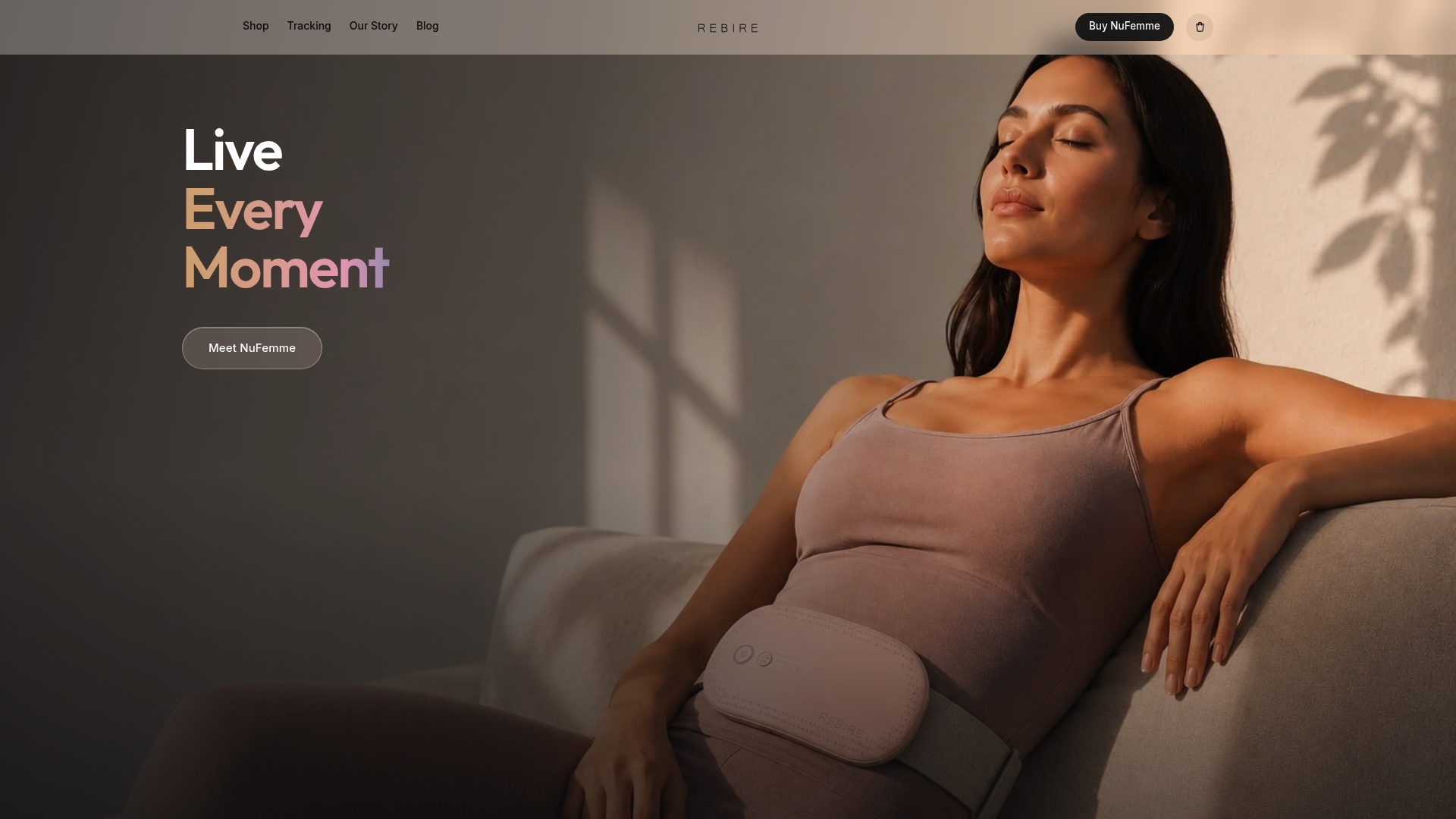
- Three heat levels and three massage speeds let you match intensity to the moment, whether you are at a desk or winding down.
- Rechargeable and cordless, so there is no cord to manage and no waiting near an outlet for a pad to warm up.
- It also works as a thoughtful gift from a partner who has actually paid attention to what you deal with monthly.
Use it the way you would any heat device: start on a lower setting, follow the device instructions, and treat it as an adjunct rather than a way to push through red-flag symptoms like sudden severe pain or heavy bleeding, which still call for a clinician. If you want a closer look at how it fits into a workday, see our NuFemme workday relief page, or explore the NuFemme product page to check current availability and pricing.
Sources
- Living with uterine fibroids: MedlinePlus Medical Encyclopedia
- Heat therapy for primary dysmenorrhea: a systematic review and meta-analysis (PMC)
- Diagnosis and treatment - Mayo Clinic
- Superficial heat therapy in women’s health (Frontiers, 2026)
FAQ
What emotions are linked to fibroids?
Living with fibroid pain and unpredictable bleeding commonly brings frustration, anxiety, and fatigue, especially when symptoms interfere with work or plans. These emotional effects are a recognized part of managing a chronic physical condition and are worth mentioning to your clinician alongside physical symptoms.
What foods should I avoid if I have fibroids?
There is no single food proven to cause or worsen fibroids specifically, so general dietary guidance for symptomatic relief centers on the same balanced habits recommended for overall health. If you are managing heavy bleeding, ask your clinician about iron-rich foods to help offset the risk of anemia.
What medicine can I take to relieve fibroid pain?
Mayo Clinic lists over-the-counter NSAIDs like ibuprofen and naproxen, along with acetaminophen, as common options for fibroid-related pain. Heat therapy can be used alongside these medications, and a clinician can advise on prescription options if over-the-counter relief is not enough.
Does fibroid pain come and go?
Yes, fibroid pain often follows a cyclical pattern tied to your menstrual cycle, flaring around your period and easing afterward. Pain can also vary with fibroid growth or position over time, which is part of why ongoing or worsening symptoms deserve a medical evaluation rather than being written off as normal.