

Yes — surface heat is an effective and generally safe way to relieve menstrual cramps when you follow specific temperature and duration limits. The safest range for skin contact is about 100–108°F, sessions should be timed and monitored, and heat should never touch broken, numb, or irritated skin. Systematic reviews back its pain-relieving effect, and wearables that regulate low-level heat carry less burn risk than an unmanaged hot pad.
TL;DR:
- Applying surface heat within 100 to 108°F for up to 30 minutes is generally safe, but continuous monitoring is essential to prevent burns.
- Wearable devices with automatic timers and adjustable low-level heat significantly reduce skin injury risks compared to hot water bottles or unmanaged pads.
- People with reduced sensation, skin conditions, or during pregnancy should consult a healthcare professional before using heat therapy.
- Combining lower-temperature heat with light movement or hydration can enhance pain relief and reduce dehydration risks during treatment.
- Designing safety features into devices, such as temperature limits and automatic shut-offs, is more effective than relying solely on user vigilance.
Table of Contents
- What Are the Core Safety Rules for Heat Therapy During Your Period?
- Does Heat Safety Depend on Which Device You’re Using?
- How Do You Apply Heat Safely, Step by Step?
- When Should You Stop Using Heat and Talk to a Doctor?
- A Publisher’s Take on Wearable Heat Safety
- Are There Other Ways to Manage Cramps Alongside Heat?
- Does Hot Weather Make Period Symptoms Worse?
- Why Does Hydration Matter When You’re Using Heat Therapy?
- Should You Combine Heat With Cooling on Hot Days?
- Do Safety Guidelines Change With Age or Health Conditions?
- The Case for Designing Safety Into the Device, Not Just the Instructions
- Ready to Try a Safer Way to Manage Cramps?
- Sources
What Are the Core Safety Rules for Heat Therapy During Your Period?
Heat works on cramps by relaxing uterine muscle and improving local blood flow, and the research backs it up: a meta-analysis of 57 randomized trials covering 5,359 participants found heat reduced pain both within 24 hours and with repeated use, with a safety profile that held up at least as well as NSAIDs. That is the headline. The details of temperature and timing are where most people get it wrong.
Superficial heat applied to skin should stay in the range of roughly 100–108°F (38–42°C). Anything hotter raises your risk of a burn without adding extra pain relief, because the muscle relaxation effect plateaus well before you reach scalding territory.
Duration depends heavily on the device:
- Hot, high-temperature sources (hot water bottles, electric pads on high) need a check every 15–30 minutes.
- Low-level wearable patches and belts delivering around 104°F are often built for extended periods of continuous, low-grade heat.
- Any device without a timer or auto shut-off should be treated as a high-temp source, regardless of what the dial says.
Statistic Callout: Clinical reviews note that adhesive, low-level heat patches commonly hold steady around 104°F for several hours, which is why they carry a different risk profile than a hot water bottle held against bare skin for the same stretch.
Skin safety is the part people skip. Check the skin before you apply heat (no cuts, rashes, or inflammation) and again after (no lingering redness, blistering, or numb patches). Stop immediately if you feel burning rather than warmth.
Pro Tip: If you can’t tell whether a sensation is “intense warmth” or “starting to burn,” take the device off. Cramp pain and heat pain feel different, but adrenaline and distraction make that line easy to miss in the moment.
Does Heat Safety Depend on Which Device You’re Using?
The temperature and duration rules above are the foundation, but each device applies them differently. Here’s how the main categories stack up.
- Hot water bottles and warm towels. These run the hottest and cool the slowest, which is exactly why they cause the most reported burns. Always use a cloth or cover layer between the bottle and your skin, check the water temperature before filling, and never fall asleep with one against bare skin.
- Electric heating pads. Convenient at home, but riskiest when left unattended on a high setting, especially if you doze off. Stick to low or medium settings and favor pads with an automatic timer.
- Adhesive single-use heat patches. These deliver a steady, low-level heat (often near 104°F) for extended wear, per the clinical evidence on patch duration. The main downside is skin irritation from the adhesive itself, not the heat, so follow the package directions on wear time.
- Cordless wearables and massage belts. Devices like NuFemme sit in a category of their own: adjustable heat levels mean you can dial down for long wear and up for a short, focused session, and the massage function adds relief without raising skin temperature at all. Because these are built for sustained lower heat rather than short bursts of high heat, they tend to fit safely into a full workday.
Consumer health guidance generally ranks patches and wearables above hot water bottles for convenience precisely because they’re designed for longer, lower-risk exposure rather than short blasts of intense heat.
How Do You Apply Heat Safely, Step by Step?
Good habits matter more than the device itself. Run through this sequence every time.
- Prepare. Inspect the device for frayed cords, cracked casing, or a leaking bottle. Wash and dry the skin. Choose your heat level based on what you’re doing next: higher heat suits sitting still on the couch, lower heat suits a device you’ll wear while moving around.
- Apply. Start at the lowest setting that takes the edge off, not the highest one available. Set a phone timer for a check every 15–30 minutes if you’re using a hot water bottle or electric pad style device. Never place heat directly over an open wound, a fresh scar, or already-irritated skin.
- Monitor. Look for redness that doesn’t fade, numbness, or blistering. Remove the device the moment any of these show up. Never layer a high-heat device on top of a topical numbing cream. Combining the two masks the warning signs your skin would otherwise give you.
- Finish. Let your skin return to a normal temperature before covering it with tight clothing. If you noticed irritation, jot down what happened and what caused it, so you can rule out that setting or device next cycle. Recharge or store your device properly so it’s ready for next time.
Pro Tip: Keep your first session of a new heat level short, even if the box says it’s rated for hours. Skin tolerance varies cycle to cycle, and testing on a lower setting first costs you nothing.
When Should You Stop Using Heat and Talk to a Doctor?
Most people use heat for cramps without incident, but certain signals mean stop now, not later.
- Blistering, peeling, or persistent redness that doesn’t fade within a few hours.
- Numbness or tingling where the device sat.
- New or worsening focal pain, fever, or unusually heavy bleeding alongside your cramps.
Certain conditions raise your risk of thermal injury even at “safe” temperatures. Clinical guidance on heat therapy safety flags diabetes-related neuropathy, active skin conditions or dermatitis, recent surgery, and medications that dull sensation as reasons to check with a clinician first, since reduced sensitivity means you might not feel a burn forming.
Pregnancy and the postpartum period deserve their own caution. Heat guidance for cramps doesn’t automatically apply here. Skip heat over a cesarean incision or perineal trauma, and get pregnancy-specific advice from your provider before using any heat device. If cramps are severe, resistant to heat and standard measures, or paired with symptoms that feel new or off, that combination is worth a medical evaluation to rule out something beyond typical dysmenorrhea.
A Publisher’s Take on Wearable Heat Safety
We built our perspective on this topic around one question: how do you make heat therapy safer by design, not just by instruction? That’s the thinking behind NuFemme’s three heat levels and three massage speeds. A lower, sustained setting is genuinely different from a hot pad cranked to maximum, and giving people that choice matters.
Our own user data shows 93% of NuFemme users reported reduced pain within 15 minutes of use. That’s a self-reported outcome, not a clinical trial, but it lines up with what the broader heat-therapy research already shows about how fast surface heat can work. Cordless and discreet under clothing, the belt is built so you can adjust intensity to your day rather than your day adjusting around a cord.
Are There Other Ways to Manage Cramps Alongside Heat?
Heat rarely needs to work alone. NSAIDs like ibuprofen remain a standard comparison point in the clinical literature, and the heat-therapy meta-analysis found heat performs similarly or slightly better on pain scores, often with fewer side effects. That makes combining the two, heat for the muscle relaxation and a low dose of medication for inflammation, a reasonable option on tougher days, as long as you check with a doctor about any interactions specific to you.
Beyond medication, light movement counts for more than most people expect. A slow walk or a few minutes of gentle stretching increases blood flow to the pelvis in a way that complements what heat is already doing. Some people find a TENS unit useful too, since it works through a different mechanism (nerve signal disruption) rather than temperature.
Magnesium and other supplements come up often in cramp-relief conversations, but the evidence there is thinner and more mixed than the heat-therapy research, so treat supplement claims with more skepticism than you’d apply to heat. Rest, hydration, and reducing caffeine intake during your period round out a reasonable non-heat toolkit. None of these replace heat. They stack with it, which is really the point: heat handles the muscle-level pain quickly, while everything else chips away at inflammation, mood, and energy over the following hours.
Does Hot Weather Make Period Symptoms Worse?
Cramp intensity and heat exposure are two separate issues, and it’s worth keeping them that way in your head. The temperature guidance in this article is about the heat you deliberately apply to your skin, in the 100–108°F range, for a controlled window of time. Ambient heat, a hot room or a summer afternoon, is a different variable entirely, and it can affect how your body handles fluid balance and fatigue during your period regardless of whether you’re using a heating device at all.
If you already run warmer during your period, adding a heat patch or wearable in a hot room means your overall heat load is higher than usual. That’s not a reason to avoid heat therapy. It’s a reason to be more attentive to your skin and your comfort while you use it. Take slightly shorter sessions, keep the device on a lower setting than you might use in a cooler room, and give your skin a break between applications rather than wearing a device continuously through a hot day.
The practical takeaway is simple: the temperature limits for a device don’t change because the room is warm, but your tolerance for extra warmth might. Pay attention to how your skin and body feel, not just the clock.
Why Does Hydration Matter When You’re Using Heat Therapy?
Sweating and fluid loss are part of using any heat source on your body, even a low-level wearable. Add that to normal fluid shifts during your period, and dehydration becomes easier to slide into without noticing, especially over a long wear session.
Water alone isn’t always enough. Electrolytes, sodium, potassium, and magnesium in particular, support muscle function, and cramping muscles are, functionally, muscles working overtime. Some people find that an electrolyte drink or a magnesium-rich snack during a heavy cramp day takes noticeably more edge off than water by itself, though the clinical evidence on supplementing specifically for cramp relief remains limited.
A practical rule: if you’re wearing a heat device for several hours, treat it like light exercise for hydration purposes. Drink water at regular intervals rather than waiting until you’re thirsty, and if you’re prone to heavy periods, watch for signs of dehydration, dizziness, dark urine, unusual fatigue, since blood loss and fluid loss can compound each other. None of this is unique to heat therapy, but heat makes fluid loss a little more of an active variable than it would be otherwise.
Should You Combine Heat With Cooling on Hot Days?
Using heat therapy in warm weather doesn’t have to mean choosing between “on” and “off.” A short, cooler shower or a fan on your face while a wearable belt runs on a low heat setting works better for most people than cranking air conditioning to fight the device’s warmth head-on.
A few combinations work well in practice:
- Keep the heat device localized to your abdomen or lower back, and let the rest of your body stay cool with light clothing and airflow.
- Alternate: a shorter heat session followed by a cool cloth on your neck or wrists, rather than one long continuous session in a hot room.
- If you’re active outdoors, save the heat device for after you’re back inside and cooled down, rather than layering it under clothes in direct sun.
The goal is comfort without overheating your whole body while your skin is already receiving direct, localized warmth. A wearable with adjustable heat levels gives you more room to do this than a fixed-temperature hot water bottle, since you can turn the intensity down without losing the therapeutic effect entirely.
Do Safety Guidelines Change With Age or Health Conditions?
The 100–108°F range and the duration limits in this article apply broadly, but a few groups need to adjust the details.
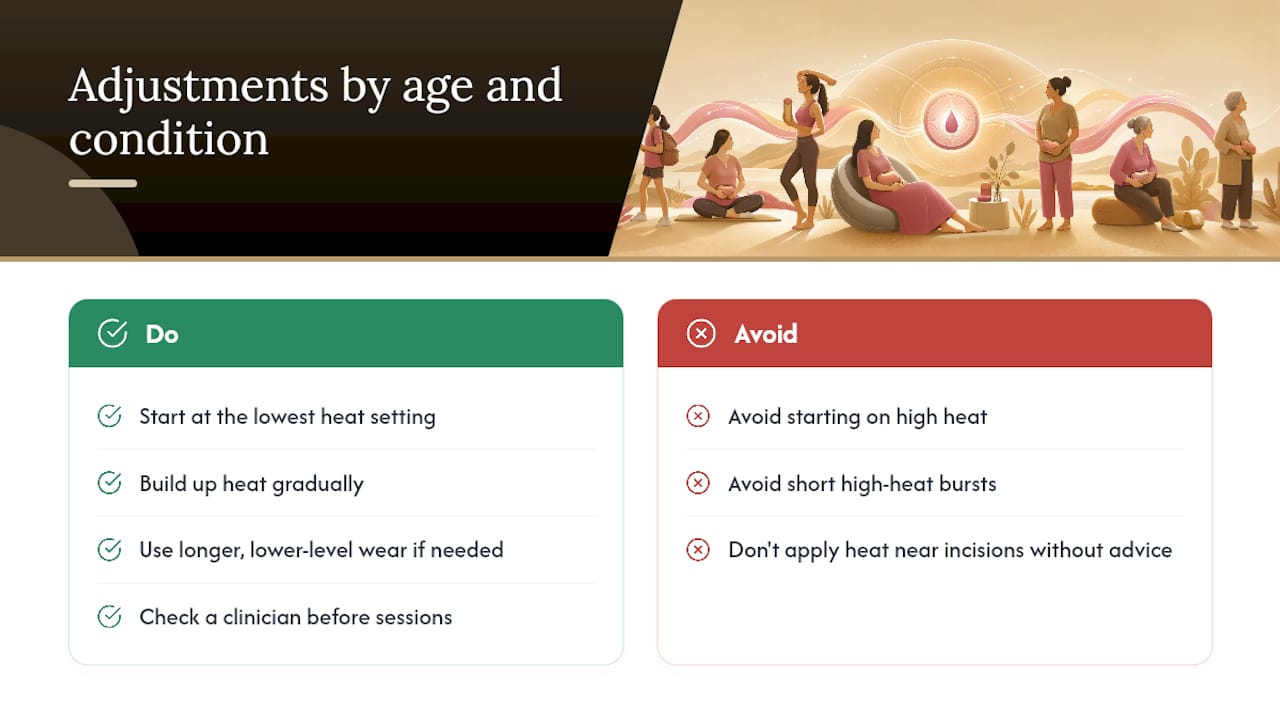
Teens experiencing their first few years of periods often have more sensitive skin and less experience judging “warm” versus “too hot,” so starting at the lowest heat setting and building up is worth emphasizing more than with an experienced user. Perimenopausal people managing heavier or less predictable cramping alongside other symptoms may find longer, lower-level wear more useful than short high-heat bursts, which lines up well with what wearables are built for.
People managing diabetes, circulatory conditions, or any condition that reduces sensation should treat every heat session as a higher-risk one and check in with a clinician about safe limits, since numbness is exactly the warning system heat safety depends on. The same caution applies during pregnancy and postpartum recovery, where guidance on safe recovery products is worth reviewing before resuming any heat-based routine, particularly near incisions or healing tissue. Age and health status don’t change the physics of heat. They change how much margin for error you actually have.
The Case for Designing Safety Into the Device, Not Just the Instructions
Most advice about heat and cramps treats safety as a matter of willpower: watch the clock, check your skin, don’t fall asleep on the pad. That advice isn’t wrong, but it puts the entire burden on the person in pain, at the exact moment they’re least equipped to track a timer.
The more useful shift is designing devices that make the unsafe behavior harder to do by accident. A wearable that tops out at a moderate, sustained temperature rather than a scalding one removes the worst-case scenario before it starts. Timers and auto shut-off do the monitoring you’d otherwise have to remember yourself, mid-cramp, half-asleep, or distracted at work.
What’s overrated in most heat-safety content is temperature precision to the degree. What’s underrated is duration and unattended use, the conditions under which even a properly rated device turns risky. If you take one thing from this guide, prioritize the device’s built-in limits over your own vigilance. Vigilance fails. Good defaults don’t.
— Lavinia
Ready to Try a Safer Way to Manage Cramps?
Some cordless wearable heating devices offer adjustable heat levels and massage speeds to help users find a comfortable setting, and are designed to be discreet under clothing.
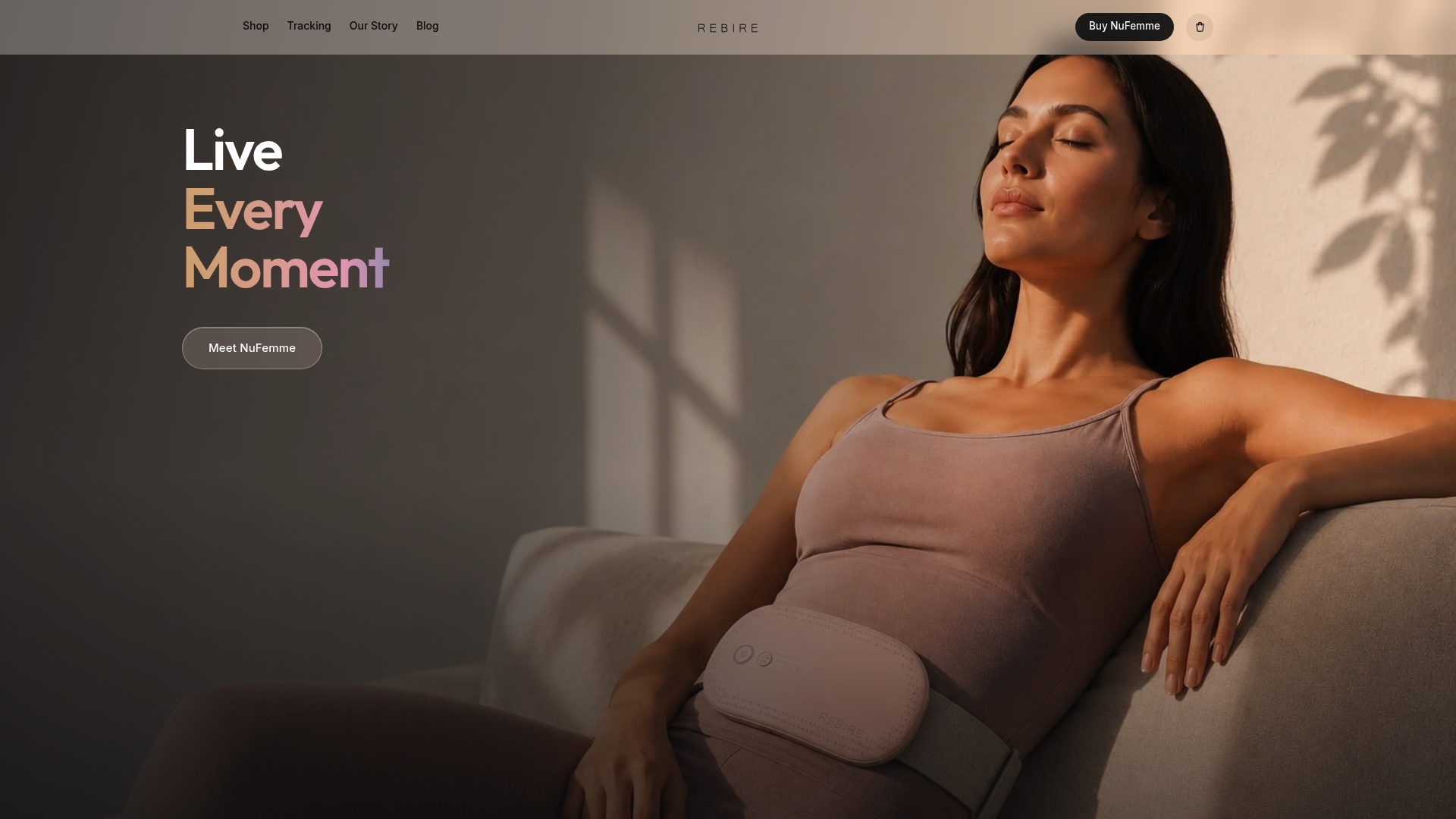
Such devices can also serve as thoughtful gifts, available in elegant finishes, to show care for someone managing monthly discomfort. If you’re ready to see what adjustable, wearable heat feels like, check out the NuFemme wearable collection and find the setting that works for you.
Sources
The safety and efficacy claims in this guide draw on:
- Heat therapy for primary dysmenorrhea: a systematic review and meta-analysis
- Heat therapy for primary dysmenorrhea: A systematic review and meta-analysis of its effects on pain relief and quality of life
This article is general information, not a substitute for advice from a qualified doctor. Consult a qualified healthcare professional about your own circumstances before acting on anything here.