

For most people with period cramps, heat is the smarter first choice: it’s backed by more consistent clinical evidence and works almost immediately. TENS (transcutaneous electrical nerve stimulation) is a solid second option, and some people find that combining the two brings even more relief. If your pain is severe, unusual, or disrupts your daily life, that’s a signal to check in with a doctor rather than relying on either method alone.
TL;DR:
- Heat therapy has more consistent and higher-quality evidence for reducing menstrual pain compared to TENS, with temperatures around 104 to 113°F (40 to 45°C).
- Combining heat and TENS can provide additional relief, especially for individuals who do not find sufficient benefit from either method alone.
- TENS’s effectiveness varies among users, with high-frequency settings (50 to 120 Hz) offering modest pain reduction based on low-certainty trials.
- Both methods are low-risk but should be avoided in cases of broken skin, implants, or severe, unusual, or worsening pain that requires medical attention.
- Starting with heat is recommended due to its stronger evidence base, and adding TENS or combining therapies is advisable if additional relief is needed.
Table of Contents
- What the research says: systematic reviews, meta-analyses, and RCTs
- How heat relieves cramps and which heat options exist
- How TENS works, common settings, and why set-up matters
- Direct comparisons: trials testing heat vs TENS vs both
- Safety rules and absolute contraindications for heat and TENS
- Step-by-step: choose and use heat or TENS effectively
- Combining heat and TENS safely: when it helps and how to do it
- NuFemme: publisher’s evidence and practical fit
- Heat and TENS for other types of cramps beyond period pain
- Our take: start simple, adjust from there
- Try a wearable option that combines heat, massage, and light therapy
- FAQ
- Sources
What the research says: systematic reviews, meta-analyses, and RCTs
The clinical evidence tilts in favor of heat as the more dependable option, though TENS has real support too.
A systematic review and meta-analysis found that continuous low-level heat therapy, applied around 104 to 113°F (40 to 45°C), reduces menstrual pain compared with no treatment at all, and in several trials performed as well as or better than common pain relievers. One randomized trial went further: a continuous heat wrap outperformed acetaminophen for pain relief over an eight-hour period.
TENS has its own body of evidence, though it’s less uniform. A Cochrane review concluded that high-frequency TENS can reduce period pain compared with placebo, but graded the certainty of that evidence as low, meaning results differ quite a bit from one trial to the next.
A few patterns show up across the research:
- Heat therapy has more consistent, higher-quality trial support for primary dysmenorrhea.
- High-frequency TENS (roughly 50 to 120 Hz) shows benefit over placebo in multiple small trials, but responses vary by person and device.
- Combining high-frequency TENS with thermotherapy produced additive benefits in some studies.
- Many of these trials are small and use different protocols, so individual results can vary from the averages.
The Cochrane review reported a mean difference of −1.39 points (95% CI −2.51 to −0.28) favoring high-frequency TENS over placebo, a real but modest effect given the low certainty of the underlying trials.
How heat relieves cramps and which heat options exist
Heat works by increasing blood flow to the area and relaxing the uterine muscle, which helps ease the cramping that comes with prostaglandin release during your period; many find relief using herbal tea for menstrual cramps as an adjunct to other therapies. That’s the physiological reason a heating pad feels like instant relief instead of a placebo effect.
The effective range sits between about 104 and 113°F (40 to 45°C), which is warm enough to relax muscle without risking skin damage. Most guidance suggests sessions of 15 to 30 minutes for standard heating pads, while lower-level wearable heat devices are designed for longer, intermittent use throughout the day.
You have a few main options:
- Electric heating pads: strong, adjustable heat, but you’re tied to an outlet.
- Adhesive heat patches: portable and disposable, though heat output is fixed once applied.
- Wearable low-level heat belts: cordless and discreet, built for all-day wear under clothing.
Our guide on heat settings by device and timing breaks down which temperature range suits which device type.
Pro Tip: Always place a thin layer of fabric between skin and any heat source above 113°F (45°C) to avoid burns, especially if you tend to fall asleep with the pad on.

How TENS works, common settings, and why set-up matters
TENS delivers a mild electrical current through electrodes placed on the skin, which is thought to work through two mechanisms: blocking pain signals at the spinal cord (the Gate Control Theory) and triggering the release of the body’s own endorphins.
Devices typically offer high-frequency settings (around 50 to 120 Hz) or low-frequency settings. Most of the clinical evidence supporting TENS for period pain centers on the high-frequency mode, which is why it’s the setting most often recommended as a starting point.
A few practical pointers matter more than people expect:
- Start the device early, ideally before pain peaks, and run it for 20 to 60 minutes per session.
- Adjust intensity until you feel a strong but comfortable tingling, never actual pain.
- Electrode placement on the lower abdomen or lower back affects how well it works.
- Expect a learning curve: many people need a session or two to find their ideal settings.
Pro Tip: If a TENS unit feels ineffective on the first try, experiment with electrode placement before giving up entirely. Small position changes often make a noticeable difference.
Direct comparisons: trials testing heat vs TENS vs both
A handful of trials have put heat and TENS head-to-head, and the pattern is fairly consistent.
A randomized, placebo-controlled trial compared thermotherapy, TENS, a combination of both, and placebo in 88 participants. Thermotherapy alone, and thermotherapy combined with TENS, produced significantly lower pain scores than TENS alone or placebo at several follow-up points. That’s a meaningful data point for anyone deciding which to try first: heat carried more of the measurable benefit in this trial.
Separately, a randomized, single-blind trial testing a device combining high-frequency TENS and thermotherapy found it significantly reduced dysmenorrhea scores compared with a sham device, with 115 women reporting both lower pain and a longer duration of relief.
What this means in practice:
- Heat has the most robust, repeatable evidence as a first-line option.
- TENS helps a meaningful number of people, but individual responses are more unpredictable.
- Combined heat and TENS may offer extra benefit for people who don’t get full relief from either alone.
In the four-arm trial comparing thermotherapy, TENS, and combined treatment, thermotherapy and combined therapy significantly outperformed TENS alone and placebo at multiple follow-up points, reinforcing heat’s role as the stronger single intervention.
Safety rules and absolute contraindications for heat and TENS
Both methods are low-risk for most people, but a few rules matter.
- Do not use TENS if you have a pacemaker, an implanted defibrillator, epilepsy, or a history of blood clots, without clearing it with a clinician first.
- Avoid placing TENS electrodes on broken skin, the front of the neck, the eyes, or directly across the chest, and never use TENS in water.
- With heat, avoid very high temperatures on numb or desensitized skin, and don’t apply continuous high heat for extended periods.
- Skip heat on open wounds, rashes, or already irritated skin.
- Seek medical care for pain that’s severe, new, rapidly worsening, paired with fever or heavy bleeding, or that stops you from going about your day.
Clinical resources like the NHS guidance on TENS outline these contraindications in more detail, including specific advice for pregnancy.
Step-by-step: choose and use heat or TENS effectively
A simple decision flow helps cut through the noise.
- If you want fast, reliable, low-effort relief, start with heat: it has the strongest evidence and almost no learning curve.
- If heat alone isn’t enough, or you want a drug-free option you can use alongside a heating pad, try TENS, starting the device before pain peaks.
- If neither fully works on its own, consider combining them, following the safety spacing described below.
- If pain is unusual, severe, or doesn’t respond to either, talk to a clinician before continuing self-treatment.
For heat, place the pad or patch directly over the lower abdomen, choose a setting in the 104 to 113°F (40 to 45°C) range, and run it for 15 to 30 minutes, or longer with a low-level wearable designed for extended wear. For TENS, place electrodes on the lower abdomen or lower back, start at a low intensity, and increase until you feel strong tingling without discomfort.
Cost and portability vary widely: disposable patches are cheap per use but add up over time, reusable electric pads cost more upfront but last years, and wearable devices sit in between while offering better portability. Our guide to wearable heating pads covers what features matter most when comparing devices.
Pro Tip: If an adhesive patch won’t stay in place, dry the skin fully before application. Moisture is the most common reason patches peel early.
Common troubleshooting: if heat feels too intense, add a fabric layer; if TENS feels ineffective, reposition electrodes before increasing intensity.
Combining heat and TENS safely: when it helps and how to do it
Some people get better results using both methods, and the trial testing a combined high-frequency TENS and thermotherapy device supports that approach, showing a meaningful reduction in dysmenorrhea scores compared with a sham device.
A few rules keep combination use safe:
- Never place TENS electrodes underneath an active adhesive heat patch; the combined heat and electrical contact can irritate skin.
- Use heat and TENS in sequence rather than layered directly on top of each other, giving your skin a short break between methods.
- Watch for redness, itching, or unusual sensitivity, and stop immediately if it appears.
- If combining both methods doesn’t bring relief within your usual cycle pattern, that’s a reasonable point to check in with a clinician rather than continuing to experiment.
NuFemme: publisher’s evidence and practical fit
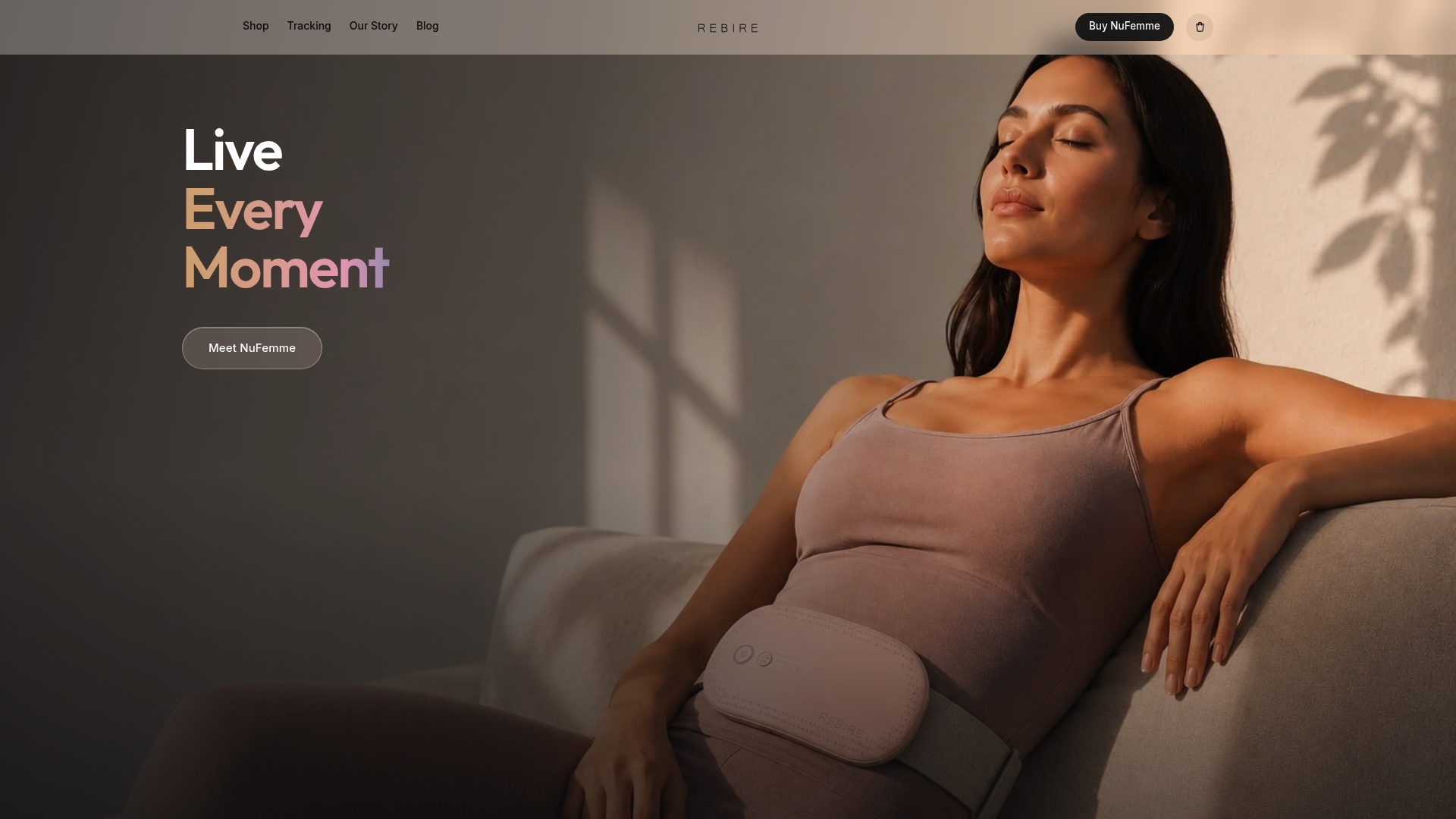
The product is a cordless, wearable device that combines heat, massage, and red-light therapy in a single belt, designed for discreet wear under clothing. Because it’s a low-level wearable rather than a plug-in pad, it fits the all-day, on-the-go use case that heat research generally supports.
These figures come from our own user reporting rather than an independent clinical trial, so we present them as real-world feedback, not as peer-reviewed evidence.
For someone following the decision flow above, NuFemme sits squarely in the “try heat first” category, with massage and light therapy layered in. It also works well as a gift for someone who deals with cramps every month, since it is discreet and rechargeable.
Heat and TENS for other types of cramps beyond period pain
Most of the clinical evidence discussed here focuses specifically on primary dysmenorrhea, the cramping tied to your menstrual cycle. Exercise-induced muscle cramps and general muscle cramps have different underlying causes, often related to fatigue, dehydration, or electrolyte shifts rather than prostaglandin release in the uterus.
Heat can still help with general muscle cramping by relaxing tight muscle tissue and improving local blood flow, which is why it’s commonly used for back spasms and post-exercise soreness. TENS is also used for musculoskeletal pain more broadly, working through the same gate-control and endorphin mechanisms, though the strength of evidence differs by condition and muscle group.
The practical takeaway: don’t assume a protocol that works for period cramps translates exactly to a leg cramp during a run or a sore back after a workout. The settings and placement that help with uterine cramping (lower abdomen, moderate heat, high-frequency TENS) aren’t automatically the right approach for a calf cramp or lower back spasm, where targeted stretching, hydration, and different electrode placement often matter more. If you’re using heat or TENS for something other than period pain, it’s worth adjusting your approach rather than copying the dysmenorrhea protocol directly.
Our take: start simple, adjust from there
Heat remains the most dependable starting point for period cramps, simply because the evidence behind it is more consistent than what exists for TENS. That said, we don’t think there’s one universal right answer. Try heat first, add TENS or a combined approach if you need more relief, and treat severe or unusual pain as a reason to talk with a clinician rather than push through alone.
— Lavinia
Try a wearable option that combines heat, massage, and light therapy
If you want the convenience of heat therapy without being tied to an outlet, NuFemme combines heat, massage, and red-light therapy in one cordless belt you can wear under your clothes. It works well whether you’re buying it for yourself or picking out a thoughtful gift for someone who deals with cramps every cycle.
Read the safety guidance above before use, particularly if you have a history of heart conditions or skin sensitivity.
This article is general information, not a substitute for advice from a qualified doctor. Consult a qualified healthcare professional about your own circumstances before acting on anything here.
FAQ
Are TENS units good for cramps?
TENS units can reduce period pain for many people, with a Cochrane review finding high-frequency TENS more effective than placebo. The evidence is graded as low-certainty, so results vary more than they do with heat therapy.
Where should you never put a TENS unit?
Avoid placing TENS electrodes on broken or irritated skin, across the front of the neck, over the eyes, or directly on the chest. People with pacemakers or implanted defibrillators should avoid TENS entirely unless cleared by a clinician, as outlined by the NHS.
Why do cramps feel better with heat?
Heat increases blood flow to the area and relaxes the uterine muscle, which helps ease the tension behind cramping. Research reviews confirm that heat applied in the 104 to 113°F (40 to 45°C) range reduces menstrual pain compared with no treatment.
Should you use heat or ice with a TENS unit?
Heat is the more commonly recommended pairing with TENS for period cramps, and a randomized trial combining high-frequency TENS with thermotherapy found it reduced dysmenorrhea scores more than a sham device. Avoid placing electrodes directly under an active heat source to prevent skin irritation.
Is heat or TENS better for cramps overall?
Heat generally has stronger, more consistent clinical evidence as a first-line option for period cramps, as shown in a placebo-controlled trial where thermotherapy outperformed TENS alone. TENS remains a reasonable second option or addition for people who want more relief.
Sources
- Heat therapy for primary dysmenorrhea: a systematic review and meta-analysis
- Is ‘TENS’ an effective treatment for period pain?
- Continuous, low-level, topical heat wrap therapy as compared to acetaminophen for primary dysmenorrhea
- Efficacy of the device combining high-frequency transcutaneous electrical nerve stimulation and thermotherapy for relieving primary dysmenorrhea
- Thermotherapy and transcutaneous electrical nerve stimulation effects on primary dysmenorrhea: randomized placebo-controlled trial