

Yes, you can wear a heating pad under clothes, and for cramps or lower back pain, it’s often the most practical way to get relief while you keep moving. The catch is real: your skin needs breaks, checks, and the lowest heat that still works. Discreet options like thin adhesive patches, cordless heat belts, and slim rechargeable pads make this doable at a desk, in a car, or standing in line at the grocery store.
TL;DR:
- Reusable cordless belts and rechargeable pads are ideal for all-day heat therapy, prioritizing adjustable temperature, hidden battery packs, and durability over slim profiles.
- Applying heat to fresh injuries is risky during the first 48 to 72 hours, and overexposure can cause toasted skin syndrome or burns, so skin checks every 20 to 30 minutes are essential.
- Using a thin cotton layer between skin and heating device reduces burn risk, with proper positioning and secure straps preventing hot spots during movement.
- NuFemme combines heat, vibration massage, and light therapy in a cordless belt designed for discreet, continuous relief during busy days or travel.
- Discreet adhesive patches work for short-term use and clothing-only applications, but rechargeable belts are more cost-effective and comfortable for daily cramp relief.
Table of Contents
- Types of Wearable Heating Solutions You Can Wear Under Clothes
- What Are the Safety Rules for Wearing Heat Under Clothing?
- How to Wear a Heating Pad Under Clothes Comfortably
- How Do You Choose the Right Discreet Heating Option?
- What Does a Cordless Wearable Like NuFemme Offer for Discreet Relief?
- Which Heating Option Actually Makes Sense for You?
- A Discreet Option Worth Considering: NuFemme
- Sources
- FAQ
Types of Wearable Heating Solutions You Can Wear Under Clothes
Not every heat source belongs under a shirt or waistband. Some are built for it. Others just happen to fit if you’re careful.
Disposable adhesive heat patches stick directly to skin or the inside of clothing and stay thin enough to disappear under fabric. They’re ideal for a single outing, but they run hot for a fixed window and can’t be adjusted once they’re activated.
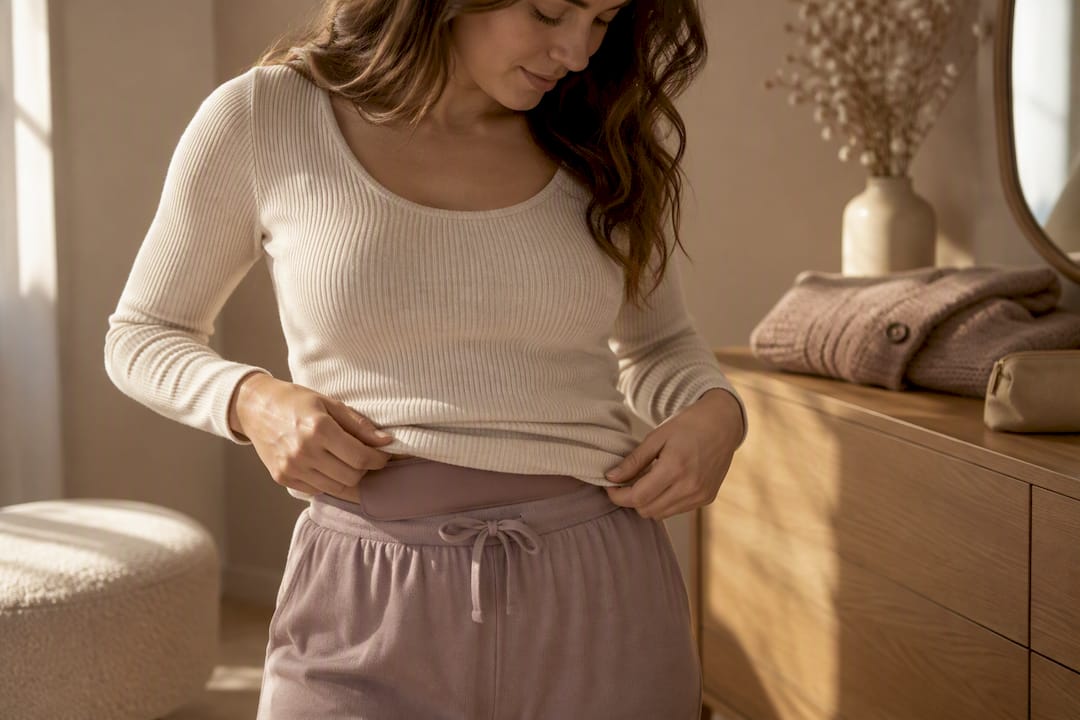
Cordless battery-powered belts and rechargeable pads are the better fit for anyone who needs heat for hours, not minutes. You control the intensity, they’re reusable, and most sit low enough on the waistband to stay hidden. The tradeoff is bulk. Some models add noticeable thickness at the battery pack, so check that detail before buying.
Gel packs and microwavable wraps cost the least, but they’re the least discreet option, and they’re not designed for continuous all-day wear. Healthline’s guidance on heating pad use recommends following package instructions closely with gel packs, since reheating rules vary by product.
When comparing options, scan for:
- Profile thickness (can you see it through fitted clothing?)
- Adjustable straps that won’t shift during movement
- Simple, one-hand controls
- Automatic shutoff
- Washable outer covers
What Are the Safety Rules for Wearing Heat Under Clothing?
Heat works. Mayo Clinic notes that heat therapy for menstrual cramps increases blood flow and relaxes the muscle tension behind cramping, and clinical research backs this up for both dysmenorrhea and general muscle cramps, according to findings published in PubMed. The risk isn’t that heat fails. It’s what happens when it’s left on too long, too hot, against skin that can’t tell you it’s a problem.
Skip heat entirely on a fresh injury during the first 48 to 72 hours, since added warmth can increase swelling instead of easing it. Never apply heat to numb, insensate, or reduced-sensation skin. You won’t feel the warning signs building.
Toasted skin syndrome, medically called erythema ab igne, is the condition that shows up after repeated, prolonged heat exposure in one spot. It starts as mild redness and can progress to a lasting mottled, brownish discoloration. Ohio State University Health explains that it’s preventable simply by limiting continuous exposure and checking your skin regularly.
Stop immediately if you notice:
- A burning or stinging sensation
- Redness that doesn’t fade within 20 minutes of removing heat
- Any blistering
- Numbness or tingling under the pad
How to Wear a Heating Pad Under Clothes Comfortably
Getting the fit right is what makes wearable heat actually work for a full day, not just a few minutes on the couch.
- Choose your layer. A thin cotton layer between skin and heating element reduces direct contact heat and lowers burn risk, especially at higher settings. Skip the barrier only with devices specifically rated for direct skin contact and kept on the lowest setting.
- Center the placement. For cramps, position the pad low on the abdomen, centered rather than off to one side, and smooth out fabric underneath so no folds create hot spots against one patch of skin.
- Secure it for movement. Straps or a fitted belt keep the pad from sliding as you walk, sit, or bend. High-waisted leggings or a thicker waistband on pants can also anchor a slim pad in place without extra straps.
- Manage the controls discreetly. Tuck the battery pack inside the waistband or under a looser top layer. Devices with a small remote or app control mean you can adjust heat without reaching under your clothes in public.
Pro Tip: Set a phone timer for 20 to 30 minutes at a time rather than trusting yourself to remember. Short, repeated sessions with breaks beat one long stretch of continuous heat, and they’re gentler on skin over a full workday.
If you’re flying with a battery-powered device, check battery rules for wearable heating pads on planes before you pack it, since lithium battery limits vary by carrier.
How Do You Choose the Right Discreet Heating Option?
Match the product to how you’ll actually use it, not how it looks on a shelf. A single-use adhesive patch makes sense for a few hours at a wedding or a long commute. A rechargeable belt makes more sense if cramps knock you out for a full day or two each cycle.
Comfort and discreetness come down to a few concrete details: thickness under fitted clothing, how breathable the outer fabric feels after an hour, and whether the battery pack sits flat or pokes out at the waistband. A wearable heating belt built specifically for cramps will usually address these design details better than a general-purpose back pad repurposed for the abdomen.
Before buying, prioritize:
- Automatic shutoff and a capped maximum temperature
- Washable or wipeable covers
- Clear, plain-language instructions on session length
- Battery life that covers your actual use window, not just a lab-tested best case
- A workable return policy or warranty, since fit and comfort vary person to person
What Does a Cordless Wearable Like NuFemme Offer for Discreet Relief?
NuFemme is a cordless wearable built around a specific problem: heat alone helps, but it’s rarely enough, and it’s rarely fast enough when cramps hit mid-workday. NuFemme combines heat, vibration massage, and red-light therapy in a single belt worn under clothing, so relief doesn’t require sitting still near an outlet.
The combination isn’t just for comfort. Three heat levels and three massage speeds let you dial in intensity for a desk day versus a day you can barely stand up straight. There’s no cord, no waiting at home for a plug-in pad to warm up, and no visible bulk once it’s on.
Which Heating Option Actually Makes Sense for You?
Most people overthink the product decision and underthink the skin check. If you take one thing from this guide, make it this: whatever you choose, look at your skin every 20 to 30 minutes and drop to the lowest setting that still helps. For daily, repeated cramp relief, a rechargeable wearable belt beats disposable patches on flexibility and cost over time. Adjustable heat matters more than raw intensity.
— Lavinia
A Discreet Option Worth Considering: NuFemme
Rebire built NuFemme for three types of people: someone buying for their own cramps who’s tired of holding a plug-in pad against their stomach, a partner who wants to give something that actually shows they’ve paid attention to what she deals with every month, and anyone treating monthly relief as a self-care habit worth investing in rather than an afterthought.
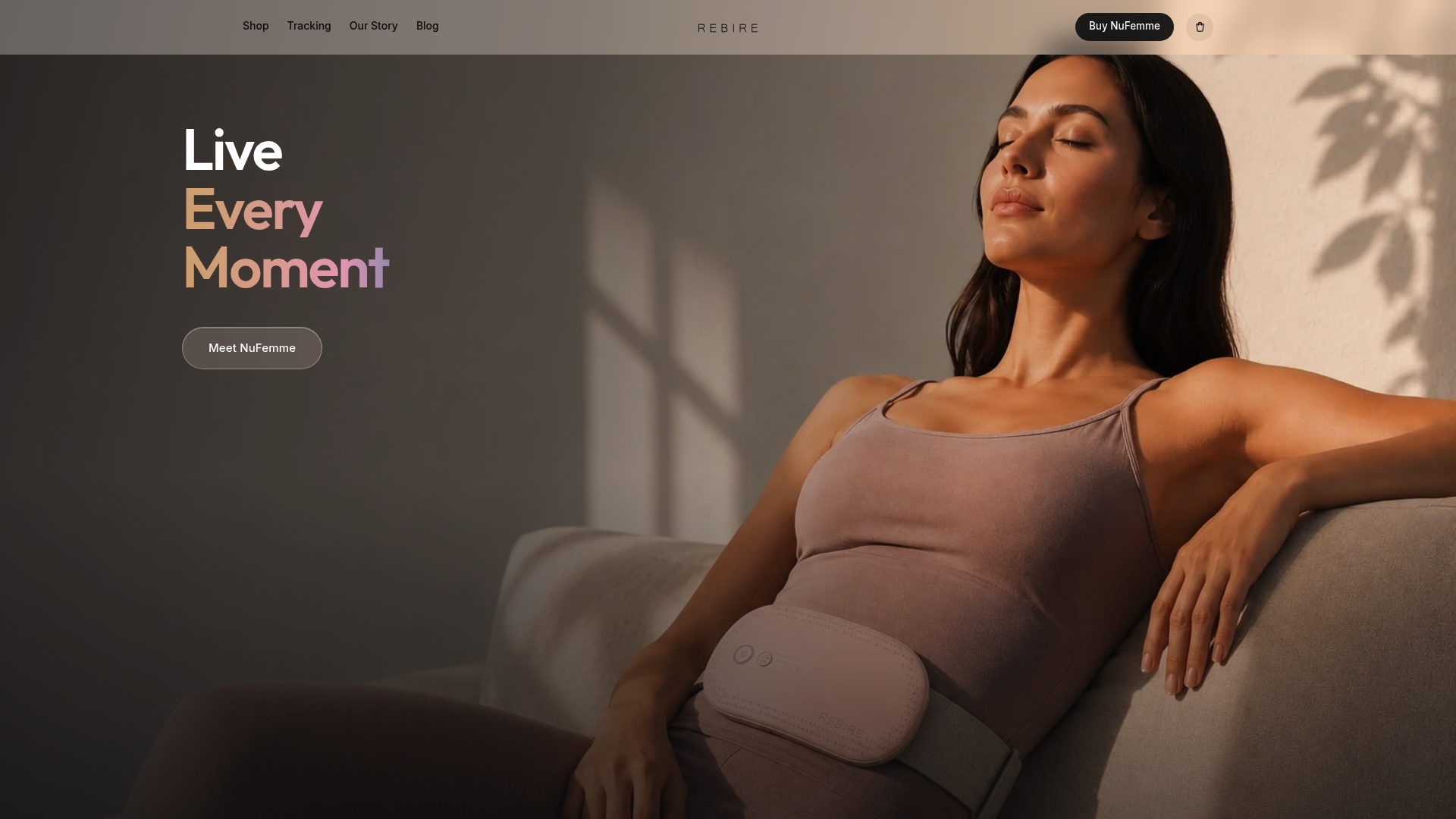
Unlike a standard heating pad, NuFemme stays cordless and quiet under clothing, so it works at a desk, on errands, or during a commute without anyone noticing. Finished in Rose Gold or Ivory, it also reads as a considered gift rather than a last-minute drugstore grab. If discreet, adjustable relief sounds like what you’ve been missing, NuFemme for period cramps is available for $338 as a one-time purchase, with three heat levels and three massage speeds to match however your day is going.
Sources
- Menstrual cramps - Symptoms and causes | Mayo Clinic
- PubMed article (28438280)
- What is toasted skin syndrome? | Ohio State University Health
This article is general information, not a substitute for advice from a qualified doctor. Consult a qualified healthcare professional about your own circumstances before acting on anything here.
FAQ
What Is the “Menstrual Lobster” People Mention Online?
“Menstrual lobster” is an informal, joking term some people use online for the reddish skin marks left after resting a hot water bottle or heating pad directly on the abdomen for too long. It’s a casual name for early-stage heat-related skin irritation, not a medical diagnosis, and it’s a signal to lower the heat or take a break.
Where Should You Not Put a Heating Pad?
Avoid placing a heating pad directly over a fresh injury in the first 48 to 72 hours, since heat can worsen swelling during that window. Also avoid numb or reduced-sensation skin, areas with poor circulation, and skin that’s already irritated, broken, or sunburned.
What Treats Toasted Skin Syndrome?
There’s no single over-the-counter cream that reverses toasted skin syndrome (erythema ab igne) once discoloration sets in, and treatment options should come from a doctor. Prevention is the more reliable path: limit continuous heat exposure and check skin regularly rather than relying on aftercare.
Do Heat Patches Stick to Clothing Instead of Skin?
Some adhesive heat patches are designed to stick to the inside of clothing rather than directly on skin, which reduces burn risk while still delivering warmth through the fabric. Always check the product label, since patches made for skin contact and patches made for clothing use different adhesive strengths and heat outputs.
How Much Does NuFemme Cost?
NuFemme is priced at $338 as a one-time purchase on Rebire’s product page. That covers the full cordless belt with heat, massage, and red-light therapy built in.