

Ten to thirty minutes is the safe window for most heat sessions, with 15 to 20 minutes as your best starting point. Electric pads work in these timed sessions, while disposable heat patches run lower and slower, sometimes lasting several hours. Whatever you use, keep a cloth layer between the heat and your skin, check for redness often, and never fall asleep on a standard electric pad.
TL;DR:
- Applying heat for 15 to 20 minutes at a time on the lower abdomen effectively calms uterine spasms and improves blood flow, alleviating cramps.
- Using heat patches or disposable wraps with extended duration is safe as long as you follow product instructions and don’t rely on them for longer than recommended.
- Placing heat on the lower abdomen, with a cloth barrier, is the safest and most effective method; avoid overlapping heat sources or applying excessive intensity.
- Prolonged, unmonitored use of electric pads can cause skin burns or erythema ab igne, so skin checks and following instructions are essential for safety.
- If cramps persist or worsen despite heat and NSAIDs, medical evaluation is necessary to rule out underlying conditions like endometriosis or fibroids.
Table of Contents
- What Do Studies Say About Heating Pad Duration for Cramps?
- Where Should You Place a Heating Pad for Cramps?
- Which Heat Source Lasts Longest, and Is Longer Better?
- How Can You Use Heat Without Risking a Burn?
- When Should You Stop Relying on Heat Alone?
- Why Cordless Heat Changes the Calculation
- A Cordless Option Built for Real Days, Not Just Timed Sessions
- Sources
- FAQ
What Do Studies Say About Heating Pad Duration for Cramps?
A systematic review and meta-analysis in Scientific Reports pulled together randomized trials testing heat against painkillers and no treatment at all for primary dysmenorrhea, the clinical name for period pain that isn’t caused by another condition like endometriosis. Heat came out ahead consistently, though the trials used different devices and different session lengths, which is exactly why you’ll see a range instead of one magic number.

Major patient guidance backs up that range. The NHS lists warmth from a hot water bottle or heating pad as a first-line self-care step, and notes that period pain typically runs one to three days. MedlinePlus recommends heat as a routine home measure too. Most clinical sources land on the same practical advice, drawn from hospital patient leaflets: apply heat for 10 to 30 minutes at a time, with 15 to 20 minutes as a sensible place to start.
Here’s why that window works. Local heat relaxes the uterine muscle spasms behind cramping and increases blood flow to the area, which eases the ache without you needing to keep the heat blasting for hours.
- Start with a 15 to 20 minute session at a moderate setting.
- Reassess how you feel before deciding whether to reapply.
- Repeat as needed rather than leaving heat on continuously.
Quick fact: the same review found that heat therapy modalities varied widely across studies, from adhesive patches to wraps to infrared belts, which is part of why “how long” doesn’t have one universal answer.
Where Should You Place a Heating Pad for Cramps?
Your lower abdomen, just above the pubic bone, is where most cramp pain actually originates, and it’s the primary spot for heat. If your cramps radiate into your lower back, a second short session there can help too. When pain travels down into the thighs, alternating brief sessions between your abdomen and lower back is usually more effective and safer than trying to cover everything at once with high heat.
A few placement details make a real difference in comfort and safety:
- Keep a thin layer of clothing or a cloth barrier between the heat source and bare skin.
- Position wearable belts or patches low and centered, not riding up near the ribs.
- Secure the pad so it can’t shift out of place while you move, sit, or bend.
- Avoid stacking two heat sources on overlapping areas at once.
Which Heat Source Lasts Longest, and Is Longer Better?
Not all heat sources are built for the same amount of time on your skin, and the differences matter more than most people realize.
- Electric heating pads: typically used in 10 to 30 minute sessions. Many newer models include auto shutoff, but you should still follow the manufacturer’s instructions rather than assume the timer will catch every risk.
- Disposable heat patches and wraps: designed to run at a much lower, steady temperature, so some products advertise up to eight hours of wear. That longer duration comes from lower surface heat, not a stronger dose, and they’re single-use.
- Hot water bottles and wheat bags: treat these like electric pads for timing purposes. Check for leaks, and make sure the water isn’t scalding before it touches your skin.
- Cordless wearables: built for movement, with adjustable settings that let you control intensity throughout the day rather than committing to one fixed temperature for a fixed block of time. That flexibility changes how you think about “how long,” since you can dial heat down instead of removing it entirely.
Longer isn’t automatically better. A patch running eight hours at low heat and a pad running 20 minutes at higher heat are solving the same problem through very different intensity curves.
How Can You Use Heat Without Risking a Burn?
Heat is one of the safest tools you have for cramps, but skin damage from a pad left on too long is a real and common mistake. A short checklist keeps you protected every time:
- Follow the product’s instructions first, and start at a moderate setting rather than the highest one.
- Place a cloth barrier between the device and your skin, always, even if direct contact feels better in the moment.
- Check your skin every 10 to 15 minutes during use, and stop immediately if you notice redness, blistering, or numbness.
- Never use heat on skin that already feels numb or less sensitive than usual.
- Skip unsupervised sleep on a standard electric pad. Some patches and wearables are labeled for longer wear, so check the packaging before assuming.
- Pair heat with NSAIDs if you already take them for cramps. Heat works alongside medication, not instead of it, and neither replaces a doctor’s advice if pain is unusual for you.
Pro Tip: A cloth barrier does more than protect your skin from burns. It also spreads the heat more evenly, which often feels more soothing than direct, concentrated warmth.
When Should You Stop Relying on Heat Alone?
Heat treats the symptom, not the cause, and some symptoms need more than a warm compress. Watch for these signals:
- Sudden, severe pain that comes on differently than your usual cramps.
- New, intense cramping that starts for the first time after age 25.
- Fever alongside pelvic pain.
- Heavy or otherwise abnormal bleeding.
- Pain that keeps disrupting work, sleep, or daily life even after heat and over-the-counter NSAIDs.
If pain persists despite heat and medication for one or two full cycles, or if it’s getting worse instead of better, get it checked. Conditions like endometriosis, fibroids, or pelvic infection can mimic ordinary cramps but need a clinician’s evaluation, not a heating pad.
Why Cordless Heat Changes the Calculation

Timed sessions work, but life doesn’t pause for them. A cordless wearable lets you keep heat on your lower abdomen through a meeting, a grocery run, or a school pickup, instead of lying still next to an outlet. That’s less about a longer duration and more about heat that travels with you.
There’s also a gifting angle worth naming honestly. A partner who notices what someone goes through every month, and responds with a considered wearable instead of a last-minute drugstore grab, is sending a specific message. It’s a small, useful way to say you were paying attention.
— Lavinia
A Cordless Option Built for Real Days, Not Just Timed Sessions
Rebire’s NuFemme is built around exactly the gap timed sessions leave open: relief you don’t have to sit still for. It combines heat, vibration massage, and infrared light in one cordless belt, with three heat levels and three massage speeds so you can adjust intensity through the day instead of starting a new timed session every time cramps flare.
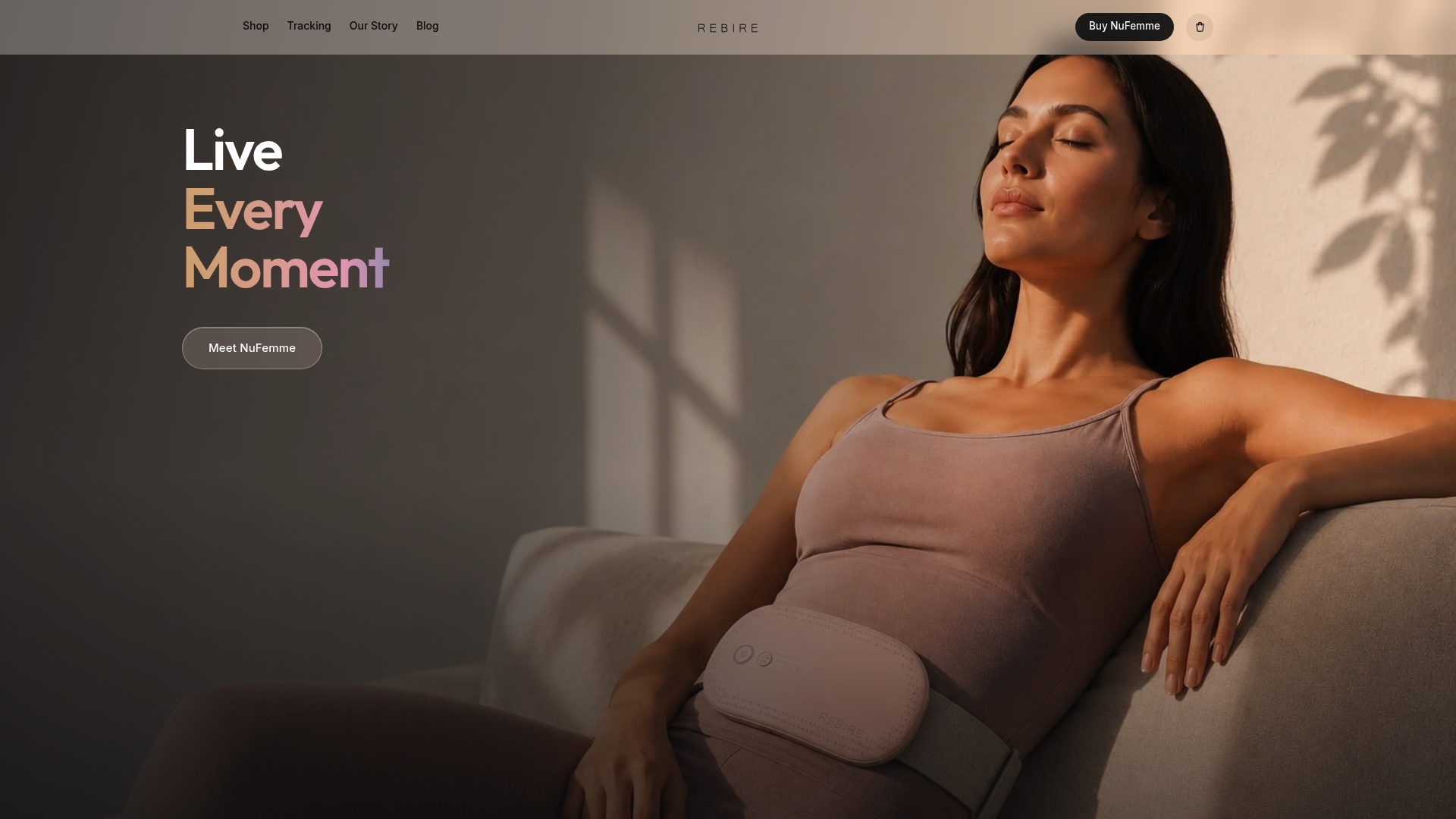
It’s a fit for anyone who wants relief that moves with them, at a desk, running errands, or just needing a quiet minute to reset, and it doubles as a genuinely thoughtful gift, finished in Rose Gold or Ivory rather than a generic drugstore pickup. NuFemme is priced at $338 as a one-time purchase. If discreet, mobile, multi-setting relief sounds like what your routine has been missing, check out NuFemme and see which heat and massage combination fits your day.
This article is general information, not a substitute for advice from a qualified doctor. Consult a qualified healthcare professional about your own circumstances before acting on anything here.
Sources
- Heat therapy for primary dysmenorrhea: A systematic review and meta-analysis — Scientific Reports
- Period pain (dysmenorrhoea) — NHS
- Period pain — MedlinePlus
- Cold versus heat for pain relief — Harvard Health
FAQ
What Kills Period Cramps Fast?
Heat applied to the lower abdomen for 15 to 20 minutes is one of the fastest non-drug options, since it relaxes uterine muscle spasms and boosts local blood flow. Combining heat with an NSAID and gentle movement tends to work faster than any single method alone.
What Happens if You Leave a Heating Pad on Too Long for Cramps?
Extended, unmonitored heat can cause skin redness, burns, or a condition called erythema ab igne from repeated low-grade heat exposure. That’s why Harvard Health recommends a cloth barrier and skin checks every 10 to 15 minutes rather than falling asleep with a standard electric pad running.
Where Is the Best Place to Put a Heating Pad for Cramps?
The lower abdomen, just above the pubic bone, is the primary spot since that’s where uterine cramping originates. If pain also hits your lower back, a short second session there, rather than layering heat in both places at once, tends to work better.
Why Do My Cramps Hurt More With a Heating Pad?
Heat that’s too intense or applied too long can irritate skin and mask worsening pain instead of easing it, which sometimes makes cramps feel worse rather than better. If heat consistently makes pain feel sharper or different from your usual cramps, that’s worth mentioning to a doctor rather than pushing through with more heat.