

A cordless wearable that combines heat, vibration massage, and red-light therapy can ease period cramp pain within minutes for many people, with research backing heat as the strongest single mechanism. NuFemme, built around that same heat-plus-massage approach, reports that a large majority of users felt reduced pain within 15 minutes of use. It works whether you’re at your desk or running errands, and it makes a genuinely thoughtful gift for anyone whose partner watches her push through cramps every month.
TL;DR:
- Heat therapy applied at 40 to 45 degrees Celsius significantly reduces menstrual pain and can match NSAID relief with a better safety profile.
- Combining vibration and heat provides additional pain relief, especially when using devices like a vibration-heat belt tested at 50 Hz for ten minutes.
- The most consistent pain relief occurs within 15 minutes of using heat, making early application crucial for best results.
- Wearables are suitable for those seeking drug-free relief, but individuals with pregnancy concerns or electronic implants should consult a doctor before use.
- Practical features to look for include adjustable heat, multiple massage speeds, full cordless operation, discreet design, and simple controls for effective, on-the-go relief.
Table of Contents
- How Heat, Massage, and Infrared Ease Period Cramp Pain
- Who Actually Benefits From a Cramp Relief Wearable?
- How to Use a Cordless Wearable for Fast Relief
- What to Look for When Choosing or Gifting a Wearable
- Why Heat-First, Wearable-First Makes Sense
- NuFemme: A Wearable Built Around What Actually Works
- Sources
- FAQ
How Heat, Massage, and Infrared Ease Period Cramp Pain
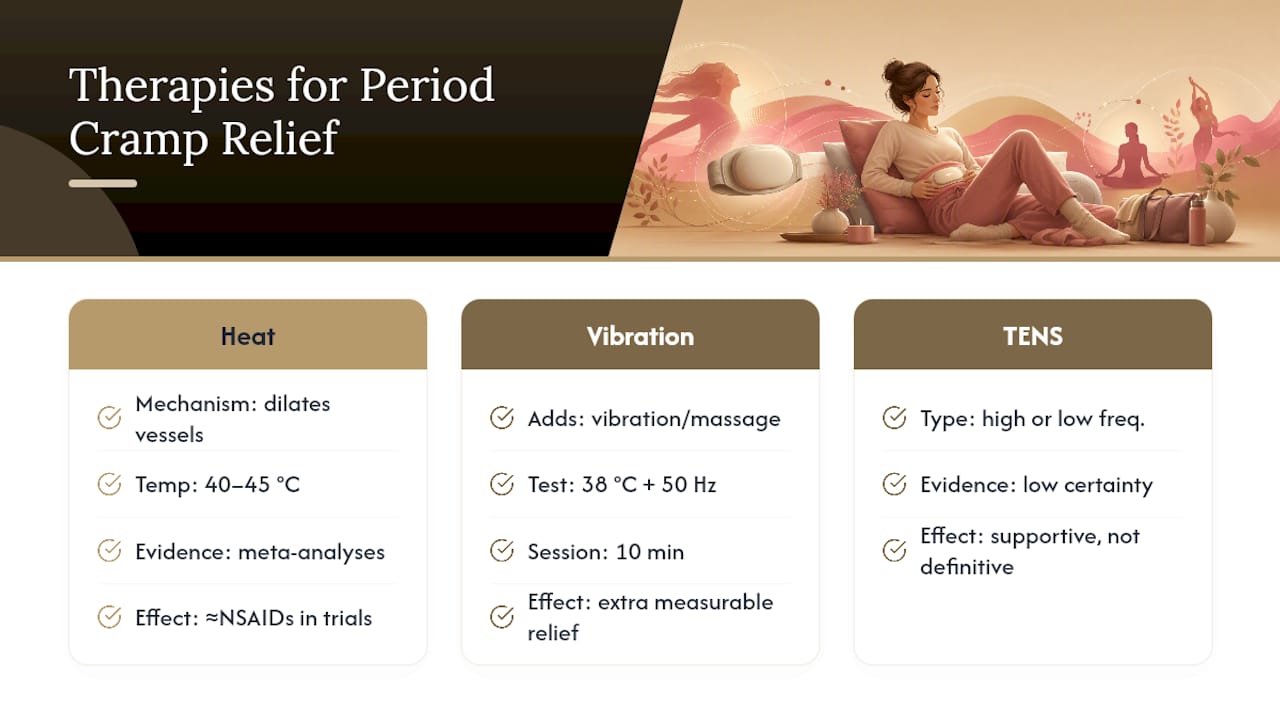
Your uterus cramps because prostaglandins trigger muscle contractions that temporarily cut off blood flow, starving the tissue of oxygen. That oxygen debt is what produces the sharp, gripping pain of primary dysmenorrhea. Local heat reverses the process: it dilates blood vessels, restores circulation, and relaxes the smooth muscle that’s contracting against itself.
The evidence for this is not thin. A systematic review and meta-analysis found that superficial heat applied at 40 to 45 degrees Celsius reduced menstrual pain and, in some trials, matched the relief provided by NSAIDs, with a better safety profile since there’s no stomach lining or liver involved. A separate meta-analysis published in Scientific Reports reported the same pattern across multiple randomized trials: heat beat no treatment consistently and held its own against analgesic medication in pooled comparisons.
Vibration and combined vibration-heat devices add a second layer. One trial testing a vibration-heat belt, heated to roughly 38 degrees Celsius and vibrating at 50 Hz for ten-minute sessions, found significantly larger drops in abdominal, lumbar, and leg pain compared with routine methods.
TENS therapy tells a murkier story. A Cochrane review found that both high and low frequency TENS may reduce menstrual pain versus placebo, but the certainty of that evidence is low. A randomized, placebo-controlled trial went further, finding that heat alone reduced pain intensity more reliably than TENS alone at multiple time points, and that combining heat with TENS raised pain thresholds without consistently beating heat by itself.
Heat is the workhorse. Vibration and massage add measurable extra relief. TENS remains a supportive, not definitive, layer of evidence.
Two honest caveats: most trials are small, devices vary widely, and 93% relief in 15 minutes is a brand-reported figure from NuFemme’s own user data, not an independent clinical study. Realistic expectations still put heat-based relief among the better-supported drug-free options available.
Who Actually Benefits From a Cramp Relief Wearable?
A wearable like this suits a specific set of people well:
- Anyone who wants drug-free relief and would rather skip ibuprofen if there’s another option
- Commuters, students, and desk workers who can’t sit next to a plug-in heating pad all day
- Partners shopping for a gift that shows they’ve actually paid attention to what she deals with monthly
It’s not the right tool for everyone. Pregnant individuals, people with implanted electronic devices like pacemakers, and anyone with signs of secondary dysmenorrhea (pain that’s new, worsening, or paired with unusual bleeding) should check with a clinician before relying on heat or vibration therapy against the abdomen. If pain is severe, doesn’t respond to standard measures, or disrupts daily life every cycle, that’s a signal to get evaluated rather than push through it with any device.
How to Use a Cordless Wearable for Fast Relief
Timing and placement do most of the work here.
- Start at the first twinge, not after the pain builds. Waiting until cramps peak means you’re playing catch-up against inflammation that’s already underway.
- Position the wearable over your lower abdomen or lower back, wherever the ache concentrates, and secure it snugly enough to stay put under clothing.
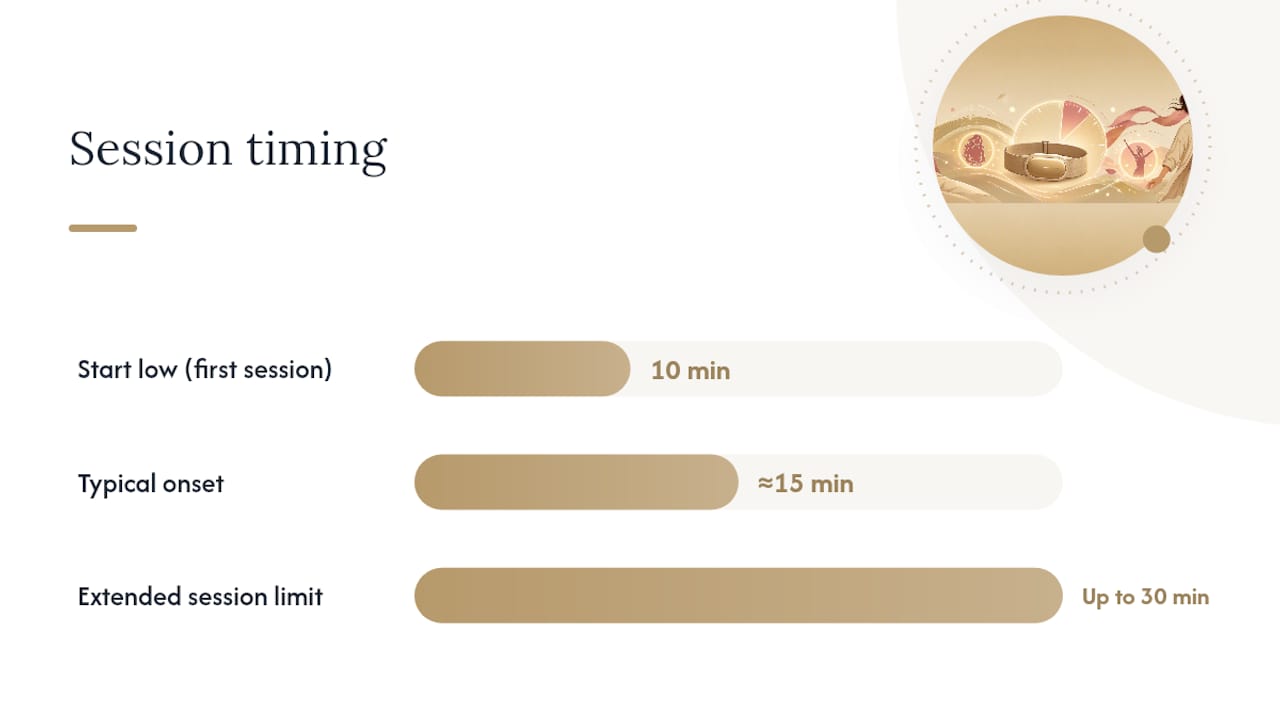
- Run an initial session of 10 to 20 minutes at a low heat and massage setting to see how your body responds.
- Increase heat or massage intensity gradually if relief feels incomplete, rather than maxing out both settings immediately.
- Extend sessions up to 30 minutes as needed throughout the day, giving your skin brief breaks between uses.
- Check your skin periodically for redness or irritation, and avoid continuous high heat for hours at a stretch.
Reported onset for heat-based relief tends to land in the 15-minute range, consistent with brand-reported NuFemme user data. That doesn’t mean every session eliminates pain entirely. It typically takes the edge off enough that you can keep working, walking, or sitting through a meeting without gritting your teeth.
Pro Tip: Keep the device on its lowest heat setting during the first ten minutes if you’re new to wearable heat therapy. Your skin’s heat tolerance adjusts quickly, and starting low prevents the mild burning sensation some people feel from jumping straight to a high setting.
If you have an implanted electronic device or are pregnant, skip vibrational or electrical therapies against the abdomen and talk to a doctor first. For everyone else, the main troubleshooting issue is usually fit. A wearable that shifts out of place during the day loses contact with the muscle group it’s meant to treat, so recheck the strap or band partway through your morning.
What to Look for When Choosing or Gifting a Wearable
A few practical criteria separate a genuinely useful wearable from one that ends up in a drawer:
- Adjustable heat range, typically in the 100 to 110 degree Fahrenheit practical band, so intensity can match a cramp that’s mild in the morning and sharp by afternoon
- Multiple massage intensities, since preference varies a lot from person to person and even cycle to cycle
- Real cordless run-time, not just a battery that survives one short session
- Discreet profile that sits flat enough to wear under regular clothing without printing through
- Simple controls, ideally one or two buttons, because nobody wants to read a manual mid-cramp
Gift-buyers have an extra layer to weigh. A generic drugstore heating pad says “I know periods hurt.” A wearable with a considered finish, real packaging, and clear one-handed controls says “I noticed what you actually go through.” That distinction is most of what makes a wearable land as a premium gift rather than a practical afterthought.
Before buying, check the product page for three things: the warranty and return policy, any onset-time claims and whether they’re backed by user data or clinical study, and the actual battery runtime per charge. Those three details tell you more about real-world usefulness than the marketing copy around them. For more on how heat settings interact with timing, this breakdown of heat levels and session timing covers the practical range in more depth, and this comparison of vibration evidence digs into why massage settings matter as much as heat.
Why Heat-First, Wearable-First Makes Sense
The conventional advice for period pain still defaults to “take some ibuprofen and lie down,” and for a lot of people, that’s simply not compatible with a workday. What the evidence actually supports is a heat-first strategy: using adjustable heat, ideally before pain peaks, as a legitimate first-line option rather than a fallback for when you forgot to take a pill. That’s not a fringe opinion. It’s what the clinical literature on dysmenorrhea management increasingly recommends.
Where I push back on some of the marketing around this category is the tendency to oversell certainty. Heat has strong evidence. Vibration adds a real, measurable benefit. TENS is promising but unproven at scale. Severe or worsening pain still deserves a doctor’s attention, not just a higher heat setting.
— Lavinia
NuFemme: A Wearable Built Around What Actually Works
NuFemme puts the heat-first, vibration-added approach into a single cordless device you wear under your clothes, no cord tethering you to an outlet and no waiting around for a plug-in pad to warm up.
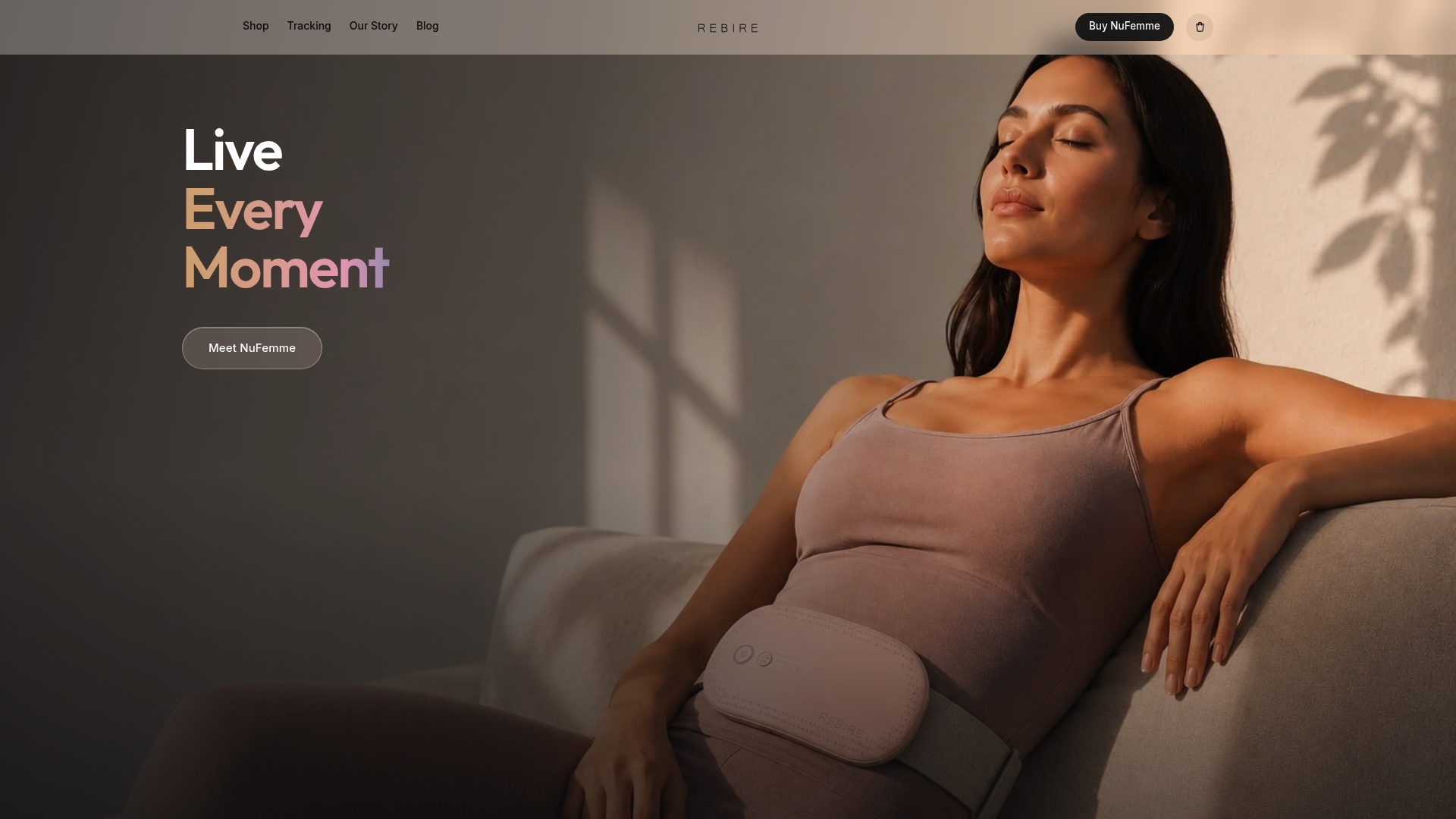
It checks the boxes that matter most: three heat levels and three massage speeds so you can dial in exactly what a given cramp needs, a rechargeable battery built for real portability, and a low profile discreet enough for a desk, a classroom, or a long commute. As a gift, it comes finished in Rose Gold or Ivory, the kind of detail that separates “I grabbed this at the pharmacy” from “I actually thought about what you’d want.” Before you buy, check the NuFemme product page for current warranty and return details, and browse the gift-focused landing page if you’re shopping for someone else’s cycle rather than your own. It is priced as a lasting piece of relief gear, not a disposable drugstore fix. If you’re ready to stop reaching for a heating pad tethered to the wall, visit the NuFemme page to start.
Sources
The clinical picture behind this article rests on a small set of well-designed studies:
- Heat therapy for primary dysmenorrhea: a systematic review and meta-analysis - PMC
- Heat therapy for primary dysmenorrhea: a systematic review and meta-analysis of its effects on pain relief and quality of life | Scientific Reports
- TENS (electrical nerve stimulation through the skin) for period pain — Cochrane evidence
- Effects of thermotherapy and transcutaneous electrical nerve stimulation on patients with primary dysmenorrhea: A randomized, placebo-controlled, double-blind clinical trial
For more practical reading, see this guide to drug-free cramp relief and the essential guide to relieving period cramps.
This article is general information, not a substitute for advice from a qualified doctor. Consult a qualified healthcare professional about your own circumstances before acting on anything here.
FAQ
How Fast Does a Heat and Massage Wearable Work?
Most people feel some relief within 10 to 20 minutes of starting a session, which lines up with heat therapy’s known onset in clinical trials.
Can a Wearable Replace Pain Medication Entirely?
For many people with primary dysmenorrhea, heat therapy performs comparably to NSAIDs in some clinical trials, but it doesn’t work identically for everyone. Severe or unusual pain still warrants a medical evaluation rather than relying on a device alone.
Is It Safe to Wear a Cramp Relief Device All Day?
Extended wear is generally fine at moderate settings, but continuous high heat for hours risks skin irritation, so periodic breaks and skin checks matter. Anyone pregnant or with an implanted electronic device should consult a doctor before using heat or vibration therapy on the abdomen.
What Should I Check Before Buying One as a Gift?
Look at the warranty and return policy, how the onset-time claims are backed, and the real battery runtime per charge, since those details matter more than packaging alone. The NuFemme product page lists its heat levels, massage settings, and current price.
Does Vibration Actually Add Anything Beyond Heat?
Yes. A clinical trial of a combined vibration-heat device found significantly greater pain reduction in abdominal, lumbar, and leg pain compared with routine methods, suggesting massage adds real value on top of heat.