

Yes: clinical trials show red light therapy, known clinically as photobiomodulation, often reduces menstrual cramp pain in meaningful, measurable ways. One trial recorded a 63.62% average drop in pain scores over three cycles. Most protocols call for 20 to 30 minutes of red light on the lower abdomen daily, often starting about a week before your period, used as prevention rather than a last-minute fix.
TL;DR:
- Consistent use across three cycles is more effective than short-term application, with some studies reporting pain relief for over 98% of participants.
- Proper targeting over the lower abdomen or uterus, along with early initiation, is essential for optimal results, as the mechanism involves boosting cellular energy and improving blood flow.
- Safety concerns are minimal, but devices with high heat or lacking transparency about parameters should be avoided, especially for sensitive skin or pregnancy.
- Combining red light therapy with heat, massage, or magnesium can enhance relief, whereas relying solely on rescue treatments may limit its benefits.
Table of Contents
- What the Clinical Evidence Says About Red Light Cramps
- How Red Light Actually Works on Cramp Pain
- How to Use Red Light for Cramps: A Practical Protocol
- Safety, Side Effects, and the Limits of Red Light Therapy
- Red Light vs. Heat, TENS, and NSAIDs for Cramps
- Understanding Primary Dysmenorrhea: Symptoms and How Common It Is
- Other Non-Drug Options for Period Cramp Relief
- Choosing a Red Light Device: What Actually Matters
- When to Avoid Red Light Therapy for Cramps
- Why the Skepticism Around Red Light Therapy Misses the Point
- A Wearable Built Around What the Research Actually Recommends
- Key Studies and Reviews to Read Next
- Sources
- FAQ
What the Clinical Evidence Says About Red Light Cramps
The strongest data point comes from a PLOS One trial of 119 women with primary dysmenorrhea, the clinical term for period cramps with no underlying condition like endometriosis or fibroids. Participants used LED red light therapy for three consecutive cycles, starting treatment seven days before their period was due. Average pain scores on the standard 0 to 10 Visual Analog Scale (VAS) dropped by 63.62%, and 98.32% of participants reported some degree of improvement.
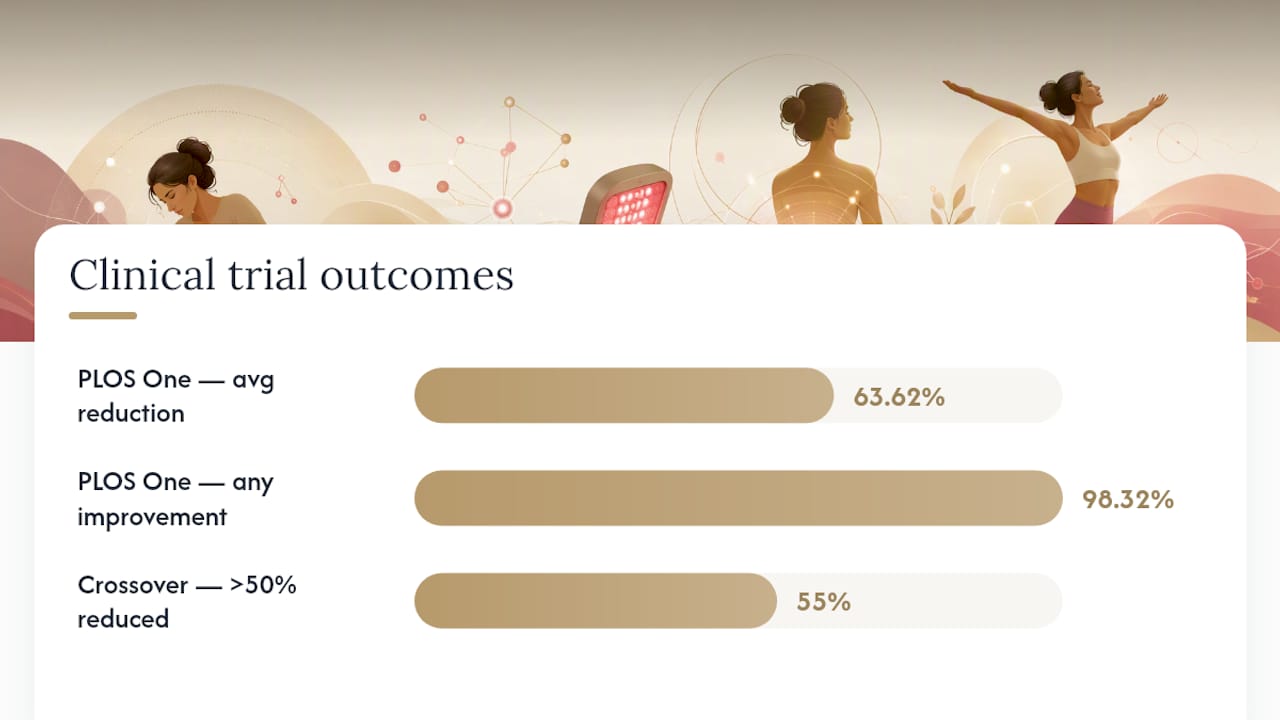
A separate randomized crossover trial, a design in which each participant experiences both the real treatment and a placebo phase so she serves as her own control, tested pulsed 630 nanometer light in daily 20 minute sessions. Researchers found that 55% of participants experienced a pain reduction exceeding 50%, with statistical significance well beyond chance (p < 0.001). Crossover trials carry more weight than single-group studies because they control for the placebo effect that plagues a lot of pain research.
Smaller observational reports add texture but deserve caution. It suggests a promising direction worth studying at scale, not a settled fact.
Where the evidence is strong:
- Multiple independent trials, not just one lab, show consistent pain reduction with red light in the 610 to 630 nanometer range.
- Effects appear across both single-group and randomized crossover designs, which is a meaningful signal since these methods have different weaknesses.
- Reported effective rates exceed 98% in the largest published trial to date.
Where it’s thinner:
- Sample sizes remain modest by pharmaceutical trial standards, and most studies run three cycles or fewer.
- Device types, wavelengths, and session lengths vary enough across studies that a formal meta-analysis is still catching up to the individual trial data.
The takeaway isn’t that red light therapy is a miracle cure. It’s that the mechanism is biologically plausible and the early trial data lines up with what you’d predict from that mechanism, which is a combination you don’t always get in period pain research.
How Red Light Actually Works on Cramp Pain
Menstrual cramps happen because your uterus produces prostaglandins, hormone-like compounds that trigger muscle contractions to shed the uterine lining. Too much prostaglandin, particularly PGF2α, means stronger, more painful contractions and reduced blood flow to uterine tissue. That’s the biochemical root of most period pain, and it’s also the exact process red light appears to interrupt.
Red light in the 610 to 630 nanometer range penetrates skin and soft tissue to reach mitochondria, the energy-producing structures inside your cells. There, it gets absorbed by an enzyme called cytochrome c oxidase, which kicks mitochondrial energy production into higher gear. A narrative review synthesizing biomarker data describes a chain reaction from that single absorption event:
- Increased cellular energy (ATP) production supports tissue repair and reduces the cellular stress associated with inflammation.
- The process releases nitric oxide, a molecule that relaxes blood vessels and improves local circulation, which helps counter the blood-flow restriction prostaglandins cause.
- Better circulation and reduced inflammatory signaling appear to lower prostaglandin-related activity, easing the uterine hypercontractility that produces cramping.
Why 610 to 630 nanometers specifically? That band penetrates deep enough to reach uterine-adjacent tissue without the higher energy (and higher heat risk) of some other light wavelengths. It’s the sweet spot researchers keep returning to across independent trials, which is part of why it shows up as a near-standard in the clinical literature rather than a single manufacturer’s marketing claim.
How to Use Red Light for Cramps: A Practical Protocol
Trial protocols are remarkably consistent, and that consistency is useful if you want results that resemble what researchers actually measured.
- Pick a wavelength in the 610 to 630 nanometer range. This is the band used across the major published trials, including both the PLOS One study and the pulsed-light crossover trial.
- Use it daily for 20 to 30 minutes. Shorter, more frequent sessions outperformed occasional long ones in the studies reviewed.
- Start about seven days before your period. Preventative timing lines up with when prostaglandin buildup begins, and trials that started early generally reported better outcomes than rescue-only use.
- Continue through the first few days of bleeding. Cramps typically peak in the first 24 to 48 hours, so keep sessions going rather than stopping once bleeding starts.
- Target the lower abdomen at the midline, roughly over the uterus. Some device makers also reference acupuncture points like CV4 and CV6 in that same region, or lower back placement for referred pain.
- Track your pain with a simple 0 to 10 scale each cycle so you can tell whether the pattern is actually improving or if you’re relying on memory, which tends to be unreliable for pain.
Pulsed light deserves a specific mention. The pulsed 630 nanometer trial found that pulsing the light on and off, rather than running it continuously, reduced heat buildup on the skin while preserving the pain-relief effect, and researchers suggested pulsing may even improve tissue penetration.
Pro Tip: Don’t wait for cramps to start before reaching for red light. The trials with the strongest results all began treatment before pain hit, not after. If you only use it as a rescue tool during a bad flare, you’re working against the biology the research describes.
Consistency across cycles matters more than any single session. Trials that ran three full cycles saw better cumulative results than shorter interventions, which tracks with how prostaglandin-related inflammation tends to build and resolve gradually rather than switching off overnight.
Safety, Side Effects, and the Limits of Red Light Therapy
The safety profile across published trials is reassuring. The PLOS One study reported no severe adverse events, and only 0.84% of participants experienced any device-related issue at all, generally mild skin redness or minor adhesive irritation from the patch itself rather than the light.
That said, a few boundaries are worth respecting:
- Avoid high-heat or high-irradiance devices on thin, sensitive, or broken skin, since the risk shifts from the light itself to thermal irritation.
- Watch for redness that lingers well past a session, unusual warmth, or skin discomfort that increases with repeated use. That’s a sign to reduce session length or frequency.
- Red light therapy is not a substitute for medical evaluation if your cramps change character. Pain that’s newly severe, progressively worsening cycle over cycle, accompanied by unusually heavy bleeding, fever, or pain outside your period entirely can indicate endometriosis, fibroids, or another condition that needs a clinician’s assessment.
- Choose devices with published specifications, wavelength, irradiance in mW/cm², and energy density in J/cm², since parameter transparency is what lets you actually replicate what trials tested rather than guessing.
Red light therapy is a strong tool for primary dysmenorrhea specifically, meaning cramps without an underlying gynecological condition. If self-care measures including red light aren’t moving the needle after a few cycles, that’s your cue to talk to a doctor rather than escalate the light exposure.
Red Light vs. Heat, TENS, and NSAIDs for Cramps
Each approach works on a different part of the pain pathway, which is exactly why combining them often makes sense.
- Heat relaxes uterine and abdominal muscle directly and increases local blood flow. Trials comparing heat to other interventions have found pain reductions around 20%, useful but modest next to some red light results.
- TENS (transcutaneous electrical nerve stimulation) works by disrupting pain signal transmission to the brain rather than addressing the underlying inflammation.
- NSAIDs like ibuprofen block prostaglandin synthesis systemically, which is effective but comes with the tradeoff of gut irritation and other side effects with regular use.
- Red light appears to act at the mitochondrial and biochemical level, boosting cellular energy, improving circulation through nitric oxide release, and calming the same prostaglandin pathway NSAIDs target, without the systemic drug exposure.
None of these approaches is mutually exclusive. Red light paired with heat, since one relaxes muscle immediately while the other addresses inflammation over the following hours, is a reasonable combination strategy. If cramps remain severe despite consistent non-drug approaches, a short course of NSAIDs alongside medical follow-up is a sensible next step rather than pushing through untreated pain.
Understanding Primary Dysmenorrhea: Symptoms and How Common It Is
Primary dysmenorrhea is the clinical term for period cramps that occur without an underlying reproductive condition like endometriosis, adenomyosis, or fibroids. It’s caused by excess prostaglandin production in the uterine lining, which triggers stronger, more frequent contractions than necessary to shed tissue.
Symptoms typically include cramping, aching pain low in the abdomen, sometimes radiating to the lower back or thighs, along with nausea, fatigue, headache, or diarrhea in more severe cases. Pain usually begins just before or at the start of bleeding and eases within the first two to three days.
Dysmenorrhea is one of the most common gynecological complaints among menstruating women, affecting a large share of the population at some point, with severity ranging from mild discomfort to pain intense enough to interrupt work, school, or daily activities. Secondary dysmenorrhea, caused by an identifiable condition, is a distinct category that needs its own diagnostic workup and typically doesn’t respond the same way to the non-drug approaches covered here. If your pain pattern is new, unusually severe, or worsening year over year rather than staying consistent, that distinction between primary and secondary causes is exactly what a clinician will be checking for.
Other Non-Drug Options for Period Cramp Relief
Red light therapy sits inside a broader toolkit of non-drug approaches, and understanding where it fits helps you build a realistic self-care routine rather than betting everything on one method.
Heat therapy remains the most widely used first-line option, and for good reason: it’s accessible, cheap, and backed by decades of use even if its effect size trails some red light results. Magnesium supplementation has a growing body of support as a way to ease muscle tension tied to cramping, and it pairs easily with other strategies since it works through a completely different pathway. Gentle exercise and stretching can improve pelvic blood flow, and staying well hydrated may reduce bloating and cramp intensity for some women, though the evidence here is less robust than for heat or magnesium.
Acupuncture and acupressure targeting points like CV4 and CV6, the same region many red light protocols focus on, have observational support, though rigorous trial data lags behind what exists for photobiomodulation. TENS units offer another accessible drug-free route, working through nerve signal disruption rather than biochemistry.
None of these approaches needs to work alone. A drug-free approach to period pain that layers two or three complementary methods, say, red light plus magnesium plus hydration, tends to outperform any single tactic used in isolation, simply because you’re addressing inflammation, muscle tension, and circulation at the same time instead of picking just one lever.
Choosing a Red Light Device: What Actually Matters
Not every red light product on the market is built for cramp relief, and the differences matter more than marketing copy suggests.
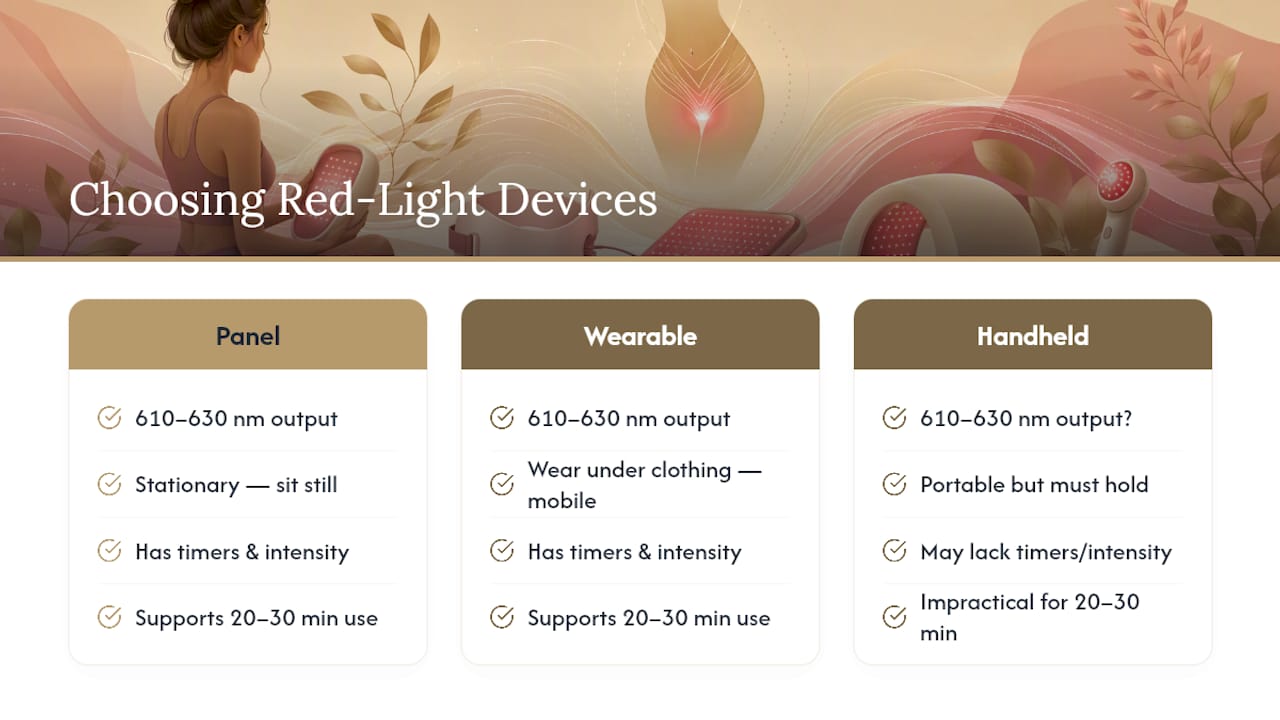
Wavelength specificity is the first filter. Look for devices that clearly state output in the 610 to 630 nanometer range, since that’s the band supported by the clinical trials discussed above. A device that only advertises “red light” without a number isn’t giving you enough to judge whether it matches what was actually tested.
Form factor affects whether you’ll actually use it consistently, which matters more than any single spec sheet. Standalone panels require you to sit still at home, which works for some people but conflicts with the reality that cramps often hit during a workday or errands. Wearable belts and patches that stay in place under clothing solve that problem directly, letting you keep moving while treatment continues.
Session controls worth checking include adjustable intensity and timed shutoff, both of which help you match the 20 to 30 minute daily protocol trials used without babysitting a timer.
Cost ranges widely, from inexpensive handheld wands to premium wearables running into the hundreds of dollars. Price alone doesn’t guarantee efficacy, but published parameter transparency, wavelength, irradiance, and energy density, is a reasonable proxy for a manufacturer that’s engineered around actual research rather than guesswork. A partner resource on LED light therapy protocols offers additional context on session length and wavelength standards if you want to compare device claims against clinical norms.
When to Avoid Red Light Therapy for Cramps
Red light therapy is generally well tolerated, but a few situations call for caution or a skip entirely.
If you’re pregnant or suspect you might be, hold off on abdominal red light use and check with a clinician first, since pregnancy changes the risk calculus for any abdominal intervention. Active skin conditions over the treatment area, open wounds, rashes, or recent sunburn, are a reason to wait until skin has healed rather than adding light exposure to already irritated tissue.
Photosensitizing medications, certain antibiotics and acne treatments among them, can increase skin sensitivity to light exposure, so check with a pharmacist or doctor if you’re on one of these before starting a daily protocol. If you have a diagnosed condition like endometriosis, adenomyosis, or fibroids, red light may still offer some comfort, but it should complement medical treatment rather than replace it, since these conditions have underlying pathology that light alone won’t resolve.
Finally, if cramps are a new symptom for you, or a lifelong pattern has suddenly changed in intensity or timing, that’s a signal to get evaluated before assuming red light or any other self-care tool will fix it. Consistent, predictable primary dysmenorrhea is exactly the profile the clinical trials studied. New or evolving pain patterns fall outside that picture and deserve a clinician’s eyes first.
Why the Skepticism Around Red Light Therapy Misses the Point
A lot of the doubt around red light therapy for cramps comes from comparing it to drugs, expecting instant, dramatic relief the way an NSAID can work within an hour. That’s the wrong comparison. Photobiomodulation works more like a cumulative anti-inflammatory strategy than a fast-acting painkiller, and the trials bear that out: the biggest effects showed up after three consecutive cycles of consistent use, not after one session.
The other reason some clinicians stay quiet on red light isn’t that the evidence is bad. It’s that the evidence, while genuinely promising, is still early relative to decades of NSAID and hormonal treatment research. Doctors tend to be conservative about recommending anything without a large body of long-term data behind it, and that caution is reasonable even when the early signal, including a 63.62% average pain reduction in one trial, looks strong.
What I find most underrated in this space is the timing insight. Most women reach for relief after cramps have already started, but the research consistently shows better outcomes when red light begins before pain onset. That’s a mindset shift, not just a device feature. A wearable like NuFemme, which combines heat, massage, and red light therapy in one cordless device, maps directly onto that trial-informed timing and layered mechanism, without claiming to replace medical care for pain that falls outside typical primary dysmenorrhea.
— Lavinia
A Wearable Built Around What the Research Actually Recommends
Most red light devices ask you to sit still at home, which doesn’t match how cramps actually happen, mid-meeting, running errands, halfway through a commute. Some cordless wearable devices combine heat, vibration massage, and red-light therapy into a belt that can be worn under clothes, letting users follow trial-aligned protocols without interrupting their day.
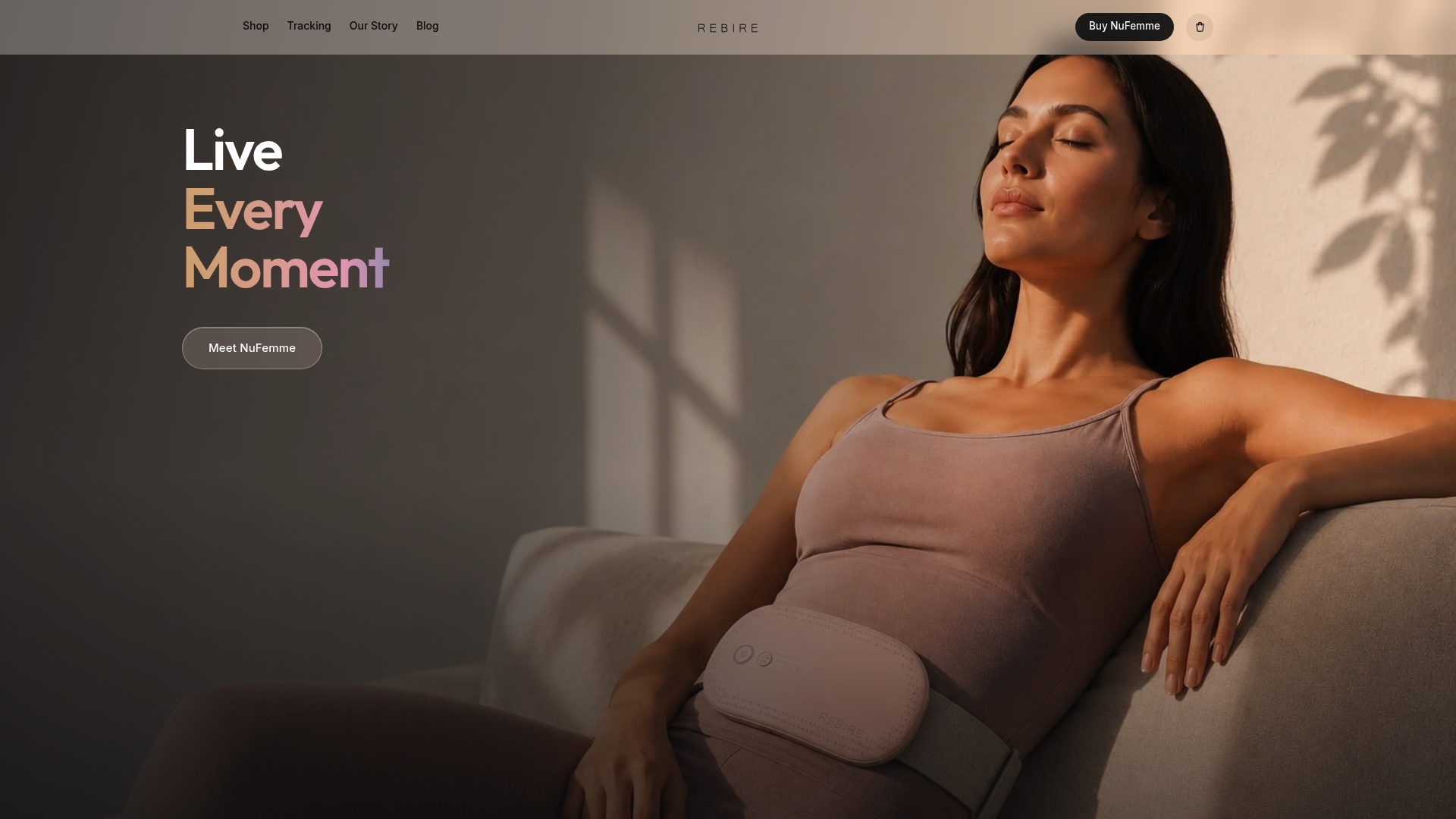
That combination isn’t arbitrary. Heat delivers the immediate muscle relaxation trials describe, red light targets the deeper prostaglandin and circulation pathway, and massage adds a third layer of comfort you can adjust to your own tolerance with three heat levels and three massage speeds.
It’s also built to be a genuine gift, not a last-minute drugstore grab. Finished in Rose Gold or Ivory, it’s the kind of thing a partner gives when they’ve actually paid attention to what she deals with every month. If your pain pattern is unusual or worsening, see a clinician first. For everyday cramp relief, NuFemme is priced at $338 as a one-time purchase, ready whenever your next cycle starts.
Key Studies and Reviews to Read Next
- The PLOS One clinical trial behind the 63.62% pain reduction figure, tracking 119 participants across three cycles.
- The pulsed 630 nanometer randomized crossover trial showing sham-controlled efficacy data and heat-risk mitigation through pulsing.
- A narrative mechanistic review connecting photobiomodulation to mitochondrial activation and prostaglandin modulation in plain, explanatory terms.
Sources
- LED red light therapy for relief of primary dysmenorrhea: An open, single-group target value clinical trial | PLOS One
- Bypassing the Heat Risk and Efficacy Limitations of Pulsed 630 nm LED Photobiomodulation Therapy for Anti-Primary Dysmenorrhea
- Mechanistic insights into photobiomodulation for primary dysmenorrhea: A narrative review
FAQ
Does Red Light Therapy Help With Cramping?
Yes. Clinical trials on primary dysmenorrhea report meaningful pain reduction, including a 63.62% drop in VAS pain scores after three cycles of consistent use. Effects appear strongest with daily use started before your period rather than only during acute pain.
What Are the Signs of Too Much Red Light Therapy?
Mild, temporary skin redness or adhesive irritation from a device patch are the most commonly reported side effects, and they’re uncommon even in trials. Persistent warmth, worsening skin irritation, or discomfort that increases with repeated sessions are signs to shorten sessions or reduce frequency.
What Does Red Light Do for Your Belly?
Applied to the lower abdomen, red light penetrates to reach uterine-adjacent tissue, where it’s absorbed by mitochondria and appears to boost cellular energy production, improve local blood flow through nitric oxide release, and calm the prostaglandin activity that drives cramping. That mechanism is why devices like NuFemme place red light directly over the abdomen alongside heat and massage.
Why Don’t Doctors Recommend Red Light Therapy More Often?
It’s less about doubt in the mechanism and more about caution: the evidence base, while consistent across several trials, is still smaller and newer than decades of NSAID and hormonal research. Many clinicians will suggest trying it as a complement to standard care rather than a first-line replacement, especially for pain that doesn’t fit a typical primary dysmenorrhea pattern.
How Should I Time Red Light Sessions for the Best Results?
Trials that started sessions about seven days before the period began generally showed better outcomes than starting once pain had already set in. Daily 20 to 30 minute sessions continued through the first few days of bleeding align most closely with the protocols researchers actually tested.