

The fastest relief for exam cramps combines three things at once: discreet heat on low, an NSAID timed correctly, and thirty seconds of seated stretching or breathing. None of these require leaving your seat for long, and none will draw attention from a proctor.
Here’s your immediate checklist:
- Apply heat now. A slim patch or a cordless belt worn under your waistband works quietly at your desk.
- Take your NSAID on schedule if you already know your cramps are coming, ideally at the first twinge, not after the pain peaks.
- Do two seated micro-stretches and a slow four-count breath to dial down how much pain you actually register.
- Test any wearable before exam day. You don’t want to discover a heat setting is too weak or too warm mid test.
Pro Tip: If you’re considering a wearable like NuFemme, Rebire reports that a large majority of users felt reduced pain within 15 minutes, which is roughly the length of one exam section.
Key Takeaways
Relief from exam-day cramps comes down to timing NSAIDs correctly, using discreet heat consistently, and planning bathroom and accommodation logistics before the test starts.
| Point | Details |
|---|---|
| Time your NSAID | Start ibuprofen or naproxen at the first sign of cramps, not after pain peaks. |
| Use low-profile heat | A patch or cordless belt on low or medium setting works quietly under clothing during a test. |
| Test devices in advance | Check comfort, heat level, and battery life at home before relying on a device during an exam. |
| Plan for restricted breaks | Check exam bathroom policy early and request accommodations in writing if needed. |
| Know your red flags | Pain that resists NSAIDs and heat, or worsens each cycle, warrants a clinician visit. |
| Consider a wearable option | Rebire’s NuFemme pairs heat, massage, and infrared therapy, with many users reporting relief within 15 minutes. |
Table of Contents
- Exam Cramps Relief: Tactics You Can Use Without Leaving Your Seat
- Discreet Products and Wearable Options for Exams
- Over-the-Counter Medications: Timing Beats Dosage
- Exam-Day Planning and Practical Tips
- When Cramps Are a Red Flag
- A Short Note on Taking Your Pain Seriously
- A Discreet, Drug-Free Option Worth Testing Before Exam Season
- Sources
Exam Cramps Relief: Tactics You Can Use Without Leaving Your Seat
Heat is the single most practical tool you have during a test, and it’s not just folklore. Warmth relaxes the uterine muscle and increases blood flow to the area, which eases the cramping sensation without a single pill. The trick during an exam is discretion and timing. A heat patch stuck to the inside of your waistband, or a cordless wearable set to a low or medium level, can run for the length of a typical exam period. If you’re using a hot pack instead of an adhesive patch, reapply or reposition it roughly every 20 minutes to keep the warmth consistent without overheating your skin.
Movement helps too, even the small kind you can do while seated. Try these three during a scheduled break or even between questions:
- Pelvic tilt in your chair. Sit tall, tuck your pelvis forward slightly, hold for five seconds, then release. Repeat five times.
- Seated forward fold. Lean your torso over your knees for a slow ten count, letting your lower back release tension.
- Shoulder roll and exhale. Roll your shoulders back twice while exhaling fully, which calms the nervous system response that can sharpen pain perception.
Breathing matters more than most students expect. A slow exhale, roughly twice as long as your inhale, activates the parasympathetic nervous system and can measurably lower how intensely pain feels in the moment. This same technique doubles as exam stress management, since anxiety and cramping tend to amplify each other.
Some students also use a small TENS device, which sends a mild electrical pulse through adhesive pads to interrupt pain signals. TENS units are legal, drug-free, and can run silently under clothing, but they need testing well before test day since the sensation takes some getting used to.
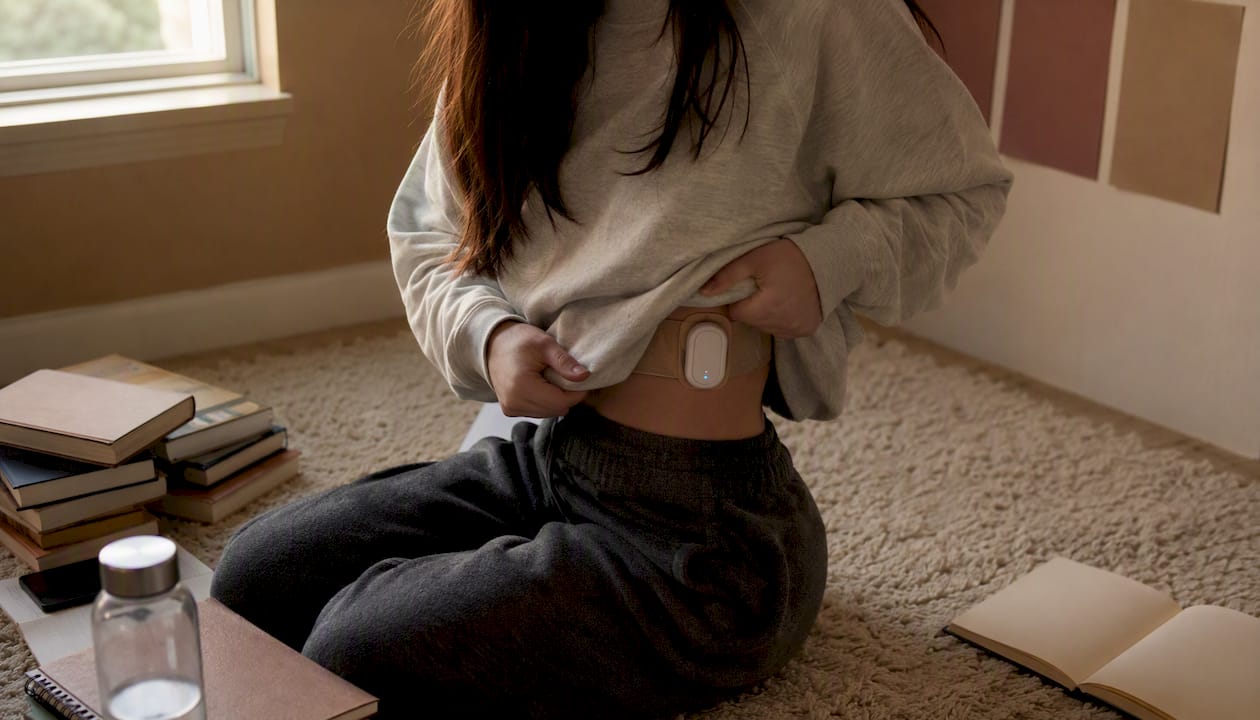
Discreet Products and Wearable Options for Exams
Not every relief tool fits under a school desk the same way. Here’s how the main categories stack up on the criteria that actually matter during a timed test:
- Single-use heat patches are thin and cheap, but most only stay warm for a few hours and lose heat unevenly toward the edges.
- Cordless heating belts hold their temperature longer and let you adjust intensity, though battery life and bulk vary a lot between brands.
- Soft hot packs tucked into waistbands work in a pinch but shift out of place easily during a long exam.
Rebire’s NuFemme sits in the cordless wearable category, combining heat, vibration massage, and red light therapy in one belt worn under clothing. It offers three heat levels and three massage speeds, so a student can dial in something gentle for a three-hour exam instead of full-strength warmth meant for lounging at home. Rebire reports that many users noticed reduced pain within 15 minutes, a fast enough window to matter mid-exam. The one rule that applies to any wearable: try it during a practice run at home first, not on the morning of the test.
Over-the-Counter Medications: Timing Beats Dosage
NSAIDs like ibuprofen and naproxen are considered first-line treatment for menstrual cramps, and Mayo Clinic’s guidance is specific about timing: start the medication at the onset of your period, or the day before if your cycle is predictable, rather than waiting until pain is already severe. These drugs work by blocking the production of prostaglandins, the compounds that trigger uterine contractions, so getting ahead of that process matters more than the exact dose.
Typical starting ranges are 400 to 600 mg for ibuprofen and 220 to 440 mg for naproxen, taken with food to reduce stomach irritation. A few safety notes worth remembering:
- Avoid NSAIDs if you have a known allergy, active stomach ulcer, or kidney condition.
- Check for interactions if you’re taking blood thinners or other regular medications.
- Don’t combine multiple NSAID types at once, and don’t exceed the labeled daily maximum.
If ibuprofen or naproxen consistently fails to touch your pain, that’s worth writing down. A pattern of NSAIDs not working is one of the clearer signals that a clinician visit, not a stronger dose, is the next right step.
Exam-Day Planning and Practical Tips
A little preparation the night before saves you from problem-solving mid-exam. Here’s a compact plan:
- Pack the essentials the night before: a charged heat patch or wearable, your NSAID with food if needed, backup period products, water, and a small snack.
- Check the school’s exam bathroom policy early. Some testing environments restrict breaks entirely, so knowing the rule in advance lets you plan medication and heat timing around it instead of getting caught off guard.
- Request accommodations in writing if needed. A short email to an instructor or the school health office asking for a toilet pass or extra time due to a medical condition is a normal, reasonable request.
- Practice a low-key way to ask for a break, like a simple hand signal agreed on with the proctor beforehand, so you’re not scrambling for words if a cramp spikes.
Pro Tip: Frame any request around “medical need” rather than explaining details you’re not comfortable sharing. You don’t owe anyone a full explanation to get a reasonable accommodation.
Restricted bathroom access during high-stakes tests is a real and documented problem. BBC News reporting found students hiding hot water bottles and struggling to access toilets during exams, which only adds stress on top of physical pain. Planning ahead is the only real defense against that combination.

When Cramps Are a Red Flag
Most period cramps respond to heat and NSAIDs within a cycle or two of consistent timing. When they don’t, it’s worth paying attention. Watch for:
- Pain severe enough to keep you from attending class or an exam.
- Cramps that don’t improve with NSAIDs or heat at all.
- Pain that’s getting worse cycle over cycle instead of staying steady.
If any of these apply, a clinician visit typically starts with a history and sometimes a pelvic exam or ultrasound to rule out conditions like endometriosis, and may lead to a referral to a pelvic health specialist or gynecologist. Seattle Children’s guidance specifically flags pain that interferes with daily activities as a reason to seek care rather than push through it. Keeping a simple log of missed classes or exam disruption also helps if you later need documentation for school accommodations.
A Short Note on Taking Your Pain Seriously
Exams amplify everything, including cramps you’d otherwise manage quietly at home. Testing your relief plan ahead of time and asking for support isn’t overreacting. It’s just good preparation.
— Lavinia
A Discreet, Drug-Free Option Worth Testing Before Exam Season
If heat and timing alone aren’t cutting it, a wearable that does more than warm you up might close the gap. NuFemme combines heat, vibration massage, and red light therapy in one cordless belt, worn flat under clothing with no cord tethering you to an outlet or a waiting room. You get three heat levels and three massage speeds, so you can set something subtle for a lecture hall and something stronger for a Sunday spent recovering on the couch.
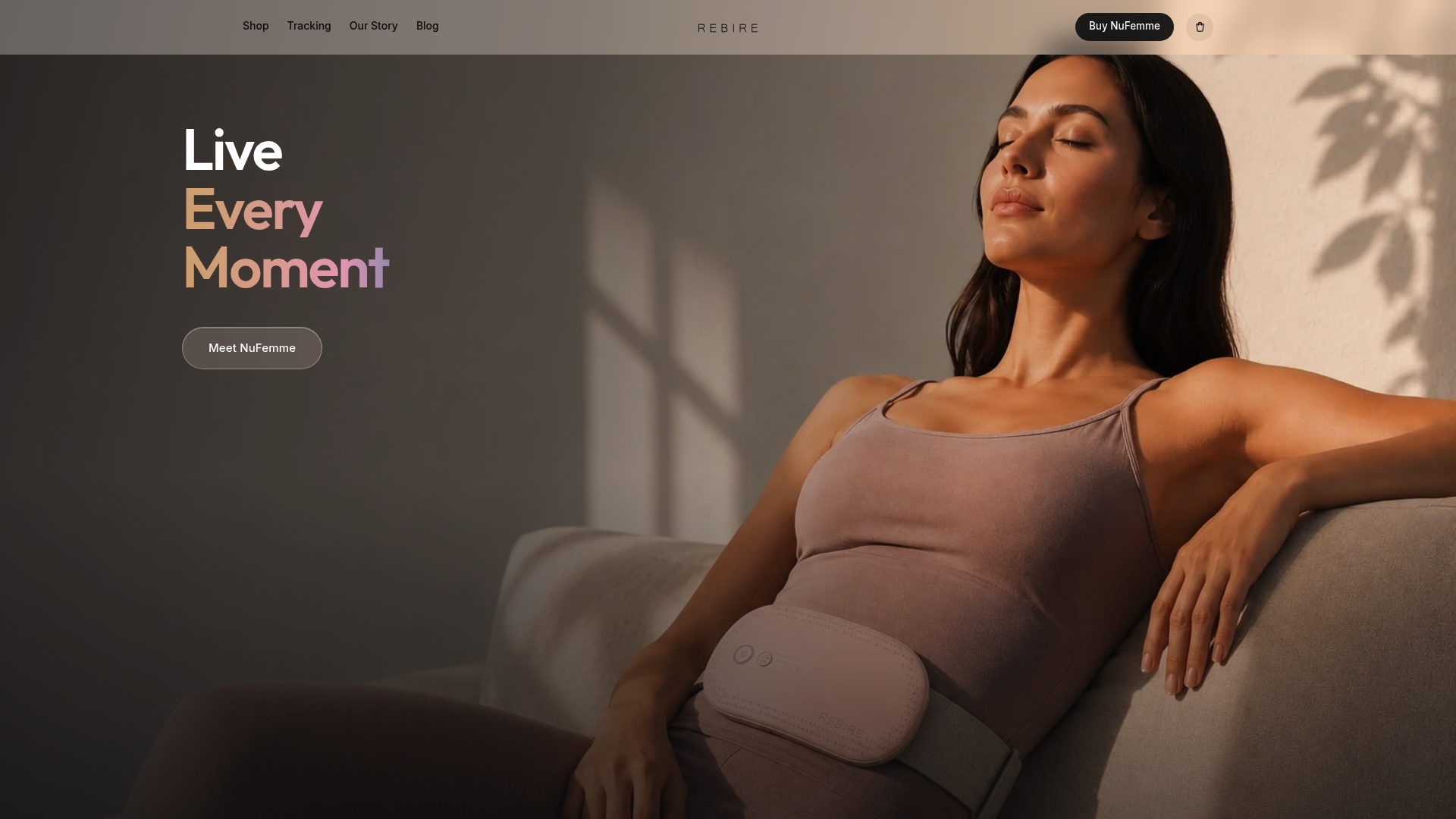
Rebire reports that a substantial number of users felt reduced pain within 15 minutes, which matters when you’ve got a three-hour exam ahead and no time to wait around for relief. The one thing worth doing before finals week: wear it at home first to check the fit, battery life, and which heat level actually works for you. Browse the full NuFemme collection and pick your finish, then order one before your next exam block starts.
Sources
- Menstrual cramps - Diagnosis & treatment - Mayo Clinic
- Menstrual cramps - Seattle Children’s
- Periods during exams were a ‘nightmare’ - BBC News
This article is general information, not a substitute for advice from a qualified doctor. Consult a qualified healthcare professional about your own circumstances before acting on anything here.