

Yes, periods can cause thigh pain, and it’s usually referred pain from uterine cramps rather than anything happening in your legs themselves. Most of the time, this comes from prostaglandin-driven contractions that radiate outward. Rarely, persistent or one-sided thigh pain signals endometriosis affecting pelvic nerves. Try heat and anti-inflammatories first, and watch for red flags like numbness or weakness.
TL;DR:
- Take ibuprofen or naproxen at the first sign of pain, typically for one to two days; avoid NSAIDs if you have ulcers, liver disease, or an allergy.
- Apply heat at 104 to 113°F to your lower abdomen or inner thigh, and try gentle walking or pelvic floor stretches.
- Pain that shifts from cyclical to persistent, especially with sciatica on one side, numbness, weakness, foot drop, or gait changes, warrants evaluation, often with MRI.
- Schedule an appointment with a gynecologist if pain disrupts daily life, resists heat or NSAIDs, begins suddenly after age 25, or occurs between periods.
Table of Contents
- Why prostaglandins turn uterine cramps into thigh pain
- When thigh pain points to endometriosis or nerve involvement
- How to tell routine cramps from something that needs attention
- What actually helps right now
- When thigh pain means it’s time to see a doctor
- Why massage and red light together ease thigh discomfort more than either alone
- Getting the most out of a wearable heat device during your day
- Choosing a gift for a partner who deals with period pain
- Building a self-care routine around your wearable
- What I wish more people knew about period thigh pain
- A discreet way to carry relief with you
- FAQ
- Sources
Why prostaglandins turn uterine cramps into thigh pain
Your uterus doesn’t hurt in isolation. When your uterine lining breaks down each month, it releases prostaglandins, hormone-like compounds that trigger the uterine muscle to contract and shed tissue. Higher prostaglandin levels mean stronger contractions and more inflammation, which is exactly why some periods hurt far more than others. Up to 90% of people of reproductive age experience some form of menstrual pain, and pain radiating to the thighs is a recognized part of that picture.
The thigh connection comes down to shared nerve pathways. Your uterus and your lower back, hips, and thighs are wired through overlapping sacral nerve roots, so your brain can struggle to pinpoint exactly where a signal originated. This is referred pain: the ache you feel in your thigh may have nothing wrong with the thigh itself.
A few other factors can pile on top of this and make thigh discomfort feel worse:
- Pelvic floor muscles tightening in response to cramping, which pulls on nearby hip and thigh muscles.
- Adductor (inner thigh) muscle spasm triggered by referred nerve signals.
- Fluid retention around the pelvis and legs, common in the days before and during your period.
Up to 15% of menstruating people report pain severe enough to interfere with daily activities, school, or work, according to a review of primary dysmenorrhea. That threshold is worth remembering: occasional discomfort is common, but pain that stops you from functioning deserves attention.
When thigh pain points to endometriosis or nerve involvement
Most period-related thigh pain is routine, but a smaller number of cases involve something more specific: endometrial tissue growing near or into pelvic nerves. Surgical case series describe endometriosis infiltrating the sciatic nerve, sacral plexus, or obturator nerve, producing cyclical sciatica or inner-thigh pain that tracks closely with the menstrual cycle, according to laparoscopic findings on sciatic nerve endometriosis.
What makes this different from ordinary cramping is the pattern over time. Case reports describe a typical progression: pain that starts out strictly cyclical, then the pain-free windows between periods shrink, and eventually the pain becomes constant with neurological symptoms layered on top, a shift that can unfold over one to three years when nerve involvement goes undiagnosed.
Specific signs worth tracking include:
- Numbness or tingling down the back or inner thigh.
- Foot drop or noticeable weakness when lifting the front of your foot.
- Weakness pulling your thigh inward (a sign of obturator nerve involvement).
- A Trendelenburg gait, where your hip drops noticeably on one side while walking.
- Sciatica that’s always on the same side and flares specifically around your period.
Case reports emphasize that cyclical sciatica paired with gait changes should prompt an MRI and multidisciplinary evaluation, since sciatic nerve endometriosis often requires surgical excision for lasting relief. MRI is the imaging tool of choice when nerve involvement is suspected, and earlier diagnosis appears to limit how much nerve damage accumulates before treatment. If you notice this kind of progression, it’s worth bringing it up with your doctor sooner rather than waiting to see if it resolves on its own.
How to tell routine cramps from something that needs attention
Not all thigh pain feels the same, and the quality of the pain is a useful clue. Referred menstrual pain tends to feel like a dull ache or cramping sensation, while nerve involvement can produce sharp, shooting, or electric pain, sometimes with numbness. Location matters too: inner thigh pain often points toward obturator nerve involvement, while pain running down the back of the thigh toward the knee or foot looks more like sciatica.
Timing is one of the clearest signals you have. Pain that shows up a day or two before your period and fades once bleeding ends fits the usual pattern. Pain that lingers between cycles, or that never fully goes away, is the pattern worth flagging.
A few quick self-checks can help you describe what’s happening:
- Is the pain on one side only, or both?
- Does moving, walking, or climbing stairs make it worse?
- Do you notice any weakness or areas where you can’t feel touch normally?
- Does the pain ever show up outside your period entirely?
Answering these honestly, even just mentally, gives you a clearer picture before you talk to a provider.
What actually helps right now
For most referred thigh pain tied to your period, first-line treatment is straightforward and well-supported. Here’s a practical sequence to try:
- Take an NSAID at the first sign of pain. Ibuprofen or naproxen taken early works by reducing prostaglandin production at the source, according to clinical guidance on NSAID timing. A short course of one to two days is typical. Skip NSAIDs if you have a history of ulcers, liver disease, or an allergy to this drug class, and check with a pharmacist or doctor if you’re unsure.
- Apply heat to your lower abdomen or inner thigh. Heat in the 104 to 113°F range is considered an evidence-backed first choice for period pain, and it works well alongside or instead of medication.
- Move gently. Light aerobic activity like walking, along with pelvic floor stretching, can ease muscle tension that contributes to thigh discomfort.
- Consider pelvic floor physical therapy if your pain seems tied to muscle tightness rather than pure cramping, especially if it’s recurring every cycle.
MedlinePlus confirms that period pain commonly radiates to the lower back and thighs, and lists NSAIDs and heat as standard first-line approaches. For a deeper breakdown of timing and dosing, our guide to relieving period cramps walks through the specifics.
Pro Tip: If you need relief while you’re at your desk or out running errands, a cordless heat and massage device like NuFemme lets you apply consistent warmth without being tied to an outlet or lying down; 93% of users reported reduced pain within 15 minutes in internal testing.
When thigh pain means it’s time to see a doctor
Some symptoms need prompt attention, not a wait-and-see approach. Seek care right away if you experience:
- Sudden, severe pelvic pain unlike your usual cramps.
- Fever, fainting, or heavy bleeding you can’t control.
- New or worsening weakness, numbness, or foot drop.
- A noticeable change in how you walk.
Beyond emergencies, it’s worth scheduling a visit with an OB-GYN if your pain regularly disrupts your daily life, doesn’t respond to NSAIDs or heat, started suddenly after age 25, or shows up outside your period entirely. Guidance on pelvic pain evaluation notes that failure of over-the-counter measures is itself a reason to investigate secondary causes.
A typical diagnostic path starts with a history and physical exam, often followed by a pelvic ultrasound. If nerve involvement is suspected, an MRI and referral to a pelvic pain specialist may follow, with laparoscopy considered when endometriosis needs direct confirmation and treatment. Surgical series suggest that earlier evaluation leads to better outcomes when nerves are involved, since delayed diagnosis tends to allow more cumulative damage.
Why massage and red light together ease thigh discomfort more than either alone
Heat gets most of the attention for period pain, but massage and red light therapy address different parts of the problem. Massage works on the muscular side, easing the pelvic floor tension and adductor spasm that often accompany referred cramping. Rhythmic pressure helps relax tight muscles around the hips and thighs that tense up in response to uterine contractions.
Red light, or infrared, therapy adds a separate layer by penetrating tissue to support local circulation, which can help calm the inflamed area contributing to your pain. Used together with heat, the combination addresses the cramping itself, the muscular tension it causes, and the surrounding inflammation in one sitting rather than treating each piece separately.
This is part of why a device that layers heat, massage, and red light tends to feel more complete than a single-mode heating pad. You’re not choosing between relaxing a muscle or warming the area. You get both at once, which matters most on days when thigh pain and cramping show up together. Our roundup of drug-free relief options breaks down how each of these therapies works on its own, if you want more detail before combining them.

Getting the most out of a wearable heat device during your day
A cordless device only helps if you actually keep it on through the parts of your day when pain hits hardest. A few habits make that easier.
Start with a lower heat setting if you’re wearing it under fitted clothing or sitting at a desk for hours, then increase it as needed. Position it low on your abdomen or against your inner thigh, depending on where the referred pain is strongest that cycle, since the location can shift from month to month.
If you’re commuting, in meetings, or running errands, the point of a wearable is that it moves with you instead of requiring you to lie down near an outlet. Pair it with your usual NSAID timing rather than replacing one with the other. Taking an anti-inflammatory early and wearing a heat and massage device through the day addresses both the chemical and muscular sides of the pain.
Charge it the night before your period is expected, since the days leading up to bleeding are often when cramping (and thigh discomfort) starts creeping in. For more on fitting quick relief tactics into a busy schedule, see our list of fast period cramp relief methods.
Choosing a gift for a partner who deals with period pain
If someone in your life mentions thigh or cramp pain every month, a thoughtful gift acknowledges that rather than ignoring it. The gifts that land best are the ones that show you’ve actually paid attention, not a last-minute pickup from a drugstore shelf on the day she’s already hurting.
Look for something practical enough to use repeatedly, not just once. A wearable that combines heat, massage, and red light therapy works for both the physical relief and the gesture itself, especially finished in a way that feels considered rather than clinical. The device comes in different colors and offers multiple heat levels and massage speeds so she can adjust it to what actually works for her, whether she’s at her desk or needs a quiet moment to recover.

Pairing it with something small, like a note that names what you’ve noticed about her cycle, tends to matter more than the price tag. The goal isn’t to solve her pain for her. It’s to hand her a tool that makes the hardest days of the month a little easier to get through.
Building a self-care routine around your wearable
A heat and massage device works best as part of a rhythm rather than a one-time fix you reach for only when pain peaks. Start tracking your cycle a few days before your period is expected, and begin wearing your device preventively rather than waiting until the cramping is already severe.
Layer in the basics that support what the device is doing: staying hydrated, gentle movement like walking or stretching, and consistent sleep, since poor sleep tends to lower your pain threshold. Some people also find magnesium useful as a complementary approach alongside heat and massage, worth asking a healthcare provider about if you’re curious. Our piece on magnesium for period cramps covers the basics.
If your pain involves noticeable pelvic floor tightness, pairing your wearable routine with pelvic floor physical therapy can address the muscular component more directly; a guide to pelvic floor PT timelines outlines what that process typically looks like for adults dealing with related back or hip pain. The combination of consistent heat and massage, basic lifestyle habits, and professional support when needed tends to outperform any single approach used alone.
What I wish more people knew about period thigh pain
Isolated thigh pain during your period can feel confusing, especially when nobody mentions it as a normal symptom. Most of the time, it’s referred pain, not a sign that something is wrong with your leg.
What helps most is tracking it: note when the pain starts, how it feels, and whether you notice any numbness or weakness alongside it. That record is genuinely useful if you ever need to describe it to a clinician. Most people find real relief with first-line steps like heat and anti-inflammatories, and specialists are there for the smaller number of cases where the pattern points toward something like endometriosis.
— Lavinia
A discreet way to carry relief with you
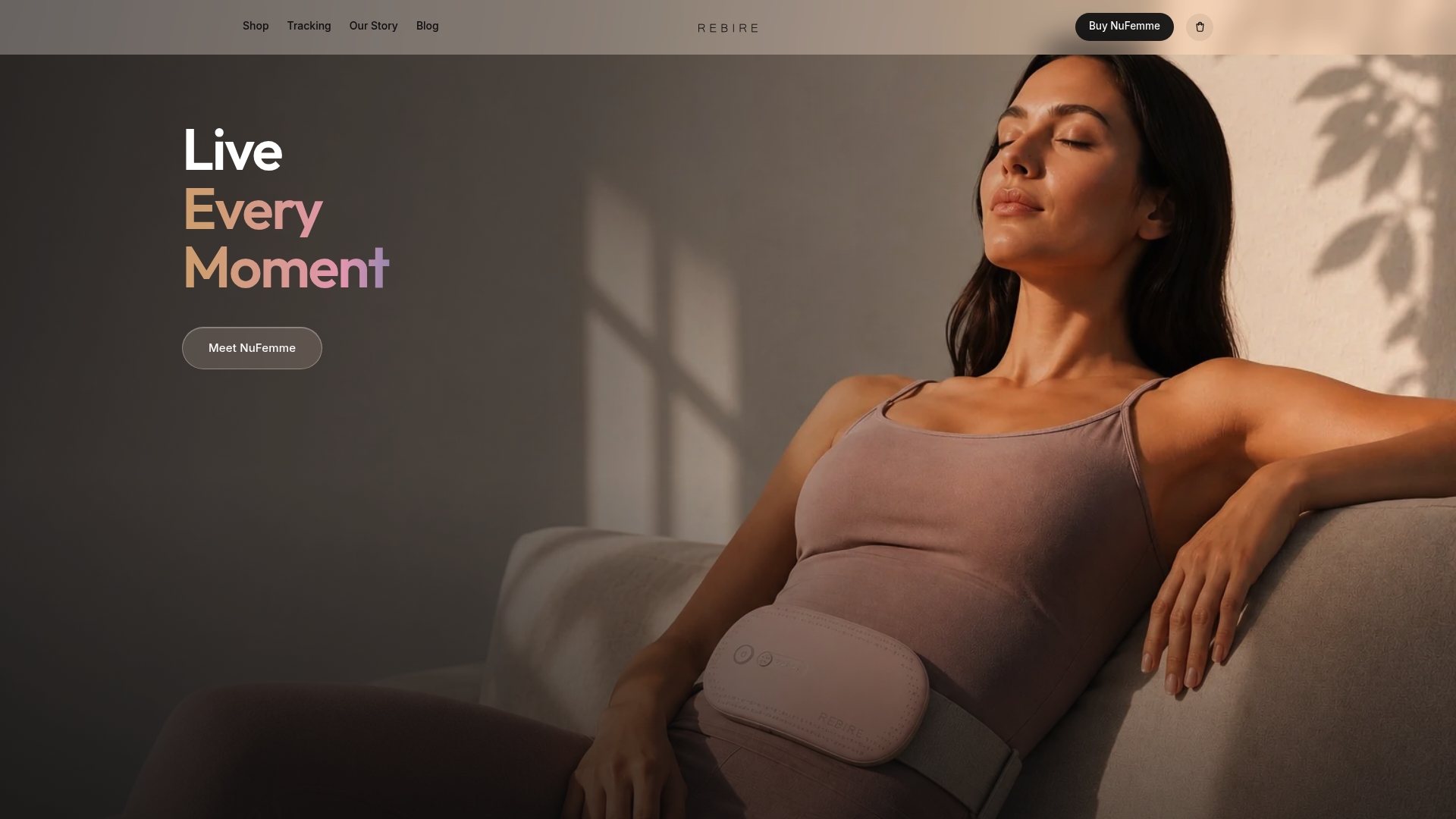
Reaching for a heating pad works fine at home, but it doesn’t travel with you to the office, a long commute, or a day of errands. NuFemme is a cordless wearable belt built to combine heat, massage, and red light therapy in one device you can wear discreetly under your clothes.
A few things make it practical for actual daily use:
- Three heat levels and three massage speeds, so you can adjust to what feels right that day.
- No cord and no waiting near an outlet for a heating pad to warm up.
- Finished in Rose Gold or Ivory, which makes it a genuine gift option as well as a personal one.
If thigh pain tends to catch you mid-day, take a look at NuFemme for period cramps and see whether it fits how you actually move through your month.
This article is general information, not a substitute for advice from a qualified doctor. Consult a qualified healthcare professional about your own circumstances before acting on anything here.
FAQ
Why do my menstrual cramps hurt so much?
Cramp intensity comes down to prostaglandin levels: higher levels cause stronger uterine contractions and more inflammation, which is why pain severity varies widely between people and even between cycles. Up to 90% of menstruating people experience some pain, and up to 15% report pain severe enough to interfere with daily activities, according to a review of primary dysmenorrhea.
Which pressure points can help with period cramps?
Definitions of specific pressure points vary across sources and aren’t backed by the clinical research reviewed here, so we can’t point to a verified technique. Gentle massage over the lower abdomen and inner thighs can help ease the muscle tension that often accompanies cramping, which is part of why combining massage with heat tends to feel more effective than heat alone.
Do heating pads help with period cramps?
Yes, heat is considered a first-line, evidence-backed treatment for period cramps, with a target range of 104 to 113°F applied to the lower abdomen or inner thigh. MedlinePlus lists heat alongside NSAIDs as a standard recommendation for managing period pain.
How to lower prostaglandins during period?
Taking an NSAID like ibuprofen or naproxen at the first sign of pain reduces prostaglandin production directly, which is why early timing matters more than waiting until pain peaks, according to clinical dosing guidance. Heat and gentle aerobic exercise are commonly used alongside NSAIDs as non-drug complements.
When should thigh pain during my period concern me?
Thigh pain that’s one-sided, constant rather than cyclical, or paired with numbness, weakness, or a change in your gait should prompt a visit to an OB-GYN. Case reports on sciatic nerve endometriosis describe this pattern progressing over one to three years when left undiagnosed, so earlier evaluation tends to lead to better outcomes.